![GreenPort[PortStrategy]](https://www.portstrategy.com/greenport/wp-content/uploads/sites/4/2026/09/GreenPortPortStrategy.svg)

Advantage: Rail
Rail is the key to Duisport’s commercial success. Kasia Kurek, of Erasmus University, Rotterdam, reports
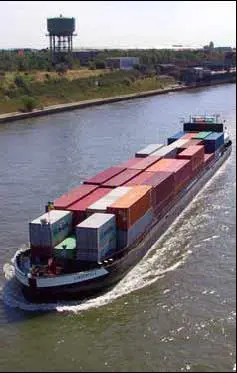
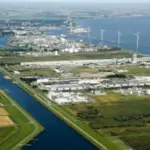
The Port of Duisburg (Duisport) is not only Europe’s largest inland port, but the world’s largest as well. Located in North Rhine Westphalia, it constitutes the commercial and transport centre of Germany’s Ruhr region, forming one of the largest industrial clusters in Europe with about 200 companies operating just in the fields of transport and logistics services.
Until the 1990s it was best known as a bulk cargo port but more recently there has been a huge expansion in container traffic to the extent that there are currently some 2.5 million container movements in the port area annually. It has become the strategic hinterland port for North Sea ports and also has direct connections with Baltic, Mediterranean and West African ports. In addition regular links have been established with the eastern seaboard of the USA.
Investment in rail infrastructure has been fundamental to Duisport’s success. With the cooperation of the federal government and Deutsche Bahn, rail links have been developed along the German border facilitating hinterland coinnections to Duisburg and more recently the port has developed its own rail service.
Duisport Rail is fully owned and operated by the Duisport Group but is not the only rail service in the port area. Belgian rail operator DLC-Hupac moves more than a million TEU annually throughout the port area. Duisport became aware of the environmental advantages of rail at an early stage and in the past decade has constructed some 200km of additional track while investing around 500 million Euros in rail infrastructure.
Along with rail services the port’s logistics facilities are rapidly expanding. Between now and 2012 an additional 80 hectares are planned to be developed for container storage.
At a recent count it was found that 25 different rail companies offer rail services from Duisport to some 80 European destinations. This deliberate shift from road to rail has been the cornerstone of Duisport Group’s environmental strategy.
Attention to green logistics is reflected by the increased inland network coverage. For example, intensive rail transhipment working in conjunction with short sea shipping support the “gateway” concept of the new D3T terminal. Environmental issues have been very much in the forefront of this development, with road becoming no more than a marginal transport node.
The environmental priority has been for rail and waterways to provide the main means of onward transportation and the port takes pride in reporting that annually some 40,000 cargo movements are currently shifting from road to rail.
By 2015 rail is expected to account for 298 million TEU transhipped via Duisport, which will mean a doubling of recent capacity. There is also a marked growth in rail traffic compared with barges and five years from now it is forecast that two thirds of container traffic will move by rail with just one third carried by inland waterways.
One of the factors supporting this forecast is the recent establishment of a rail connection with Zeebrugge and further European rail links are expected. A regional feeder shuttle network has also recently begun operating in the port area in response to environmental concerns about road congestion in the Rhine-Ruhr region.
Further expansion of Duisport is expected to result from the recent port private investment involving Kuehne+Nagel where some 45,000 square metres of warehouse storage is anticipated in response to market demand for value-added services in the Logport region. By utilising the widespread international transport network provided by Duisport’s logistics infrastructure, costs can be reduced and environmental impact kept low.
Another important recent Duisport newcomer is Danone Waters which will concentrate its German and Eastern Europe distribution activities at the new Duisport Kombi Terminal which receives cargo only by river barges and trains, cutting out truck transport altogether. This is a new logistics concept whereby cargo is moved by rail from the source of supply to warehouse storage and from there to domestic or international destinations, avoiding the pollution and congestion associated with truck usage.
Despite the recent financial turbulence experienced by port and shipping sectors, Duisport saw virtually no drop in freight traffic volumes between 2008 and 2009. With consolidated revenues of 145 million euros, Duisport Group in fact surpassed its 2008 record by 4.6%.
This success is reflected by cargo volumes as well. Container traffic by ships, trucks and rail fell marginally from 1.89 million in 2008 to 1.82 million tonnes in 2009. Although a drop, it is still seen as a very positive result in the light of other European port figures with for example Rotterdam, Antwerp and Hamburg recording shrinkage of 10%, 16% and 28% respectively. By comparison Duisport experienced a fall in container traffic of only 3.7%.
Duisport Group CEO Erich Staake, commenting on the port’s success during the recent economic downturn said: “We adjusted, improved and optimised our cost structure and above all our processes and procedures”. He sees considerable further scope for rail expansion: “Growth is expected particularly in key markets such as Turkey and the Netherlands. Rail movements to these two countries increased by 30% last year. Duisport Group is able to maintain transportation at a high level despite the hard market conditions, thanks to focus on cooperation with our logistics partners. This is what warrants the high quality of the port.”
Related Articles
 ENERGY & TECHNOLOGY GREENPORT
 ALTERNATIVE FUELS GREENPORT
 ALTERNATIVE FUELS GREENPORT