![GreenPort[PortStrategy]](https://www.portstrategy.com/greenport/wp-content/uploads/sites/4/2026/09/GreenPortPortStrategy.svg)
Embracing the opportunities in short sea shipping
The changing market should be embraced along with the decarbonisation lessons learned over the last few years in order for the shortsea shipping sector to thrive.
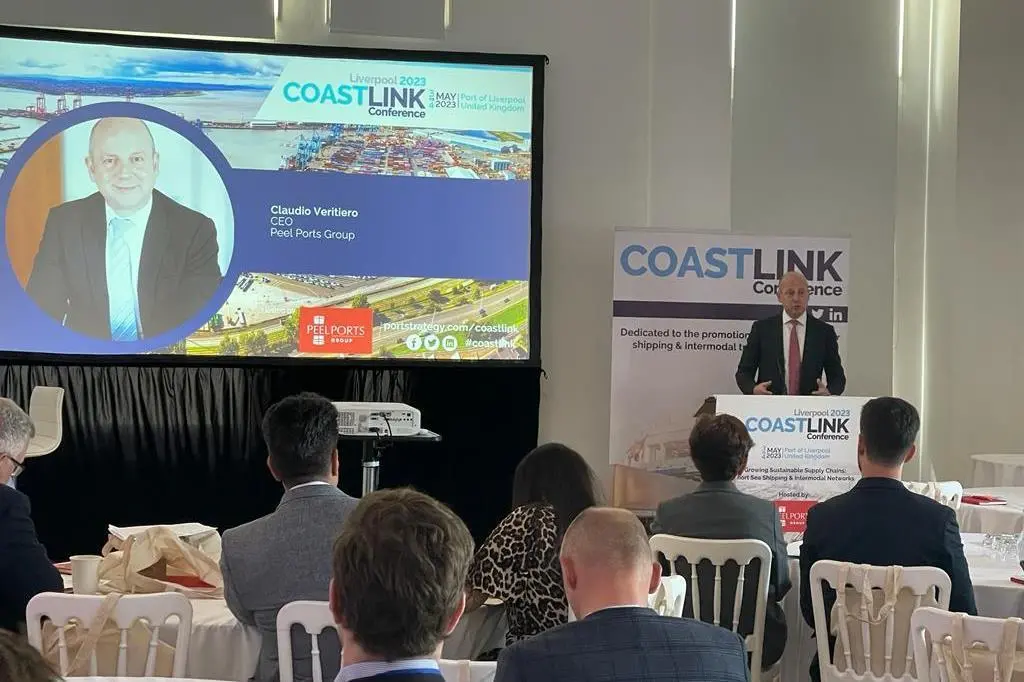
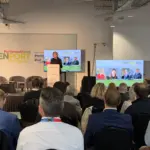
That was one of the take home messages from the 2023 Coastlink conference, which was held in May this year at Peel Ports Port of Liverpool.
It’s unsurprising that the main focus was on decarbonisation given that the pressure to decarbonise comes not only from current and future regulation but also from across the global supply chain – including industry, business, customers and end consumers.
”The industry is under huge pressure,” said Maurice Delattre, Area Manager, Port of Amsterdam International.
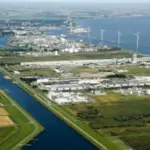
Amsterdam has been under extreme pressure to speed up its shift over from fossil fuel and transition to alternative fuels. The port has big ambitions to become a hub for alternative energy production, with 80 hectares earmarked for the development of bio/synthetic fuel and the circular economy,
“Why are we focusing on these activities? Because the key characteristics of our region mean an urgency to accelerate the energy transition,” he said.
Intermodal focus
This being Coastlink, there was also a focus on the intermodal transport networks through the ports that support the sector.
During his session, Geoff Lippitt, group commercial and strategy director, PD Ports, analysed how intermodal, shortsea shipping, ro-ro, lolo and last-mile delivery road haulage can create resilience and improve capacity for ports and operators.
“The problems of tomorrow have to be dealt with well in advance of them being on your immediate horizon. Ports are about coping with change. In the last 50 years, Teesport has seen the rise and fall of oil – exploration, oil from the North Sea and decommissioning; the rise and fall of steel, twice; offshore wind; the chemical industry fragmented; and the rise of container business, all as a result of the UK changing its markets.”
And he said, contrary to popular belief, these changes were not affected by Covid or Brexit but by market and global economic factors.
Rail was highlighted as a good way that a port can become more competitive.
Justin Atkin, UK & Ireland Rep for the Port of Antwerp-Bruges, told delegates that every berth at Antwerp is rail connected.
The other key focus is on inland waterway freight, with Antwerp-Bruges handling 230 weekly container barges to more than 90 destinations in six countries.
The panel sessions at the conference prompted some lively debate, especially surrounding the question whether government should mandate that goods only be delivered from their local regional hub port, making better use of transshipment.
The consensus was that though sometimes deregulation is good when government takes a relatively hands-off approach.
But government could do better though when it comes to the role of ports in regional economies and how you facilitate that. Port connectivity is a key area, which the government could do more around, for example.
Stephen Carr, Peel Ports Group Commercial Director, Stephen said that What the government should do is tax those elements of transport that are not socially good. ”A way of nudging the market to a solution instead of forcing the market to a solution.”
It was mooted that in the end the EU and the UK will end up adding carbon costs to the supply chain. That is why the industry should be making the effort to make the first and last mile more efficient, by taking the long haul on to rail and coastal shipping.
…………………………………………………………………………………………………………………………………………
From the port’s perspective
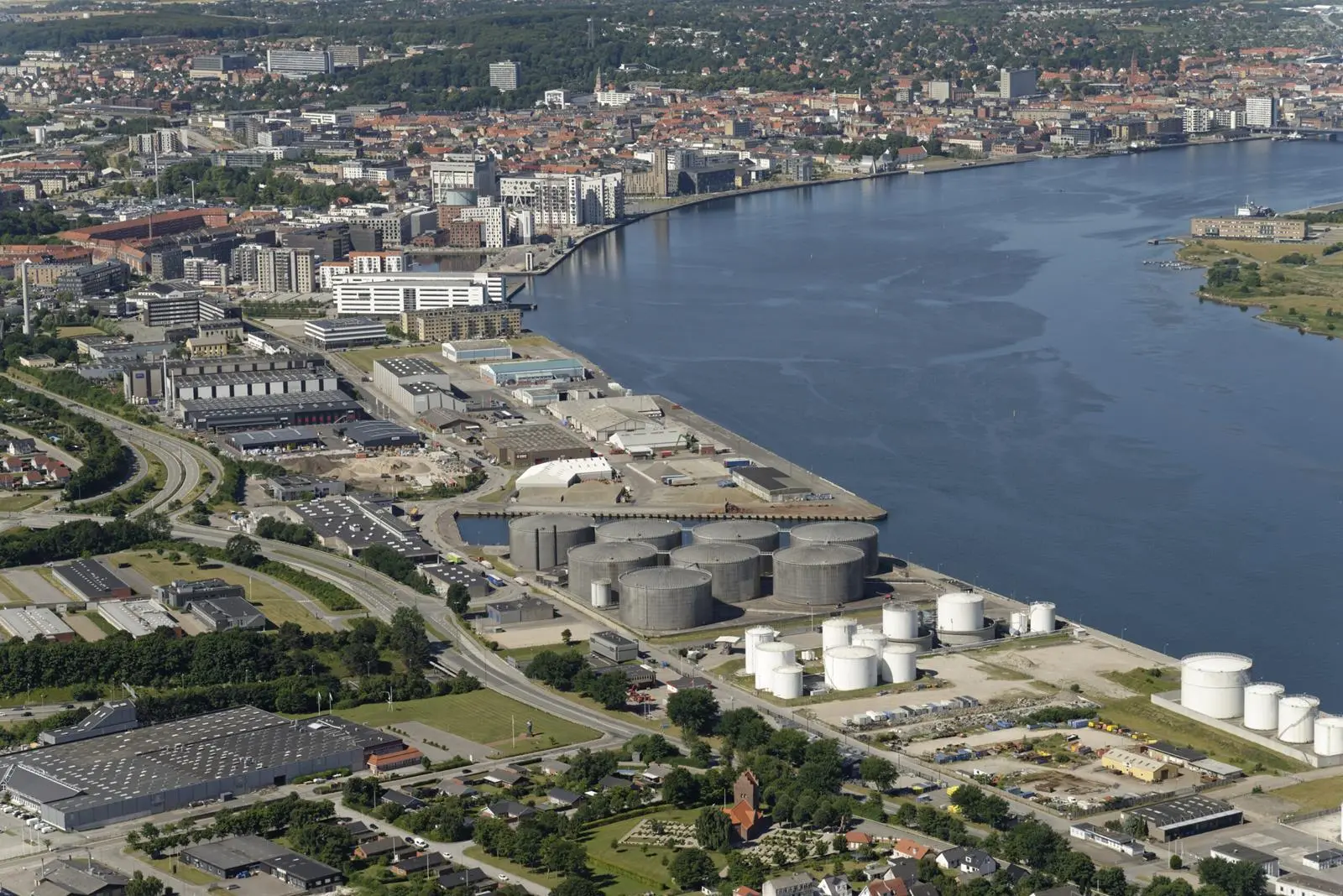
One of the stand out sessions from the first day was by Michael Rosenkilde Lind, senior commercial manager, Port of Aalborg.
In his session called ’Building a case for a greener transport alternative for smaller cargo volumes – Short Sea Shipping and intermodal cargo flow’, he was brutally honest about how it has been for his port entering the ro-ro business, a new segment for Aalborg.
”We want to be really honest about our findings and what we’re looking into and also about the issues we’re having opening this new route from Aalborg,” said Mr Rosenkilde Lind.
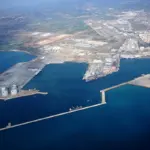
Aalborg is the biggest inland port and the third largest port in Denmark. It stretches out over 4.1m sq metres, so there is plenty of space to offer the new service. It’s also well connected to other ports in Norway and Sweden by ferries and it has a good rail connection into Europe.
Over the last few years the port has seen a gap in the ro-ro market grow and develop providing an oportunity for it to become a connecting port through and into Europe.
The port already has the terminals available and the right infrastructure, it also has the grants in place to set up a ro-ro service.
But now it just needs the confidence of the market – namely the shippers and the forwarders, to establish the new shortsea cargo route.
The challenge has been tryng to de-risk the route with the shipping lines who want a guarantee on investment. This is normally achieved by large production companies coming onboard with guaranteed volumes and time periods.
But in Aalborg, although there are multiple production companies, they are smaller ones, who cannot guarantee shipping volumes and put everything on bulk carriers. Plus, sometimes the shippers want to do what the forwarders are doing so there is a competition element involved. This is also true of road transport, with the highway sitting right next to the terminals.
All is not lost though. Mr Rosenkilde Lind said that everything is working in the port’s favour to establish the new route going forward.
“Everyone is looking for the next green solution,” he said. ”The government is really pressing manufacturers to choose greener solutions.”
Aalborg is also a partner in the EU Aegis project which sees it conducting regular analysis of its costs, ship movements, ro-ro and cargo streams.
The port has years of experience in analysing its cargo streams and has been using digitalisation to create interactive cargo flow maps which it can then use to create a business case to the shipping lines.
“The maps have shown us that there is a lot of market potential in the ro-ro market, but it is local,” he said. The main potential lies in Denmark, Sweden and Norway.
But the maps have also revealed that the biggest challenge will be getting boxes off the roads.But even this is swinging in the ports favour as most of the bridges between the major islands are toll roads and these costs are rising.
Added to this, there is the continued difficulty of getting lorry drivers and ever increasing pressure on manufacturers to lower their emissions, especially when they use third party logistics firms.
“The cargo flow and infrastructure is already there so the project doesn’t require much investment from the port and forwarder side. But the big job is to convince all the parties involved of the benefits in setting up the route.”
”We’re willing to take the calculated risk to set up this route, we just need a shipping line to take that calculated risk with us,” said Mr Rosenkilde Lind.
Related Articles
 ENERGY & TECHNOLOGY GREENPORT
 ALTERNATIVE FUELS GREENPORT
 ALTERNATIVE FUELS GREENPORT