![GreenPort[PortStrategy]](https://www.portstrategy.com/greenport/wp-content/uploads/sites/4/2026/09/GreenPortPortStrategy.svg)
Ports demand ETS revenue reform
Europe’s maritime sector is pressing Brussels to reform the Emissons Trading Scheme (ETS), warning rising compliance costs threaten port competitiveness and investment in decarbonisation.
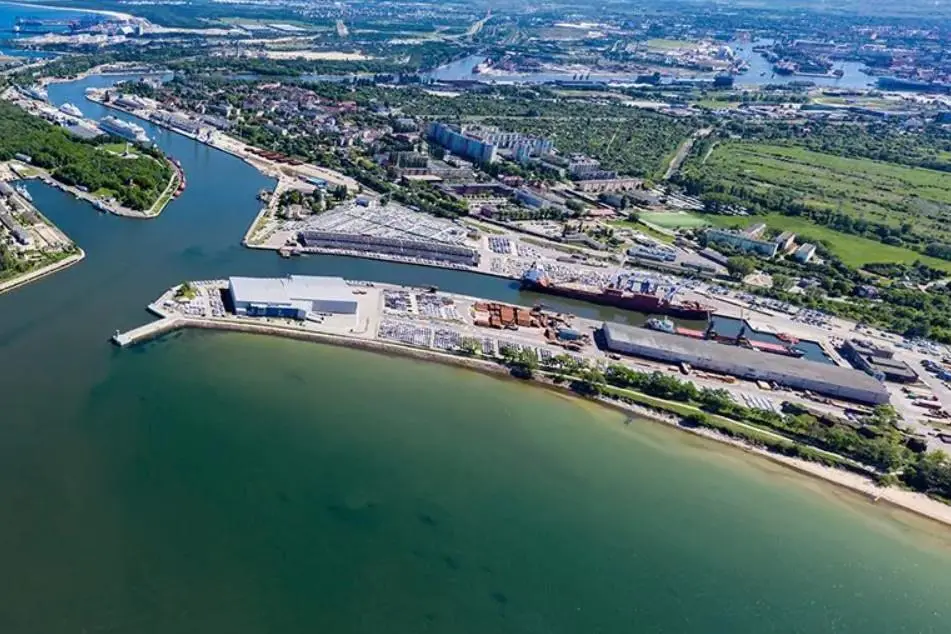
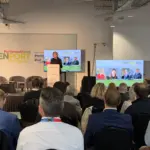
Representatives from shipping, seaports and energy experts in Poland are coordinating a joint industry position for the European Commission, arguing that ETS revenues must directly support alternative marine fuels and port infrastructure to enable a practical transition.
“Our duty is to maintain a high level of service for all carriers in maritime transport. For Polish ports to compete with other ports in Europe, necessary investments must be implemented, including those in decarbonisation. We hope they will be co-financed from external sources.
”One of these sources could be ETS revenues. Without proper financing for decarbonisation investments, European ports may lose competitiveness to ports located in countries with less restrictive regulations,” said Alan Aleksandrowicz, vice president for finance and security at the Port of Gdańsk Authority.
Undermining competitiveness
The coalition says the extension of the Emissons Trading Scheme to shipping has sharply increased operating costs for carriers and terminal operators.
With EUA prices at €60 to 70 per tonne of CO₂ and historical peaks above €100, every 100,000 tonnes of emissions can add up to €7 million annually, costs that ripple through port services, logistics and supply chains.
Industry stakeholders warn that these additional burdens risk carbon and business leakage, as operators consider relocating activity to non-EU ports with lighter regulatory frameworks. Such shifts could undermine European ports’ competitiveness and slow regional trade flows.
Although the ETS has generated more than €230 billion, only a limited share has been reinvested in transport decarbonisation.
Experts argue that at least 30 to 40% of proceeds should fund the development of alternative marine fuels including hydrogen and e-methanol, alongside shore power, bunkering and other critical port infrastructure.
Participants plan to internationalise the position and engage wider EU partners, aiming to present Brussels with a unified proposal that links predictable ETS rules with targeted funding to modernise ports and accelerate maritime decarbonisation while preserving competitiveness.
The initiative was launched by Mateusz Dziudziel, director of the fuel department at LOT Polish Airlines, supported by Żaneta Kłostowska, an expert leading work in the areas of technology, environment and innovation.
Related Articles
 ENERGY & TECHNOLOGY GREENPORT
 ALTERNATIVE FUELS GREENPORT
 ALTERNATIVE FUELS GREENPORT