![GreenPort[PortStrategy]](https://www.portstrategy.com/greenport/wp-content/uploads/sites/4/2026/09/GreenPortPortStrategy.svg)


Driving down crane emissions in the Americas
Konecranes has won an eight rubber-tired gantry (RTG) order for a new container terminal in Colombia to help it achieve its decarbonisation ambitions.
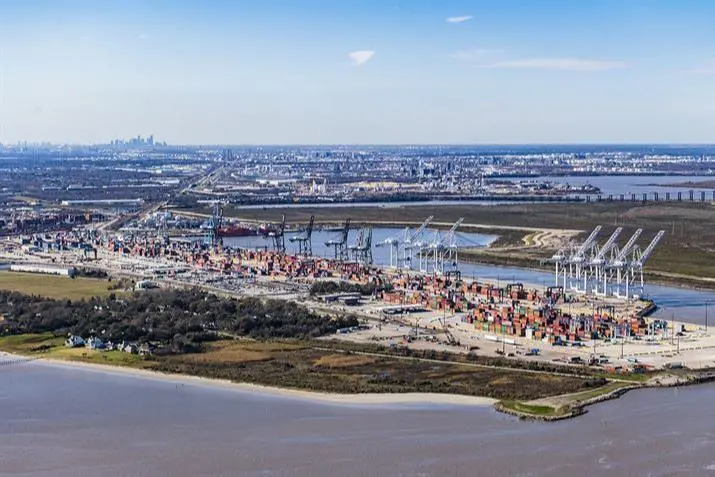
These RTG cranes will be delivered to the Puerto Antioquia terminal that will provide new export and import power for the regional economy of Antioquia and Colombia as a whole.
“The new RTGs will contribute to the successful launch of operations at the new Colombian container terminal,” sauid Neil Clegg, sales manager, Konecranes Port Solutions.
Fully-electric
The cranes were ordered by Puerto Bahia Colombia de Uraba, whose key shareholder is the CMA CGM Group.
They are fully electric, powered by cable reels connected to the local grid.
“Konecranes’ Ecolifting effort in the form of these electric, cable reel RTGs is a good fit with the CMA CGM Group’s ambition to accelerate the decarbonisation of port terminals on its path to reach Net Zero carbon by 2050 for all its operations,” Mr Clegg added.
This order comes on the back of another from Port Houston in Texas, USA.
The port has ordered five Konecranes hybrid RTGs for its Barbours Cut Container Terminal to support its long-term improvement programme covering channel development and land infrastructure investment.
Houston is continuing to hybridise its RTG container handling operations to meet growing container traffic in an eco-efficient way.
Its current RTG fleet consists of 116 Konecranes RTGs, of which 26 are hybrid RTGs. By early 2025, the hybrid RTG fleet will grow to 57 following this order and another one announced last October.
Konecranes work is heavily centred on what it calls its ’Ecolifting’ approach, or its continuous work to decrease the carbon footprint of its customers.
The approach includes everything from eco-optimising diesel drives, to hybridisation and fully electric fleets.
Related Articles
 ENERGY & TECHNOLOGY GREENPORT
 ENERGY & TECHNOLOGY GREENPORT
 PRODUCTS & SERVICES GREENPORT