![GreenPort[PortStrategy]](https://www.portstrategy.com/greenport/wp-content/uploads/sites/4/2026/09/GreenPortPortStrategy.svg)
EXCLUSIVE: Challenges and opportunities in implementing ESG strategies
GreenPort sits down for a Q&A with Jackie Spiteri, managing director, Sustainable ESG on Environmental, Social And Governance (ESG) strategy in the marine sector.
Q As the founder and managing director of SESG, you have a broad view of ESG strategy development across various sectors. What unique challenges and opportunities does the maritime industry face in implementing ESG strategies compared to other sectors?
A The maritime industry, with its unique operational characteristics and critical role in global trade, faces distinct challenges and opportunities in implementing ESG strategies compared to other sectors. One of the primary challenges is the complexity of international regulations and the need for global consensus on sustainability standards. Maritime operations span across jurisdictions, making uniformity in ESG related compliance more challenging than in sectors that operate within national boundaries.
The maritime sector is responsible for a significant portion of global greenhouse gas (GHG) emissions, driving the imperative for cleaner, more sustainable shipping methods. The transition to low-carbon technologies and fuels, while necessary, presents a substantial challenge due to the current infrastructure and investment requirements.
The maritime industry’s role in global supply chains positions it as a key player in promoting sustainability throughout the value chain. By implementing and demanding ESG standards, maritime companies can influence suppliers, customers, and partners to adopt greener practices, amplifying the sector’s impact on global sustainability.
The drive towards ESG also opens up new avenues for green financing in the maritime sector. As stakeholders increasingly prioritise sustainability, there’s a growing pool of finance directed towards projects and companies that demonstrate strong ESG credentials. This trend presents an opportunity for the maritime industry to access funds necessary for transitioning towards more sustainable operations.
While the maritime industry faces unique challenges in embedding ESG strategies, it also stands on the brink of significant opportunities. By embracing innovation and sustainability, the sector can lead in the global transition to a greener economy, securing not only environmental benefits but also operational efficiencies and new growth avenues through green finance.
Q Your recent projects have involved ESG risk and gap analysis against the new International Sustainability Standards Board (ISSB) reporting standards. Can you share some insights into common gaps you’ve identified in maritime projects and how companies can address these gaps?
A Our recent work supporting organisational readiness to comply with the ISSB IFRS S1 and S2 reporting standards within the maritime sector, has observed a range of common gaps around governance, climate risk and opportunity analysis and measuring performance.
Effective governance is the backbone of any successful ESG strategy, providing the structure and policies needed for accountability, transparency, and strategic alignment with ESG objectives.
An increasingly crucial aspect for many organisations is the assessment and management of climate risk. This encompasses both the physical risks associated with climate change and the transitional risks related to the shift towards a low-carbon economy. Despite its importance, many organisations in the sector have yet to fully integrate climate risk into their strategic planning and risk management frameworks.
While many companies have begun to adopt measures for addressing Scope 1 and 2 GHG emissions, through our work across a range of sectors has revealed significant gaps in measuring and addressing Scope 3 emissions, which are much harder to quantify and manage.
As stakeholders demand greater transparency and accountability, the need for independent assurance of ESG data is growing. Many organisations currently do not have their data independently assured, which can undermine the credibility of their ESG reporting.
These gaps highlight the varied levels of maturity across companies in addressing ESG criteria and underscore the complexity of implementing thorough and effective ESG strategies.
Addressing these gaps requires a concerted effort. By tackling these issues, companies in the maritime sector can enhance their ESG performance, position themselves to align with forthcoming reporting standards, and secure a favourable stance in the transition to a sustainable future.
Q The structuring of sustainability financing frameworks for ports and shipping lines is a crucial area of your work. Could you elaborate on what these frameworks typically entail and the impact they have on achieving sustainable development goals within the maritime sector?
A The structuring of green financing frameworks for ports and shipping lines represents a strategic endeavour to align investment flows with sustainable development goals in the maritime sector. These frameworks are designed to ensure that funds are directed towards projects and initiatives that have a positive environmental or social impact, such as reducing greenhouse gas emissions, addressing modern slavery and seafarer welfare, or mitigating adverse effects of activities on marine ecosystems.
By setting clear criteria for what constitutes a ‘green’ project, these frameworks provide a transparent mechanism for investors to assess the environmental credentials of their investments, fostering confidence and encouraging the flow of capital towards sustainable infrastructure and operations.
A key component of these frameworks is the emphasis on measurable benefits. This involves not only the identification of potential projects or sustainability targets, but also the establishment of rigorous methodologies and measuring performance and quantifying their impact.
The successful implementation of sustainability financing frameworks necessitates close collaboration between various stakeholders, including port authorities, financial institutions, shipping companies, and regulatory bodies. This collaborative approach ensures that the frameworks are not only ambitious in their sustainability goals, but also practical and achievable, taking into account the operational realities of port management and maritime logistics.
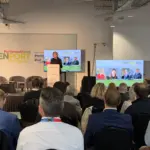
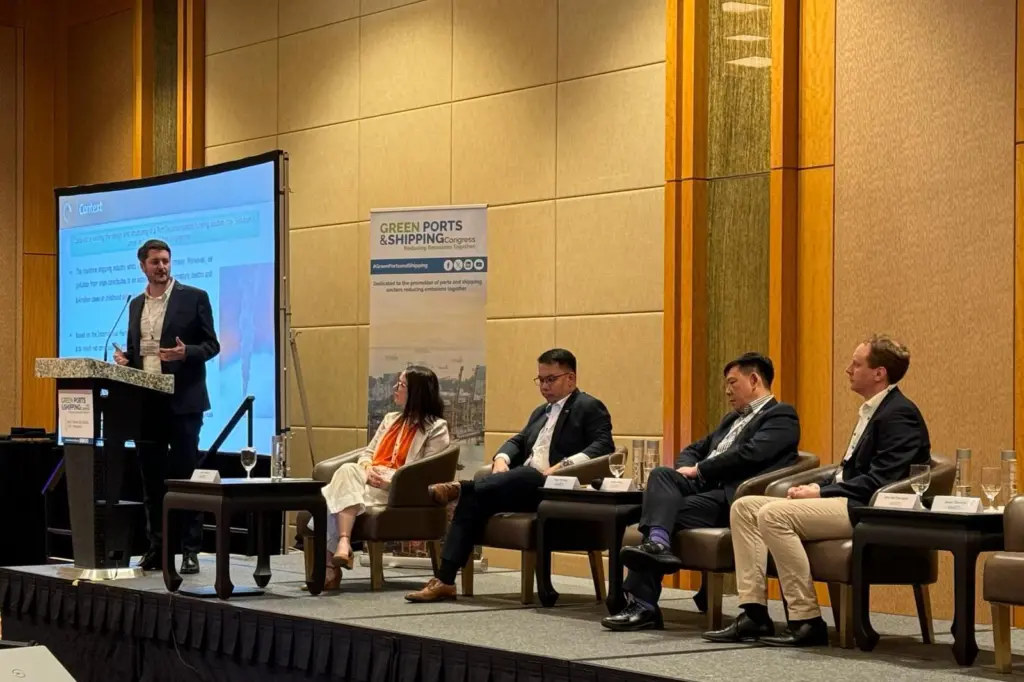
Q You recently facilitated the green financing panel at the Green Ports & Shipping Congress in Singapore. What were some of the highlights from the panel?
A The panel discussion at the Green Ports & Shipping Congress was incredibly insightful, focusing on the role of green finance in shaping the future of maritime sustainability.
We discussed innovative financial instruments such as green, sustainability-linked, and transition loans and bonds, highlighting their crucial role in funding decarbonisation efforts within the maritime sector. Expert insights from Pang Toh Wee, Eugene Wong, Jens Van Yperzeele, and Terry Tamminen provided practical strategies for integrating sustainability into maritime finance practices.
The panel also underscored the impact of frameworks like the ASEAN Taxonomy for Sustainable Finance, guiding green investments in the region and aligning financial flows with sustainable maritime development. Initiatives such as the Port Decarbonisation Fund were discussed as practical frameworks to mobilise resources towards sustainable maritime infrastructure and operations.
Overall, the panel showcased the opportunities and challenges in leveraging green finance to drive sustainable growth and achieve zero-carbon shipping goals in the maritime industry.
Q Looking forward, what emerging trends do you believe will shape the development and adoption of sustainable practices within the maritime industry? How should companies prepare to meet these new challenges and opportunities?
A As we look to the future, the landscape of sustainability within the maritime industry is poised for continued evolution, driven by a confluence of technological innovation, regulatory shifts, and changing investor priorities.
One emerging trend is the increasing focus on innovative financing mechanisms that incentivise sustainability, such as sustainability-linked loans and bonds, which tie the cost of capital to the achievement of predetermined sustainability targets. This trend not only aligns financial incentives with sustainable outcomes but also encourages companies to integrate sustainability into their core operations.
Another trend is the growing importance of transparency and accountability in sustainability reporting. The demand from investors, regulators, and stakeholders for reliable and standardised ESG data is pushing the maritime sector toward more rigorous disclosure practices. This is catalysed by the development of global standards, such as the Task Force on Climate-related Financial Disclosures (TCFD) recommendations, which are becoming de facto requirements for companies seeking to access green finance.
An emergent facet in the landscape is the emphasis on nature-related financial disclosures. As the maritime industry’s environmental impact extends beyond carbon emissions to include effects on marine ecosystems and biodiversity, the integration of nature-related risks and opportunities into financial reporting is gaining traction. Initiatives such as the Taskforce on Nature-related Financial Disclosures (TNFD) are setting the stage for frameworks that guide companies in reporting their dependencies and impacts on nature.
To effectively navigate these emerging trends, organisations should proactively adapt their strategies to embrace innovation, enhance transparency, and prioritise environmental stewardship.
Did you miss the event?
If you were unable to attend the 2024 GreenPorts and Shipping Congress you can still access the presentations and session recordings online
If you would like more information about conference downloads or any of our upcoming conferences, don’t hesitate to contact the conference team on +44 1329 825335 or email congress@greenport.com
Related Articles
 ALTERNATIVE FUELS GREENPORT
 ENERGY & TECHNOLOGY GREENPORT
 PROJECTS & INITIATIVES GREENPORT