![GreenPort[PortStrategy]](https://www.portstrategy.com/greenport/wp-content/uploads/sites/4/2026/09/GreenPortPortStrategy.svg)

EXCLUSIVE: Kenya forges ahead with low emission plan
Kenya has reiterated its commitment to reduction of emissions from ships while they are docked at the national ports, especially at the Indian Ocean port of Mombasa, writes Shem Oirere.
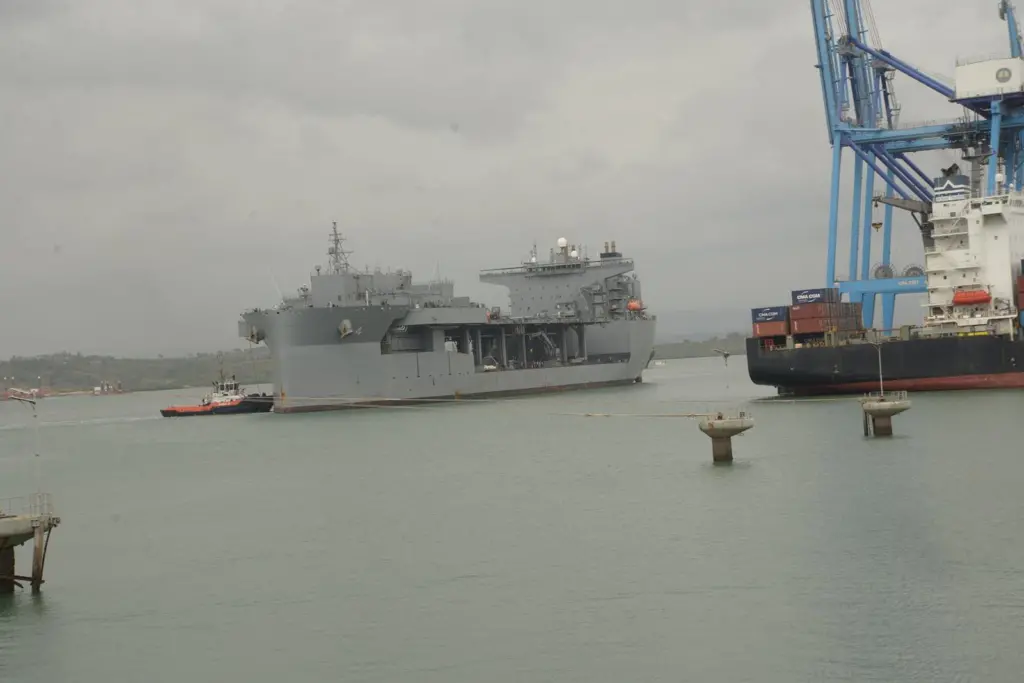
This comes even as this goal faces the challenges of technology transfer, inadequate skills and limited access to climate financing.
Mr Hassan Joho, Kenya’s Cabinet Secretary for Mining, Blue Economy and Maritime Affairs said the government is now focused on “leveraging innovation and emerging green technologies in the shipping sector” as the East Africa country strives to achieve docked ship emission levels envisaged in the 2023 IMO greenhouse gas (GHG) Strategy.
“We must champion policies that support green shipping, including alternative fuels, energy-efficient vessel designs and digital solutions to optimise maritime logistics,” the minister said during this year’s regional workshop on the implementation of the strategy and the green transition of shipping in Africa.
Tough targets
The 2023 IMO GHG Strategy targets among other goals, the reduction in carbon intensity of international shipping as an average across international shipping by at least 40% by 2030.
It also has the long-term goal of increasing reliance on zero or near-zero GHG emission technologies, fuels and/or energy sources to at least 5% of the total energy consumption with a target of 10% by 2030.
The workshop, which brought together delegates from the IMO registered member states, was held on the background of intensified efforts by Kenya’s ports operator, Kenya Ports Authority (KPA) to implement measures to reduce carbon emission levels especially by docked vessels/ships at the international port of Mombasa.
Mombasa, one of the global gateways involved in the implementation of the 2023 IMO GHG Strategy, is not only targeting the reduction of emissions from vessels/ships but also the scaling up of the use of cleaner alternative fuels that meet or exceed emissions control area requirements as determined by KPA.
For instance, KPA, with government backing is campaigning to expand the installation of shore power sources at the port of Mombasa that would enable docked vessels to turn off engines and connect to shore electricity sources in the medium term.
Currently, KPA is implementing a pilot project at Berth 1 of the Mombasa Port that would introduce shore power to reduce ship emissions as part of the port operator’s commitment to green initiatives.
Furthermore, Kenya through KPA is backing the enactment and enforcement of regulations that reduces the speed for all vessels close to port of Mombasa to reduce the intensity of emissions.
This drive towards low carbon emission levels at Kenya’s ports for a period of between one to 15 years, is also expected to create “green jobs, attract investments and build resilient economies while addressing the pressing challenges of climate change,” according to Joho.
Green partnerships
Some of the organisations agencies working towards Kenya’s low shipping emissions in Kenya include KPA, Kenya Maritime Agency, the International Maritime Organization, UNEP, shipping companies and signatories to the Northern Corridor Transit and Transport Agreement (NCTTA).
The NCTTA is a multilateral treaty to facilitate transit cargo between the port of Mombasa and landlocked countries of Burundi, Democratic Republic of Congo, Rwanda, Uganda and South Sudan.
“Our ports, shipping routes and maritime industries are integral to global trade and must evolve in alignment with the net-zero emissions target by 2050,” said Mr Joho.
Kenya is among African countries seeking for a quick but sustainable fix to the challenge shipping emissions as well as exploring new socio-economic opportunities available in the decarbonization drive of the continent’s maritime industry.
However, Kenya and other African countries have to address key constraints in their push for a successful green transition of the region’s shipping industry such as the limited access to financing.
Mr Joho said many African countries “struggle to mobilise the resources needed to invest in green infrastructure and technology.”
In fact, most African countries are said to have ratified the Paris Agreement with ambitious nationally determined contributions requiring up to US$3 trillion to reduce their national emissions and adapt to the impacts of climate change according to previous reports.
But Mr Joho said that the financial backing is also needed to cater for the “high cost of alternative fuels and the lack of regional production facilities pose constraints to their widespread adoption.”
Kenya has also identified regulatory and institutional capacity gaps that according to Mr Joho: “Further complicate the implementation of international commitments, hence the call for a continental and global concerted effort in strengthening the diverse governance frameworks.”
Related Articles
 ALTERNATIVE FUELS GREENPORT
 ENERGY & TECHNOLOGY GREENPORT
 PROJECTS & INITIATIVES GREENPORT