




EXCLUSIVE: South Africa’s renewable drive gains momentum
South Africa’s state-owned port operator, Transnet National Ports Authority (TNPA) has unveiled more cleaner and cheaper energy projects as it works towards climate change, mitigation and adaptation across its operations, writes Shem Oirere
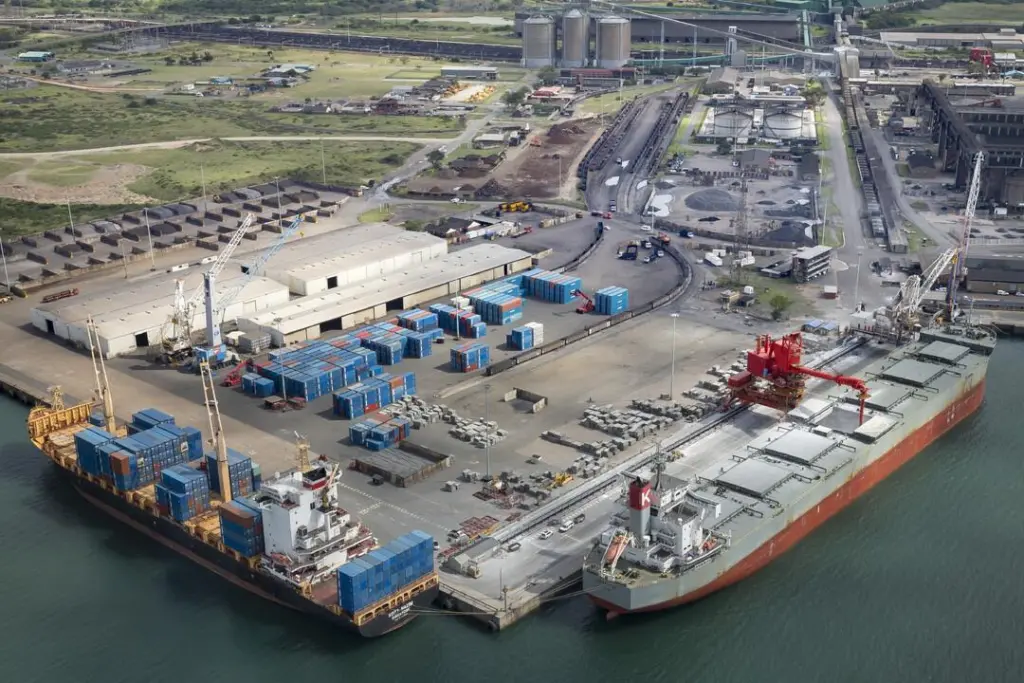
The projects across across its eight commercial seaports in the country. are also deliberate measures by TNPA, more like other state-owned enterprises in South Africa to boost the country’s delayed Energy Action Plan and the Just Energy Transition Investment Plan initially slated for implementation between 2023 and 2027.
“In response to its exposure to a range of climate change risks, [we are] leveraging opportunities offered by green and cleaner options such as renewable energy as part of the transition to a lower carbon-intensive business,” TNPA said.
Renewable focus
In June 2024, TNPA advertised for bids to design, construct and operate two solar-powered seawater desalination plants with an estimated daily production of 0.8 megalitres (ml) and 0.5 ml for the ports of Elizabeth, which is in the city of Port Elizabeth, in the Eastern Cape, and Ngqura, a deepwater port on the east coast of the country.
The port operator, which runs the eight ports of Richards Bay, Durban, Saldanha, Cape Town, Port Elizabeth, East London, Mossel Bay and Ngqura, has also sought bidders for the design, construction and operation of a 7 MW hybrid renewable energy plant that has a battery energy storage system of 6 MWh at the Port of Ngqura to “assist in decarbonising port operations and improve the reliability and availability of supply.”
TNPA said both the seawater desalination plants and the clean energy projects will help align the company’s strategic plan “to enhance sustainability in response to climate change and reduce energy costs across its commercial ports.”
The operator’s proposed projects at Port Elizabeth and Ngqura were preceded by the commencement of construction of its first ZAR60 million water desalination plant at the Port of East London, South Africa’s only river port, two months earlier to improve the reliability of freshwater supply to users at the port.
TNPA awarded a seven-year construct and operate contract for the 0.5ml per day solar-powered water desalination plant to a joint venture of Norland Civil Engineers and Contractors and Impact Water Solutions (Pty) Ltd, trading as Sun Water East London.
The project is in line with the Ports Authority’s strategic plan of increasing its utilities supply resilience and ensuring security of utilities supply by 2029,” she said.
National plan
There are other projects on the horizon too. At the East London port, TNPA has recently put out a tender for a developer to design, build, test, commission, operate and maintain the 3 MW photovoltaic with a battery energy storage system for a period of seven years (August 2024).
The plant’s construction will include a grid-tied carport solar PV and rooftop plant system to generate the required capacity, TNPA said adding the project would boost the push by the port operator to “manage energy costs and reduce emissions by diversifying its energy mix through alternative energy sources and renewable energy.”
In the long term, TNPA hopes to develop at least 100MW of renewable energy support across its eight commercial seaports.
It said it is actively working “towards climate change resilience, mitigation, and adaptation by deploying cleaner and cheaper energy solutions, in line with the Carbon Neutral Government Programme, which requires public entities to be carbon neutral by 2050, and the International Maritime Organisation (IMO) strategy which advances safer economies for net zero emissions.”
TNPA is one of the state-owned enterprises that has been incorporated into South Africa’s overall long-term energy governance and climate resilience programme.
The government is working to boost the drive to shift from fossil fuels to more cleaner fuels for a better environmental and health status of the country, as well as in the creation of more new and better green jobs.
Related Articles
 ENERGY & TECHNOLOGY GREENPORT
 NEWS GREENPORT
 PROJECTS & INITIATIVES GREENPORT