![GreenPort[PortStrategy]](https://www.portstrategy.com/greenport/wp-content/uploads/sites/4/2026/09/GreenPortPortStrategy.svg)
Why achieving net zero means leaving no stone unturned
While technology and shipping has come on leaps and bounds, enabling solutions that transform the sustainability of ports and their progress to net zero emissions still have much work to be done, writes Dr Maria Brucoli, head of research and strategic innovation at SSE Energy Solutions.
Luxury electric vehicles rolling down the high street and car chargers popping up in garage forecourts have made EVs the public face of transport decarbonisation.
But the enormous scale of the net-zero challenge means that every step of the UK’s supply chain needs to be assessed for opportunities in sustainability. The development of green ports are a critical part of the Net-Zero plan.
In 2020 UK domestic maritime vessels contributed around 5% of the UK’s domestic greenhouse gas emissions – more than trains and buses combined. In order to meet our decarbonisation objectives by the middle of the century, marine shipping and its infrastructure must transition to low carbon energy sources.
Tackling carbon emissions
The long average lifespan of vessels in the shipping sector means that now is the time for action. With operators carefully monitoring their total life cycle costs, ships last on average between 20 and 50 years.
With 2050 targets in mind, zero-emission ships will need to start being deployed by 2025 to optimise investment. Importantly, tackling carbon emissions in the marine sector means much more than just adopting zero-emissions vessels.
The latest assessments for carbon emissions for the sector shows that 5.3 million tonnes of carbon dioxide equivalent was emitted in 2020. While this data measures greenhouse gas emissions from coastal shipping and fishing vessels, as well as inland waterway ships and leisure craft, it doesn’t include the considerable other GHG contributions from the equipment in ports, maritime business service providers, or other shoreside infrastructure.
Green maritime transport was identified as a key pillar for development in the UK Government’s ‘Ten Point Plan for a Green Industrial Revolution’ in November 2020. This intention was reaffirmed at Cop26 in Glasgow in 2021, as the UK became a signatory to the Clydebank Declaration, outlining the ambition to develop zero-emission shipping routes between two ports, called ‘green shipping corridors’.
These targets dovetail with the UK’s ‘Clean Maritime Plan’ which aims to achieve net zero in the shipping sector and to position the country as a global leader in clean shipping by 2050.
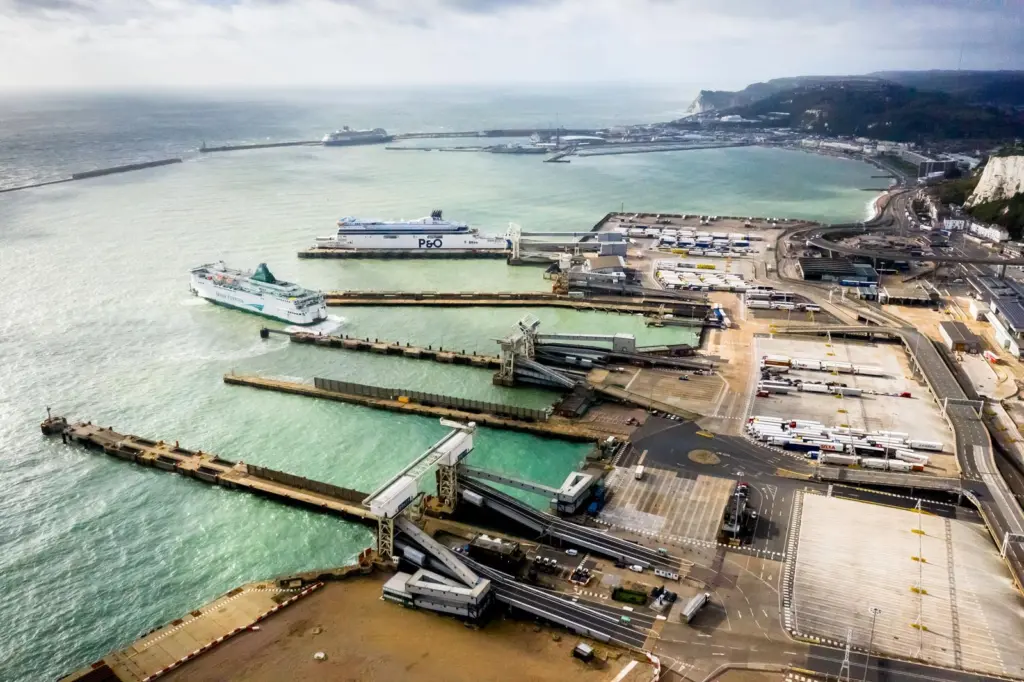
In September 2022, Green Corridor Short Straits (GCSS) – a consortium of Port of Dover, University of Kent, SSE and several others – won funding from the Department of Transport to create a zero-carbon trade route between Dover and Calais/Dunkirk.
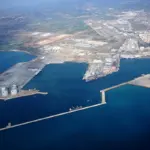
Port of Dover is the perfect candidate to lead the UK’s efforts on port decarbonisation as it forms a crucial link in Britain’s supply chain, with more than 2 million HGVs passing through the port each year. The Port of Dover is the busiest ferry port in the country and bears responsibility for a third of the UK’s trade with the EU, and nearly two-thirds of the ferry traffic to the EU.
Supply chain analysis
Port of Dover could prove critical to the UK’s ability to keep pace with the rapid growth of green port initiatives and opportunities around the world. For instance, Cop27 saw the US and Norway launch an international partnership called the Green Shipping Challenge which aims to decarbonise the marine industry – with the US earmarking more than US$700 million for the effort. Similarly, other key maritime nations, like South Korea and Sweden, are making significant strides in incentivising the domestic decarbonisation of this sector.
Back in the UK, key partners of the GCSS consortium have begun the task of identifying the energy infrastructure needs of the entire Port of Dover – no easy feat. An increase in electrification at the facility will require a thorough understanding of how the facility is powered and the potential impact any high energy requirements could have on nearby power lines and grid connections.
In addition to analysing the full supply chain and variable energy pathways for marine and landside vessels for the port, the GCSS consortium will examine relevant regulations and policy to reveal potential gaps that might hinder future development of green corridors.
The ultimate goal of the consortium is to develop a Green Corridor business case and route map that can provide a model of implementation at port sites throughout the country to increase use of zero-emission vehicles, vessels and landside equipment. This will have the added benefit of attracting private sector investment.
Future-proofing energy needs
SSE has recently undertaken several projects to design and install power infrastructure at new logistics sites across the UK. One of the key tasks at each of those sites, just like the Green Corridor Short Straits initiative, is to future-proof the facilities for further development.
With green marine systems still in their early stages, one of the key objectives of the GCSS consortium is to make sure that energy infrastructure put in place has the flexibility to accommodate a range of user needs over the coming decade. As we continue to decarbonise industry, business and society, this will include elements like new connections, increased capacities and a range of evolving power-generation sources.
SSE Energy Solutions will work closely with fellow consortium members to define the shoreside energy supply for the Port of Dover project, keeping in mind the key objectives to produce a sound business case for the green corridor, and one that can serve as a model for implementation at other ports.
It is vital to view the decarbonisation of ports as a holistic action and this is where taking a ‘whole system approach’ is invaluable. Expertise in all a variety of key areas – from energy generation to EV charging and the underlying power infrastructure, through to optimisation and battery storage systems – will be an essential contribution from the various consortium partners involved.
Consider, for example, drayage – the short distance movements of freight originating or arriving at a port, from port to yard, yard to warehouse, warehouse to HGV. Drayage is a small but crucial aspect of the whole supply chain and its efficiency dictates the success of processes we now see as standard, like two-day shipping.
Before freight ever reaches a renewables-powered ship, we want to see that it’s being processed at an energy-optimised smart warehouse, with a private wire grid, fed by local wind turbines and solar panels. That it’s then transported from warehouse to ship by electric vehicles, manned or unmanned. That it’s loaded aboard by zero-emission electric cranes. The granular list of opportunities for decarbonisation are practically endless.
Success beyond Dover
Achieving net-zero carbon emissions by 2050 means leaving no stone in the supply chain unturned. The critical significance of the Port of Dover as a linchpin in the UK’s trade means that any deliberate reduction in throughput to meet emissions targets would mean a massive imposition on the supply chain. The Port of Dover and other key channels in the marine sector will need to adapt to overcome.
The benefits of decarbonisation in the Port of Dover are many and diverse. Cost savings from reduced fuel consumption. Increased energy efficiency. Strengthened competitive advantage in a marketplace that increasingly demands sustainable operations. The port’s sustainable transformation will also help improve regional air quality for workers, businesses and nearby communities.
The SSE team is thrilled to work alongside our consortium partners on this ambitious GCSS project, to share our expertise and whole systems approach to support decarbonisation and to contribute to cleaner air over the cliffs of Dover. Success in this collaborative effort doesn’t just mean a greener port on The Channel, but also learnings and partnerships that can ripple throughout the supply chain, the country and across the seas.
Related Articles
 ALTERNATIVE FUELS GREENPORT
 ENERGY & TECHNOLOGY GREENPORT
 PROJECTS & INITIATIVES GREENPORT