



Paving the way for green methanol corridors
Opportunities are abound to lease port areas for sustainable methanol production and secure new income streams, writes Gregory Dolan, CEO, The Methanol Institute
Ports are vital to shipping’s energy transition and their role in a net carbon neutral future is set to grow as more of the fuels needed to support a low carbon industry are produced in port locations.
The much-touted ‘green corridor’ concept is founded on the availability of low and carbon-neutral fuels at set points in the global logistic chain, giving owners confidence that the fuels they need will be available to bunker their vessels.
The ability of the industry to achieve low carbon operations is a function of clean fuel production and much of the discussion reflects the chicken and egg status of fuel availability. Demand for fuels including methanol is rapidly increasing as shipowners order more vessels compatible with the liquid alcohol fuel, the most recent being COSCO’s order for 12 24,000 teu methanol dual-fuel container ships.
While conventional methanol produced from natural gas is widely available at more than 100 of the world’s leading ports, the production of renewable products is currently low.
Key locations
Ports hold the key to providing the locations, the facilities and in some cases the carbon sources that could be used to create a sustainable supply of marine fuel. With the right policy signals and investment from public and private sources, they could become hubs for decarbonisation beyond conventional diesel fuel bunkering.
Ports need to achieve several goals; reduce emissions across their port complex and develop critical services that meet new demand for cleaner fuels while creating long term employment and income.
Alongside cargo handling and distribution this will increasingly include production sites for renewable fuels using electricity produced from offshore wind and feedstock sources such as municipal solid waste to create clean fuel.
Such projects reflect and expand on the regional role that ports play in their local economies, providing employment into the logistics chain and in supporting the local workforce as well as related manufacturing and skills.
Projects like Bia Energy Operating Company’s plans for a US$550m blue methanol production plant at the Port of Caddo-Bossier in Shreveport, Louisiana would create 75 direct, high skilled jobs and would result in 390 indirect jobs, according to the local development agency. Nearly 350 construction jobs would be created at peak construction for the project.
At the other end of the scale, plans by a consortium including AP Moller-Maersk will see the construction of an industrial-scale production facility for sustainable road, maritime and jet fuels in the Copenhagen municipality to include e-methanol. Bringing together the demand and supply side of the equation the partners believe it could result in one of the world’s largest electrolyser and sustainable fuel production facilities and in the process establish an entirely new local industry.
The model applies regardless of the location or application. Denmark’s tiny Hanstholm Harbor plans to combine solar and wind energy plants with a Power-to-X facility for the production of 130,000 m2 of e-methanol and hydrogen in the port’s hinterland.
Plans for the proposed plant include a production capability of 530,000 metric tonnes of methanol annually, using natural gas as a feedstock with carbon capture, reducing CO2 emissions by more than 90% compared to conventional methanol plants.
Danish renewable energy developer European Energy has signed with the Port of Aalborg to option a 25-hectare site as the location for a new 120 MW electrolysis and associated e-methanol plant. The plant will produce around 75,000 metric tonnes of e-methanol per year and will be approximately twice the size of the plant European Energy is currently in the process of establishing in Aabenraa in Southern Denmark.
Renewable energy
Some of Europe’s most strategic ports have identified the opportunity of creating methanol from renewable electricity or waste sources.
Gothenburg Port Authority has published Methanol operating regulations for ship-to-ship bunkering and has ambitions to create a value chain that would make it the primary bunkering hub for renewable methanol in Northern Europe.
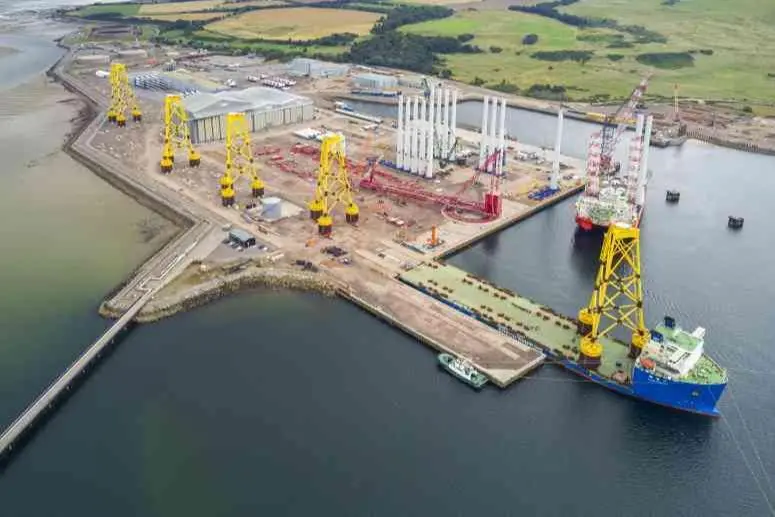
UK port operator Global Energy Group has partnered with Swiss energy company Proman to develop a renewable power to methanol plant in Scotland’s Port of Nigg. The so-called Cromarty Clean Fuels Project will utilise local industrial sources of captured carbon dioxide and harness excess wind power to produce green methanol.
The Port of Antwerp-Bruges has joined a consortium including the investment company of the Flemish Government to produce sustainable methanol, with a demonstration plant scheduled to start this year and produce 8,000 tonnes of sustainable methanol annually.
Also in Belgium, North-C-Hydrogen is the first large scale demonstrator project of North-CCU-Hub, consisting of a 63 MW electrolyser plant drawing renewable energy from offshore wind to create green hydrogen and a broad range of e-molecules including Methanol.
The Port of Rotterdam and GIDARA Energy have joined forces to create an advanced biofuels facility which will convert non-recyclable waste into sustainable methanol, using a site provided by the port. Advanced Methanol Rotterdam will achieve a reduction of 350,000 tons of GHG emissions per year, producing approximately 90,000 tonnes of renewable methanol yearly by converting 180,000 tonnes of local non-recyclable waste that is currently being incinerated.
GIDARA’s Advanced Methanol Amsterdam is located in the Port of Amsterdam’s Biopark, a development location for producers of renewable fuels. The facility will produce an average of 87,500 tons of advanced methanol per year by converting non-recyclable waste equivalent to that of 290,000 households yearly, which otherwise could be landfilled or incinerated.
Many of these projects include member companies of the Methanol Institute, which serves as the trade association for the global methanol industry. Traditional methanol producers and new market players are partnering with ports to expand the availability of low carbon and net carbon neutral methanol for the maritime industry.
These and other projects form the ends of a chain that will ultimately span the world’s shipping lanes. Applying the Green Corridor concept for these new fuels will enable owners to make fleet renewal decisions based on fuel availability. It allows ports to plan for future investments and enables policymakers to send clear signals to the market. Ports are indispensable to shipping – and will play a pivotal role in its decarbonisation.
………………………………………………………………………………………………………………………….
Methanol bunkering capacity growth picks up speed
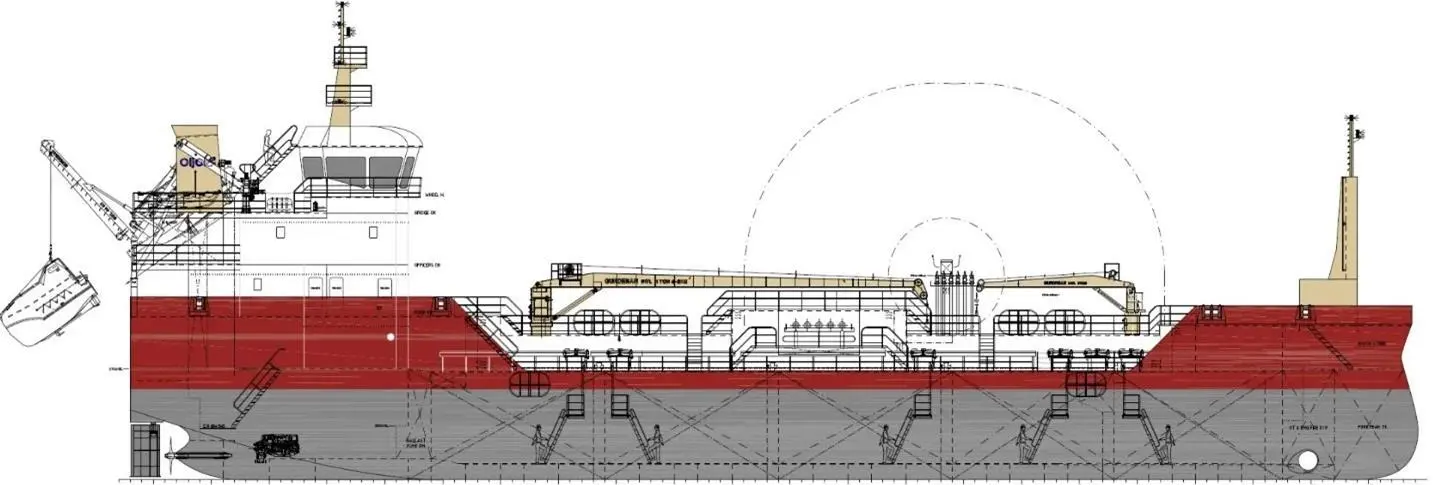
The importance of port-based bunkering capacity to the energy transition has been underlined by two recent project announcements. In November 2022, Swedish shipping company OljOla Stena Oil and Stena Teknik unveiled a joint venture to build a chemical tanker designed to become one of the first dedicated vessels for methanol bunkering.
Stena Oil and OljOla Shipping will expand their fleet of three bunker tankers with the new vessel which is designed to meet the needs of the bunker supply market in the North European region.
The vessel, which will be operated by Stena Oil has been designed by Naval Architect Kuzey and will be built by GENKA Shipbuilding in Tuzla, Turkey.
The vessel is a twin screw oil and chemical tanker with two main engines and three diesel generators, all equipped with selective catalytic reduction technology for Tier III NOx regulation compliance. The companies say that the vessel design and specifications have been upgraded to match and exceed the operational requirements for the North European region.
The bunker tanker employs diesel-electric propulsion and features a hull design that enables the vessel to move twice the amount of cargo on the same energy consumption compared to older vessels in the OljOla fleet.
Meanwhile, in Ulsan, South Korea, classification society Korean Register and Ulsan Port Authority have signed an MoU to support methanol-fuelled shipping and establish the South Korean port as a low-carbon, eco-friendly energy hub.
The partners say the agreement was made in response to the low-carbon energy transition underway in the shipping and port industries.
It reflects the growing number of dual fuel methanol vessels being ordered by international shipping companies for construction in South Korea. In October 2022, South Korean shipping company KSS Marine took delivery of the country’s first methanol powered vessel, the 50,000 dwt product tanker Savonetta Sun, the 18th methanol-capable tanker to join the Methanex Waterfront Shipping fleet.
Waterfront Shipping was the first to load and/or demonstrate methanol bunkering at ports around the world where they don’t have methanol production including in Ulsan and Onsan, South Korea; Houston, USA; Taicang, China and Rotterdam, The Netherlands.
Korean Register and Ulsan Port Authority will collaborate on regulatory reforms, regulation of methanol-fuelled ships and methanol bunkering, utilizing independent tank terminals in Ulsan as methanol storage facilities, testing methanol bunkering at Ulsan port and building methanol supply infrastructure in Korean ports.
Meanwhile Singapore, the world’s largest bunker hub, is also evaluating methanol as fuel, with Danish company Maersk Oil Trading planning to trial ship-to-ship methanol bunkering at the port during the first half of 2023, in a consortium with Japanese trading house Mitsui and classification society ABS.
Related Articles
 ALTERNATIVE FUELS GREENPORT
 ENERGY & TECHNOLOGY GREENPORT
 ENERGY & TECHNOLOGY GREENPORT