






Polish ports monitor air pollution
Port authorities in the neighbouring Polish port cities of Gdansk and Gdynia have been taking a range of measures in the fight against air pollution. This has included installing an effective air quality monitoring system to help aid policy makers in tackling the problem of air pollution in the area.
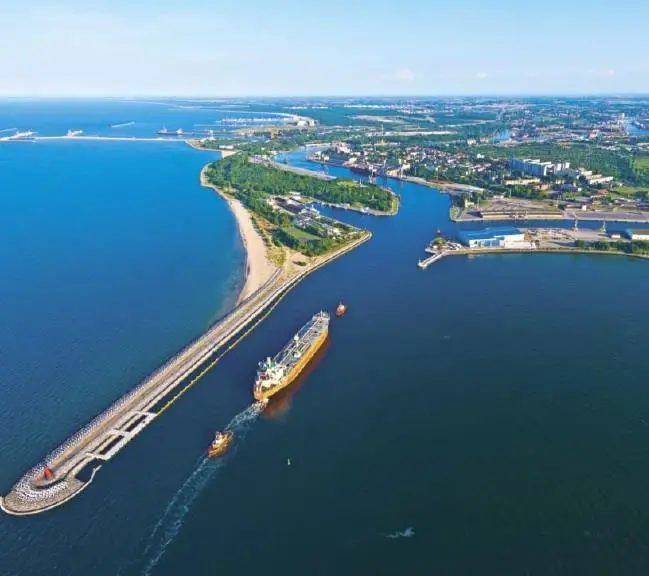
In 2017, the Gdansk port participated in the Space3ac acceleration programme, with the goal of ‘Designing and implementing a sensor/ detector system for the measurement of noise dust and odor emissions in critical points of the Port’.
A small group of friends established a startup called SeaData in November 2017. SeaData, together with another rival startup Feature Forest, took part in the Space3ac acceleration programme. With SeaData, the company installed a network of monitoring system and devices throughout the Port of Gdansk.
Sea Data’s technological solution for the Port of Gdansk offered a relatively cheap, end-to-end solution for the control of particulate matter concentrations in the Port. The devices used are called YetiBoxes and are fitted with sensors to detect PM (particulate matter), specifically PM10 and PM2.5. These devices continuously collect data from several places located in the Port and send them to the YetiSense analytical system. In the system the data is displayed on maps and diagrams, collected into reports and stored in an archive. Apart from data visualisation, YetiSense includes additional applications for data comparison, weather forecast and customisable reports generation. YetiSense informs the Port about the exceedance of allowable levels and delivers regular data reports.
Because of SeaData’s performance, in July 2018, the Port of Gdansk signed a contract with SeaData for its pollution monitoring and analysis services.
Tackling a new problem
During the summer of 2018, the nearby city of Gdynia was experiencing the problem of intensive coal dusting, caused by coal stored and handled in the Port of Gdynia.
In response to increasing public pressure, Gdynia City Council and the port authority took action. Apart from applying a range of prevention measures, including the sprinkling of coal piles with water and cellulose (to prevent dusting), they contacted SeaData.
This resulted in SeaData being awarded a contract with Gdynia, which included the installation of the YetiBox devices and implementation of YetiSense system. In addition, SeaData included a special application for the Port of Gdynia project. This new application is based on the meteorological conditions, and informs the port’s decision makers about the predicted risk of dusting and whether the high pollution present in the area might be caused by weather. The air pollution modelling included the effects associated with a temperature inversion, wind speed, insolation, cloud coverage, air pressure and precipitation.
Overall, thanks to another application which compares the data from different YetiBoxes and the risk assessment tool, which shows other factors which might cause the high air pollution, it is possible to quickly assess whether dangerous situations are arising in the port. Later this tool was adjusted to meet the needs of other clients.
Updates and future plans
In July 2019, the ports of Gdańsk and Gdynia extended their contracts with SeaData. In addition, in October 2019, SeaData started working with a new client, its first international customer, the Liepaja Special Economic Zone in Latvia.
At present, SeaData offers the measurement of PM10, PM100, PM2.5 and noise. Although its devices are not certified by any recognised environmental agency, SeaData is sure that the data they collect are reliable. This opinion is based on over two years of data collection and analysis, daily comparison of measured values with the Polish Environmental Agency air quality monitoring stations located nearby, along with a range of scientific papers focused on methods of cheap and reliable air pollution monitoring.
Both the YetiBoxes and the YetiSense system are constantly being improved based on the client’s suggestion and daily tests. Recently, the company implemented a humidity correction for measurements and changed the design of offered devices to make them more resistant to weather conditions. The predictions of the risk assessment tool included in the YetiSense system are processed, analysed and validated daily.
In January 2020, SeaData launched a new version of its monitoring systems, which all of its clients will test. Apart from the YetiBoxes, SeaData’s analytical systems also include data from Polish National Environment Agency stations (Główny Inspektorat Ochrony Środowiska), the TriCity TriStar system, and the University of Warsaw numerical weather prediction models.
Apology – In the Autumn 2018 issue of GreenPort, this Europe Viewpoint article stated that IoT start-up Feature Forest had partnered with the Port of Gdansk. This was incorrect and this article has been revised to reflect this inaccuracy.
Related Articles
 ALTERNATIVE FUELS GREENPORT
 NEWS
NEWS