

Rail operations help green new terminal
Emissions-cutting rail transport will play a major role in the operations of a new transshipment terminal soon to be operational in Sweden.
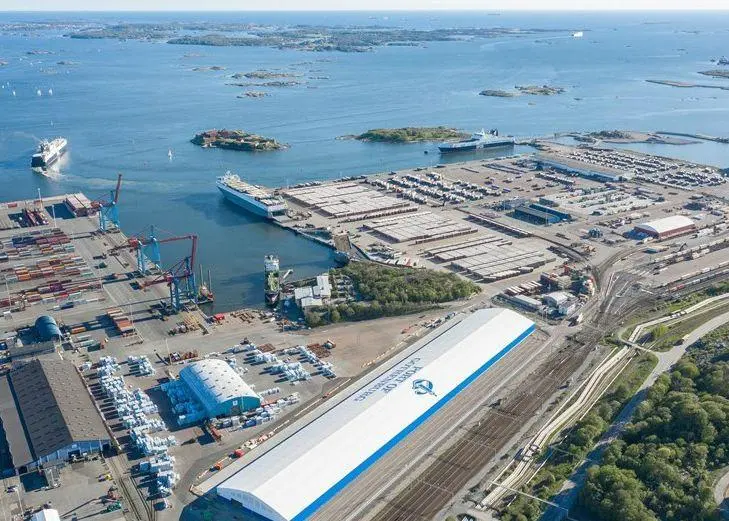
The Port of Gothenburg’s new Svea transshipment terminal, located between the port’s container and ro-ro terminals, can house a 350m train and will receive incoming forest products by rail from Swedish mills. At present around 60% of the Port of Gothenburg container volumes arrive at or leave the port by rail.
“This is the result of the long-term investment in the Railport concept, which connects the whole of Sweden to the Port of Gothenburg by rail,” said Claes Sundmark, vice president, sales & marketing, Gothenburg Port Authority.
Ambitious carbon-cutting target
The Port of Gothenburg aims to reduce its carbon emissions by 70% by 2030. One of the ways of achieving this goal is to continue investing in the Railport concept.
“The Svea Terminal is ideally suited to realising this ambition. The Terminal will increase rail capacity even further and we will be able to double forest product volumes arriving at the port by rail. It also means that we can reduce the port’s climate footprint and provide further conditions that will allow our customers to make climate-smart choices,” said Claes Sundmark.
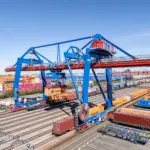
Rail investments at the port include the current expansion of the double-track Port Line and construction of the Arken Combi Terminal, which has already led to a substantial reduction in road traffic in Gothenburg. A further investment is APM Terminals’ modernisation and capacity expansion on its marshalling line, where trains are loaded and unloaded inside the container terminal.
World’s biggest tent
The Svea terminal, will offer 45,000sqm of storage space. Around half the area is covered by the world’s largest storage tent which will protect sensitive products such as pulp and paper rolls as they arrive by rail and are loaded into weather-protected containers before being transferred to ships.
Volumes equivalent to 60,000-100,000 twenty-foot-equivalent units will be handled at the terminal each year.
Related Articles
 ALTERNATIVE FUELS GREENPORT
 NEWS
NEWS