![PortStrategy[GreenPort]](https://www.portstrategy.com/wp-content/uploads/2026/09/PortStrategyGreenPort.svg)






Draft trials key to bigger ships in Belgium
Draft extension trials that will determine whether a Belgian port can handle the world’s biggest container ships have begun on a major river.
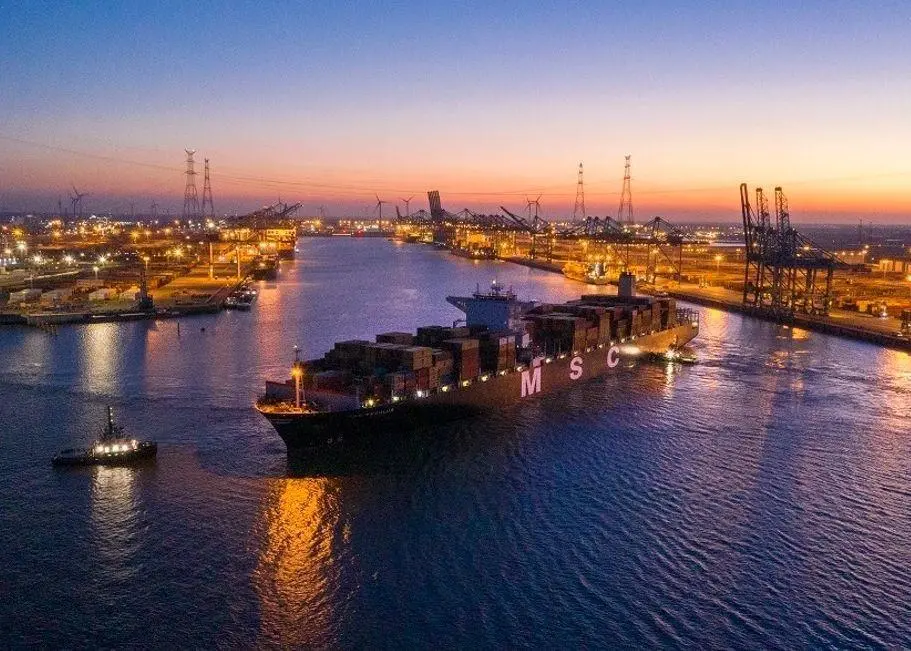
The first trial run as part of a potential extension of the maximum draught of the Western Scheldt river to 16m has been carried out successfully, with MSC’s MSC Regulus entering the Port of Antwerp with a draught of 15.7m. This is a new record at the Deurganck Dock, where the deepening will take place.
Annick De Ridder, Port Alderman, said: “For our worldwide economic position, supplying this country and Europe which is so important, and the prosperity of current and future generations, it’s essential that we can continue to receive the largest container ships and that they can choose Antwerp as their first port of call. We are therefore particularly enthusiastic about the start-up of this project and the successful first trial run.
“If ships with a bigger draught can call at the port of Antwerp, the port can raise its profile even more in the Far East, where the biggest ships sail, and strengthen its position as a first port of call here too. This will help to strengthen our competitive advantage over other ports and perpetuate our position as a world port.”
Collaborative project
The pilot project is a collaboration by Port of Antwerp, the Flemish pilots from the Flemish Agency for Maritime Services and Coast (MDK), the Dutch pilots, the Common Nautical Management (GNA), traffic controllers and the shipping company MSC.
The current maximum draught of the Western Scheldt river for container ships sailing to Antwerp is 15.5m. In order to allow the largest seagoing vessels to use Antwerp as their first port of call in the future, however, a draught of 16m is required at the inlet. It was therefore decided to carry out a series of six trial runs during which the maximum draught was systematically increased to 16 metres. This increase in the permitted draught considerably increases the loading capacity of the ships. These extra 5 decimetres can yield a +/- 1000 TEU gain. A final evaluation will follow after the six trial runs.
Related Articles
 PORT & TERMINAL NEWS
 EXPANSION & DEVELOPMENT
 PORT & TERMINAL NEWS