![PortStrategy[GreenPort]](https://www.portstrategy.com/wp-content/uploads/2026/09/PortStrategyGreenPort.svg)





UKRAINE: UNLOCKING CONCESSION POTENTIAL
Oleg Matiusha, Counsel, Head of Infrastructure, Kinstellar, Kyiv, draws on first-hand experience to explain the role of improved concession arrangements in the Ukraine’s port plans.
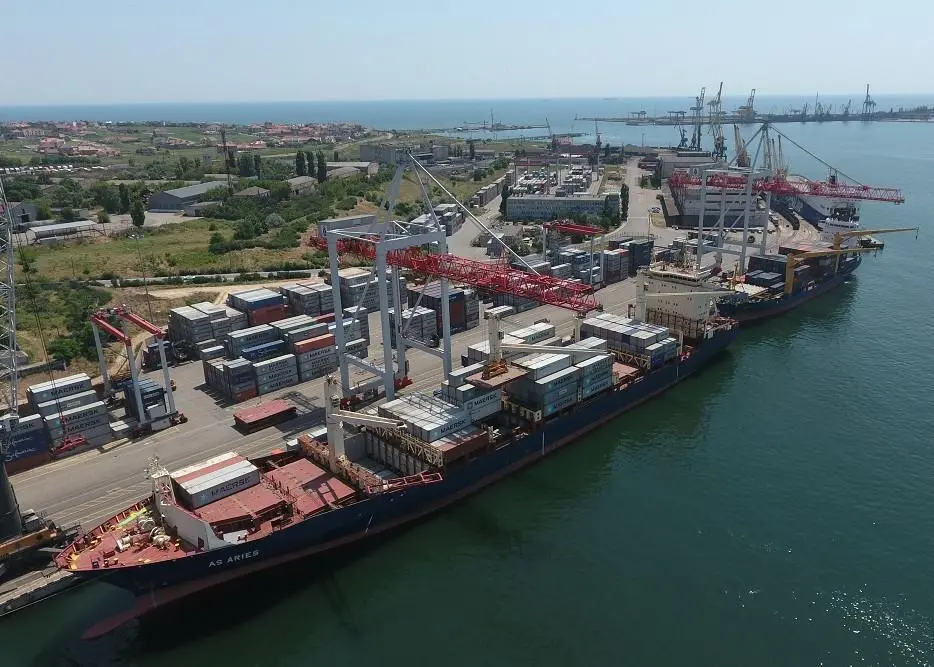
The port industry plays a key role in the Ukrainian economy and is responsible for 40 per cent of the country’s international trade. However, despite having the largest port potential in the region with 13 state-owned seaports located on the coasts of the Black and Azov Seas, the country’s port industry continues to struggle with various problems.
The recently adopted National Transport Strategy and Sea Ports Development Strategy demonstrate the government’s intention to resolve the key challenges for the industry by establishing specific measures to reform and modernise the port sector. These address issues such as insufficient state management, the lack of deep-water anchorages, inadequate condition of public transport infrastructure, the fragmentation of port lands and assets, etc.
As expected, due to the lack of fiscal resources the government is seeking alternative ways of financing for its ambitious plans without increasing the state debt. Engagement with the private sector for the modernisation of the country’s port infrastructure appears to be the most viable option to implement such plans.
The following projects completed in the past three years demonstrate the interest and capacity of the private sector to support the government’s strategy:
- The signing of 35-year concessions for the Olvia and Kherson seaports in 2020;
- HHLA’s investment into the development of its Odessa Container Terminal and the recent establishment of its own intermodal company;
- The launch of the “Neptune” terminal by Cargill in 2019;
- Korean Posco Daewoo’s acquisition of a 75% stake in the Nikolayev grain terminal in 2019;
- DP World’s acquisition of a 51% stake in the container terminal at Yuzhny port in 2020;
- Portinvest’s announced plan to invest USD 150 million to develop a grain terminal at Yuzhny port.
DOOR OPEN FOR PRIVATE SECTOR
The adoption of the new Concession Law by the Ukrainian parliament in 2019 and the successful conclusion of two pilot concessions – for the Olvia and Kherson seaports in summer 2020 – opened the door for the private sector to engage in the modernisation of Ukraine’s port infrastructure on a concession basis.
The concession of the Olvia seaport to Qatar’s QTerminals, with expected USD 120 million investments into the modernisation of the port, became one of the largest foreign investments in the Ukrainian port sector. Inspired by this success, the government plans for 10 of its 13 seaports to be transferred into concession, either fully or partially, within the next 10 years, including Yuzhny port, the passenger terminal at Odessa port, the ferry and railway complex as well as container terminal in Chernomorsk, and the Mariupol, Berdyansk and Izmail seaports.
Three smaller ports – Skadovsk, Belgorod-Dnestrovsk and Ust-Dunaysk – are being prepared for sale (privatisation). The announcement of the privatisation tenders for the UstDunaysk and Belgorod-Dnestrovsk seaports are expected within approximately two months, with the announcement for Skadovsk tender by end-2021.
The government is now actively preparing the Chernomorsk ferry and railway complex and Chernomorsk container terminal for concession. In the run-up to the concession tender, which is expected by end-2021, the government is focusing on re-structuring the current fragmented asset structure of the businesses, resolving issues with court disputes, and procuring the necessary feasibility studies and tender documentation.
UNSOLICITED PROPOSALS WELCOME
Meanwhile, due to the lack of capacity on the public side, unsolicited proposals from investors are welcomed. Ukrainian law entitles an investor that develops an unsolicited proposal but fails to win the concession tender to a reimbursement of its expenses by the successful bidder. In this way, not only may the state benefit from unsolicited proposals by reducing state expenses and expediting the preparation of port concessions, but private investors may also better prepare for concessions in advance.
Kinstellar’s experience successfully supporting the pilot Olvia seaport concession, together with the preparation of other successful concession projects, engenders confidence that the Ukraine is now the beneficiary of an improved concession regime that can be used efficiently by both the public and private sectors to realise the objective of improved port sector infrastructure.
Kinstellar is recognised as a leading legal practice with a strong presence in the markets of Emerging Europe and Central Asia. The firm’s work has earnt it numerous accolades including Law Firm of the Year Central & Eastern Europe (Chambers & Partners, 2020). https://www.kinstellar.com
Related Articles
 PORT & TERMINAL NEWS
 EXPANSION & DEVELOPMENT
 PORT & TERMINAL NEWS