

Decarbonising inland shipping
Inland waterways will play a key part in decarbonising transport in a new European plan.
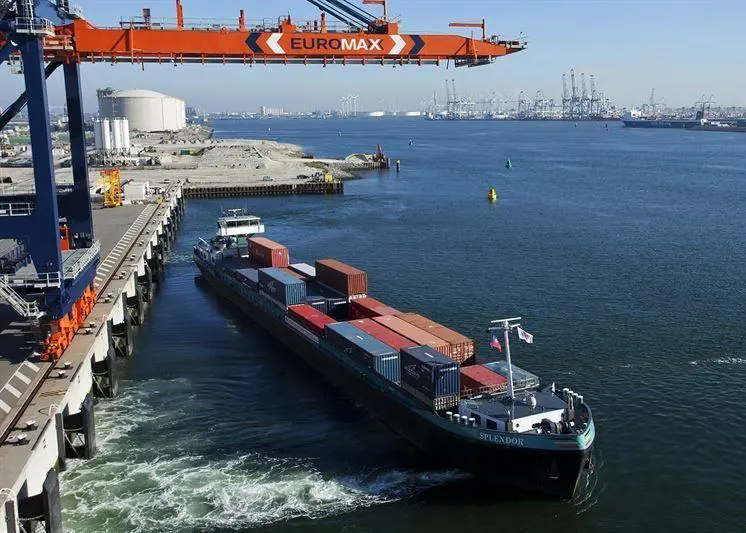
The European Commission’s NAIADES III (Navigation and Inland Waterway Action and Development in Europe) 2021-2027 action plan aims to shift more cargo to Europe’s rivers and canals and facilitate the transition to zero-emission barges by 2050.
Commissioner for Transport, Adina Vălean, said: “As one of the most CO2-efficient transport modes available, inland waterways have the potential to play a central role in decarbonising our transport systems. Yet today, our canals and rivers carry just 6% of EU freight.”
What’s proposed?
Among the proposed actions is the revision of the Combined Transport Directive, which, along with support for investments towards transshipment capacity and inland multimodal terminals, will enable the greater integration of inland waterways into a modern, trans-European intermodal transport system.
The action plan also includes measures to accelerate and stimulate investments towards the development and deployment of zero-emission and zero-waste technologies for inland vessels and inland ports.
Integrated approach needed
However, ESPO stressed an integrated approach between sea ports, inland ports and inland waterways is necessary to reach the sector’s full potential.
The organisation said it welcomed the vote of the European Parliament’s Transport and Tourism Committee (TRAN) to strengthen inland waterway transport, and that the adopted own-initiative report ‘Towards Future-proof Inland Waterway Transport (IWT) in Europe’ complements NAIADES III by adding sea ports to the picture.
The NAIADES III action plan is in line with the European Green Deal and the Sustainable and Smart Mobility Strategy, which set the goal of increasing transport by inland waterways and short sea shipping by 25% by 2030, and by 50% by 2050.
Related Articles
 ALTERNATIVE FUELS GREENPORT
 NEWS
NEWS