


Driving green change
The UK’s biggest port operator has stepped up its sustainability efforts for green recognition.
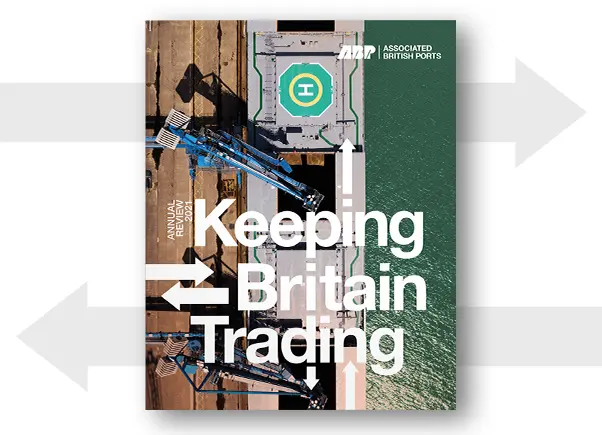
Building on its achievement of reducing its carbon emissions by 35% since 2014, ABP has continued to decarbonise its operations throughout the last year, gaining ISO 14001 Certification for Environmental Management for all 21 ports.
UK Maritime Minister, Robert Courts, said ABP’s annual review shows “how the sector has adapted to not only face unprecedented challenges head on but harness new opportunities and drive forward innovative technological and environmental change”.
What has ABP invested in?
Green initiatives this year have included the opening of the GB£55m shore power-enabled Horizon cruise terminal at ABP’s Port of Southampton. In 2020, ABP’s Port of Hull completed the UK’s largest commercial rooftop solar array.
In addition to supporting sustainable supply chains, ABP is a partner for emerging green technologies, such as offshore wind. In 2021, ABP announced the development of the Lowestoft Eastern Energy Facility (LEEF) at the Port of Lowestoft. The LEEF facility will provide a site that is suitable for offshore energy operations & maintenance (O&M) activities, a quayside suitable for construction support activities and ensure the port can accommodate the next generation of offshore support vessels.
ABP is also a leading partner in the Zero Carbon Humber initiative, which plans to develop carbon capture, utilisation and storage (CCUS) and low-carbon hydrogen production facilities, with the potential to decarbonise the UK’s largest industrial cluster and make a significant contribution to the UK’s net zero efforts.
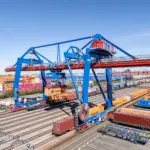
Investments have also been made in infrastructure and digitalisation. GB£50m has been spent on ABP’s new container terminals in Immingham and Hull in the Humber region, while ABP Southampton is the first British mainland port to launch a private 5G network, providing low latency, secure connectivity for its customers, in partnership with Verizon.
Related Articles
 ALTERNATIVE FUELS GREENPORT
 NEWS
NEWS