

The clever port activity app
By sharing real-time information two Scandinavian ports are increasing efficiency, saving time and protecting the environment, writes Ulf Siwe, STM EfficientFlow, Sweidish Maritime Administration

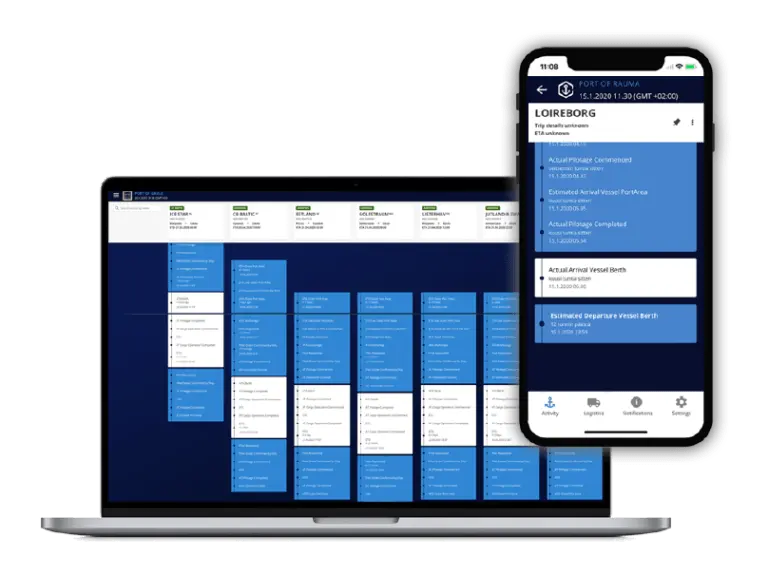
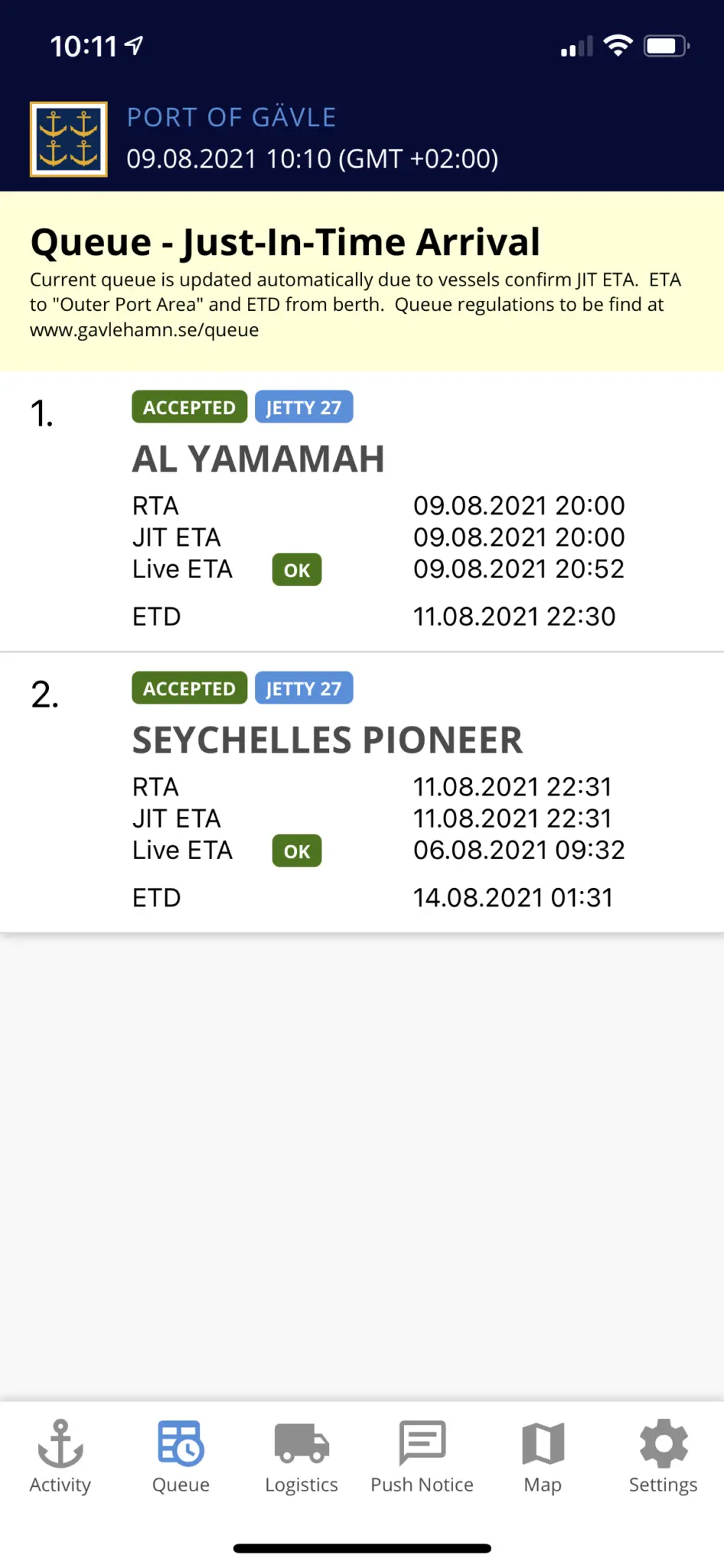
By sharing real-time information on key timestamps using an innovative app, port actors in Finnish Port of Rauma and Swedish Port of Gävle have created a more efficient flow of port calls. Resources are better used, time is saved and the environmental effects are positive.
The STM EfficientFlow project which has created the Port Activity App has been about one aim from the outset – implementing solutions and then using them in real life.
Operational since November 2020, the Port of Gävle is using the app as a basis for a Just-in-Time project for tankers, and in Finland, the solution is being rolled out to more ports through a Software as a Service solution from FinTraffic.
“The app has reduced a lot of stress – I don’t have to make all those phone calls I used to!”, says John Söderström, operational manager, Yilport Container Terminal, Gävle.
“It gives all actors a common view of the port call: what will start and finish when,” Linda Astner, sustainability manager, Port of Gävle, adds.
Just in time
One innovative way of using the shared information on ship arrival times happened happened at the Port of Gävle, which had a diving company doing major work in the harbour area.
The dive company set the new Port Activity App to send automatic notifications 30 minutes before a ship arrival, which gave them plenty of time to get divers out of the water before having ships
maneuvering nearby. So the solution that was designed to improve efficiency suddenly become a safety device as well.
Without the app, there would sometimes be more of a scrambling effort to get the divers out of the water when a ship suddenly appeared in sight.
The outcome of the port part of the project is already being offered to all Finnish commercial ports through a solution provided by FinTraffic. FinTraffic will provide the base solution through a Software-as-a-Service solution over the web and each participating port will finance the adjustments necessary for their processes, system interfaces and users.
“Having more ports participating will help the software develop quicker. We believe that the base solution will have more functionality as different port have different requirements, but all ports can benefit from these new developments. We will see a number of ports start using the Port Activity App during 2021, and almost all commercial ports in Finland will have it by the end of 2022,” says Olli Soininen, Program Manager, FinTraffic.
Meanwhile, pilots and VTS in the archipelagoes between Sweden and Finland have tried a solution that gives a much earlier heads-up for meetings in the narrow fairways. Pilots can adjust speed sooner and optimise the meeting points, choosing places where the fairway is relatively wide. Project participants are now discussing how to move the solution into standard
operations and analyse in which other areas in Sweden we should use it.”
“As a pilot, I enter information in our pilotage system. The data is then transferred to the Port Activity App. Every minute,” says Klaus Kauko, Pilot, Finnpilot Rauma
Information from relevant systems are collected and there is a web interface to enter data previously only handled manually. The information is compiled and then displayed in a web application, in an app and exported to relevant systems. You can chose to integrate the information, for example the terminal operator can continue working in their Terminal Management System. However, many actors were previously missing out on this info and for them the Port Activity App is a new useful tool.
Multitude of benefits
The tug company Alfons Håkans operates in Port of Rauma and in nearby ports. The common planning and the more reliable arrival and departure times via the app helps the tugs to be in Rauma when they are needed without spending unnecessary idle time in port due to uncertainties and misinformation.
For Linesmen, the planning is made much easier through the app. Uncertainties have been reduced and the administration around the work, which required loads of phone calls, has all but disappeared.
Every time you start sharing data, actors will find new uses for it. The innovators of the technology cannot foresee all of these uses. Aside fro the safety benefit, another example is the many uses of AIS information.
There can also be an unexpected cash flow improvement: The invoicing system of a container shipping company will send invoices at arrival and departure of their ships. Unbelievably, they have a hard time to capture the accurate actual time of arrival (ATA) and departure (ATD). By capturing this information in a standardised format from the Port Activity App or other similar solutions, they will be able to send invoices days earlier in many cases and thus improve their cash flow.
All ports are constantly trying to shorten the turnaround time. New technology is deployed to quicken unloading and loading times. When analysing the port call one thing that stands out is the waiting time between different activities of the port call. If waiting times can be reduced and some activities could happen more in parallel, the turnaround time can be shortened.
In many ports, the coordination is still happening manually with some digital tools supporting the process. This was the case in the ports of Gävle and Rauma as well. They teamed up with the Swedish Maritime Administration (SMA), FinTraffic, and the Satakunta University of Applied Sciences (SAMK) and received project funding from Interreg Central Baltic programme of the European Union.
Two requirements made the development differ from what many other ports have built. The solution must be built on standardised information formats and the solution should be available for other ports in the Central Baltic region.
The standard for port call timestamps is being developed as you read, the app uses a draft version developed in another EU project, and will adapt to the new standards when it is ready. For communication with arriving ships, the established RTZ-standard is used.
The solution procured was required to be open source. That means that the software behind the solution is available for all ports in the world to use and develop their own Port Activity Apps.
After a public procurement, the contract to develop the solution was awarded to Finnish software house Unikie.
Going forward
The port part of the project finished in November. There have been developments since. At the Port of Gävle an initiative to improve the service to ships in the liquid bulker terminal is on its way. The goal is to replace the old “first come first serve” business process with a slot time system, which encourages Just-In-Time-arrivals.
“Implementing a new business process also requires modifications to local rules and regulations,” says Linda Astner. Port of Gävle. “For Terntank it is the possibility to slow down and arrive just-in-time, meaning direct fuel savings. This has a positive impact on our profitability and it also matches our goal of reducing our emissions and environmental footprint,” says Claes Möller, CEO Tärntank Ship Management.
The ports have started the work using just a few key timestamps. Measuring the difference between estimated and actual timestamps will identify areas for further improvements. To help such improvements the ports could start estimating and reporting other timestamps also impacting the flow of the port call process
The terminal operator in Gävle mentions that re-planning is easier when fewer items are involved. Thus it is easier to re-plan when one container on a lorry is late, but it is a much tougher to re-plan if a ship is delayed. Thus, the next goods carrier to be estimated and measured might be the freight trains arriving and departing the port. They bring medium effort to re-planning.
On a global level, there is a big call for just-in-time arrivals. The IMO has published a Just-in-Time Arrival Guide, and believe that Green House Gas emissions can be greatly reduced. Port of Gävle is a good example of how the information exchange enables processes to change, and we believe that many more ports using the Port Activity App will follow suit and implement just-in-time procedures.
The Port Activity App is a success. However, many competing solutions also bring the same benefits. To make it easy on all maritime actors it is important to use global standards for the data exchange and the communication between actors. A ship sailing to many ports, should be able to communicate to all port solutions the same way.
Start with a KISS – Keep It Simple Stupid. Do not overreach from the start. There are hundreds of timestamps that can be estimated and reported in a port call. However, we focused on the ship’s arrival and departure time and the cargo operations start and completion times.
Involve the users early. We had continuous meetings with local user boards, which help us in selecting which timestamps to focus, which information to show and many of the functions needed. They were key to the much-appreciated design of the app, which makes it easy to use and accepted by almost all from Day 1.
To make your solution future proof, use the relevant industry standards available and make sure that your system design caters for updated standards.
Learn more about The Port Activity App from this 3-minute video
Related Articles
 ALTERNATIVE FUELS GREENPORT
 NEWS
NEWS