![PortStrategy[GreenPort]](https://www.portstrategy.com/wp-content/uploads/2026/09/PortStrategyGreenPort.svg)




Mass migration
AJ Keyes looks at the impact of refugees on Mediterranean ports and the strategies being adopted
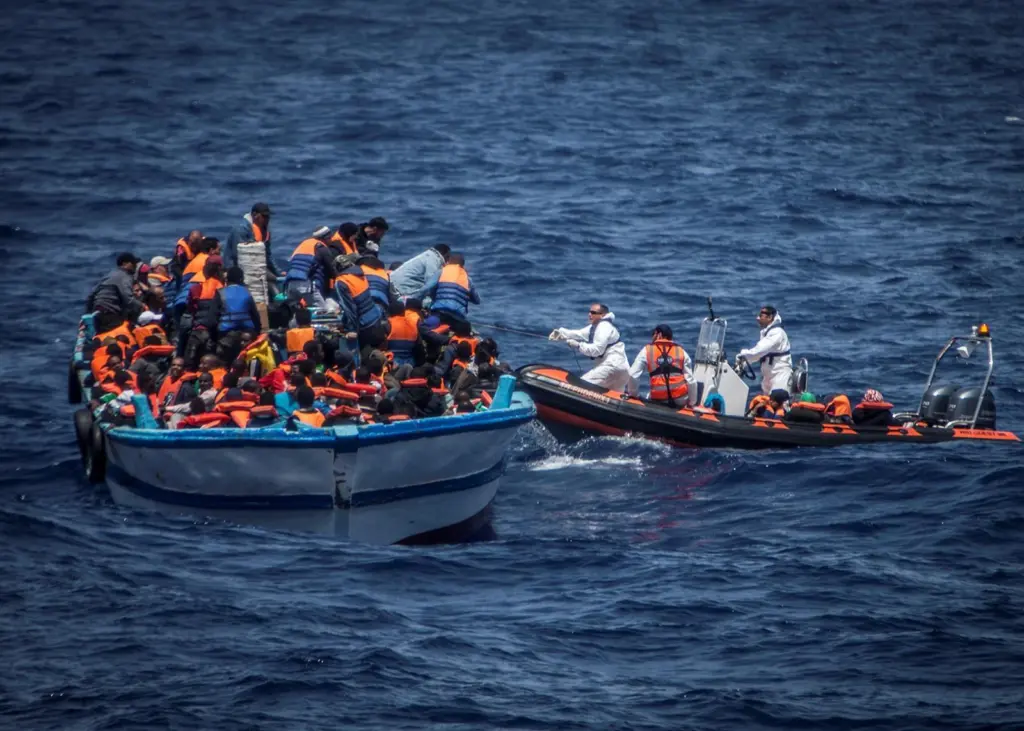
The plight of migrants trying to cross the Mediterranean Sea from North Africa to Southern European locations has been a major issue in 2015. According to the UN High Commissioner for Refugees, an estimated 98,000 people crossed the Mediterranean Sea from Africa to Italy in the first half of 2015.
The routes being taken by migrants is widespread, with Greece, Italy, Malta and Spain all common options. Italy, with its shorter distance from the coasts of Libya and Tunisia, represents a favoured route for refugees seeking entry into Europe.
With a high number of small boats carrying only a few hundred individuals across the Mediterranean Sea and towards the Italian mainland a key concern is for the safety for all shipping, especially in busy marine waterways. The presence of the Italian navy and other international ships completing daily patrols has ensured that cargo ships have had safe and regular access to help, even during the rescue process of migrants from barely seaworthy craft.
However, the immediate problem is then where to take these people. The strategy adopted in Italy has been to disembark the refugees at some of the country’s smaller, in terms of cargo volume, facilities, including Lampedusa, Catania, Crotone, Corigliano, Pozzallo, Palermo, Salerno, Reggio Calabria and Porto Empedocle. In doing so they steer clear of the country’s higher-volume cargo ports. The location of Lampedusa in particular – just 93 miles from Tunisia and 217 miles from Libya, but still an Italian territory – means it will remain an attractive destination for migrants.
Coping mechanism
To date, the impact on cargo volumes in major Italian ports has been unaffected by the migrant issue, according to experienced Italian port specialist and transport economist, Dr Emanuele D’Agostino. “I haven’t observed any drop in traffic volumes because of the choice of ports being used to receive the migrants,” he says. “Assessing the past years’ worth of data, for containers, ro-ro, dry bulk, liquid bulk and cruise demand for all main Italian ports there is no noticeable correlation between traffic decreasing and the arrival of migrants.”
However, there is one noticeable volume trend among Italy’s container ports, according to Andrew Penfold, project direct at Ocean Shipping Consultants, part of Royal HaskoningDHV, which may have been influenced by the migrant issue. “The larger Italian ports appear to be increasing their volumes of traffic, albeit at the expense of the smaller ones,” he says.
The top five Italian ports now make-up around 80% of the total container markets, with La Spezia and Genoa collectively accounting for 54% alone, an increase of several per cent in recent years. In addition, the ports of Savona and Livorno are seeing a shift of traffic to Genoa (of 1.2% per annum in the past few years). While this shift of volume is not a large percentage figure, it has materialised in a largely stagnant market, thereby meaning some ports are losing share and traffic.
The other important issue involving the movement of migrants is the potential danger of port operations being affected. If migrants are being disembarked at port facilities, then berthing space is being taken up. A careful selection of ports and terminals has been necessary to ensure that the high numbers of people being rescued on Italian and other rescue ships do not clog up berths, which has been largely successful. As Dr D’Agostino notes: “To date there has not been any significant impact on port operational activities or cargo productivity. In all ports, even the smallest ones, there is enough berthing to manage the emergencies occurring.”
Smaller issues
However, while there may not be any port operating issues, for those smaller ports seeing migrant activity there are clearly issues. The migrants disembark at available quays but then like any ‘cargo’ entering the marine terminal, there is a need for safe and secure storage.
At several ports in Sicily, which continues to see high volumes of migrant arrivals, some port officials previously provided temporary shelters. But as the volumes of people arriving continued to grow, the land and space required also increased and the simple fact of having a lot of people close to, or with potential access to, the cargo-working area increased the risk to all concerned.
One port official in the area, who wished to remain anonymous, said that as more humanitarian aid arrived, more people arrived and wanted it. In the end the potential impact to port activities was overwhelming and the aid had to be withdrawn.
A key question is at what point could the continuing influx of migrants start to really impact port operations? Mr Penfold is nonplussed: “Unless the smaller Italian ports come under pressure with sudden volume growth, the migrant issue will probably not be a long term challenge.”
This is also a view shared by Dr D’Agostino, who states that while the migrant issue is not something that the Italian port authorities and operators “complain about” there is, perhaps, a general sense of the Italian government needing more help from the EU authorities in Brussels.
With no easing in the number of migrants trying to enter Italy on a daily basis, he seems to have a valid point and there will be a continued need to carefully balance the movement of migrants through less utilised ports. But for the larger facilities it is business as usual. And while migrants may be entering lower-volume ports from the south the focus, in terms of cargo volumes, is firmly on what is happening to the north of the country.
The ability to balance the migrant issue and cargo activities is not easy but despite the obvious difficulties it is one that the Italian authorities are managing to balance – at least for the time being.
Big players look north for cargo
The humanitarian focus might be on migrants entering Italy’s marine facilities in the south, but for more traditional cargo larger ports are looking towards the north as they try to recapture European hinterland cargo and market share from major North Continent competitors.
There is no doubt that the major ports of Rotterdam, Antwerp, Hamburg, Bremerhaven and, more recently, Gdansk, are key entry points for Asian cargo moving to central European hinterlands, especially containers.
Some Mediterranean and Italian ports have a reputation for inefficiency and poor productivity, with higher levels of bureaucracy. Yet with congestion noted in several key North Europe facilities, shipping lines are considering alternative options.
Of course, the continuing focus of container shipping lines on ultra large container ships mean that the likes of Rotterdam and Antwerp are at an advantage, especially as so many of the major operators continue to commit to ever-bigger ships.
But major Italian terminal operating company, Contship Italia, has already publicly stated recently that it is “targeting Italian cargo being routed through Rotterdam”.
Recent developments from Contship Italia indicate a clear desire to maximise hinterland connectivity. For example, the company has invested in a new 300,000 teu capacity rail hub at Melzo, near Milan.
Related Articles
 PORT & TERMINAL NEWS
 EXPANSION & DEVELOPMENT
 PORT & TERMINAL NEWS