![PortStrategy[GreenPort]](https://www.portstrategy.com/wp-content/uploads/2026/09/PortStrategyGreenPort.svg)






Venice authority responds to Peril report
} return false
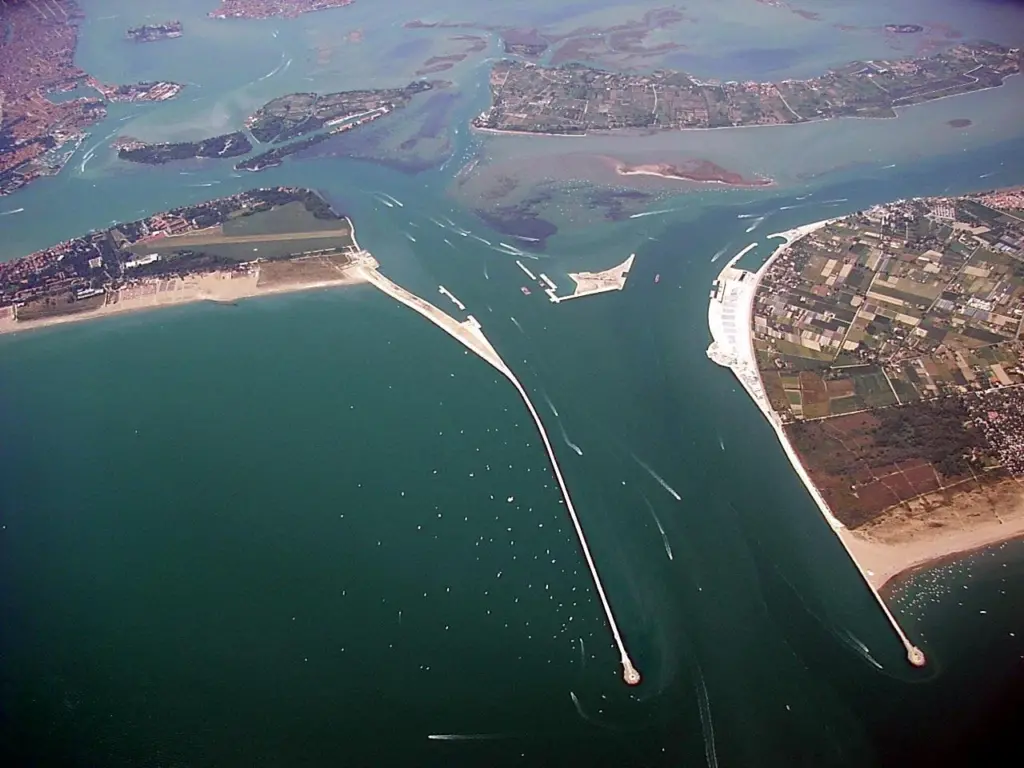
Further, it claims that dredging activities in the area fulfil two major commitments – one to keep the port running, the other, environmental.
The rebuttal is in response to the furore that followed the release of the Venice in Peril report in September: a dispute which erupted all over the pages of the international, as well as local, press with Paolo Costa, president of the Venetian Port Authority, reportedly accusing the Venice in Peril Fund (and by association a notable Cambridge University), of “pseudo-scientific profiteering”.
The developing hub of Porto Marghera is located 4 km north west of Venice and its impact is hotly contested. The Venice In Peril report pointed out that the area was extremely fragile, suffering from high water every winter and erosion of Venice’s classical buildings by salt water. It added that the dredging would further increase the influx of briny water into the lagoon area as natural barriers were washed away and that the new MOSE flood system would not be able to offset this kind of impact.
Emanuele Zanotto, head of the port’s Environmental Unit, said the port is obliged to maintain the navigations channels in accordance with port planning regulations.
“Firstly, we have a legal obligation to keep the viability of the navigation channels for the port’s development,” said Mr Zanotto, speaking to Port Strategy. He added that the lack of navigation was “a crisis” recognised by the Italian Prime Minister in 2004 which led to a four-year cycle of dredging activities that started in spring 2005.
“Secondly,” he added, “this recurrent flooding of the lagoon with briny seawater is a naturally occurring phenomenon… and the erosion of the barriers is likewise a natural happening, since yearly 0.5m cubic metres of sediment are deposited into the sea from the channels anyway.” He said it was not proven that the port’s actions were responsible for movement of material away from the lagoon and channels, adding that there was a Water Authority report in the pipeline to determine the actions necessary for restoring lagoon morphology.
Further muddying the waters, there is some discrepancy in what dredging is required. Some of the port’s departments say that although most of the channels are simply to be kept to a draft of 12 metres, the main link to the San Leonardo terminal, Canale dei Petroli (the subject of the 16 metre dredging) already keeps a ‘natural’ depth of 15.5 metres. However, like the port’s president, Mr Costa, the Italian Hydrographic Office figures a depth of 14 metres while the UKHO advises “heavy silting”.
The other part of the port authority’s argument is that the area is extremely polluted. “The sediment (and land) is contaminated with some heavy metals,” said Mr Zanotti, which makes dredging a necessity, he claimed.
This is dismissed by Anna Somers Cocks, president of the Venice in Peril Fund. Her main point however is that “the impact of dredging on the long term future of Venice should be decided in an open study by independent scientists before the port authority commits itself to huge developments.”
One industry source, Enrico Tantucci, warns that the Water Authority is not independent enough to be able to carry this out, claiming the authority acts more as “a role player than a referee in matters concerning the safeguarding of Venice and its lagoon”.
Related Articles
 PORT & TERMINAL NEWS
 EXPANSION & DEVELOPMENT
 PORT & TERMINAL NEWS