





Loud and clear
Resilience is a must-have trait for port-wide wi-fi and radio communications infrastructure, as John Bensalhia finds out
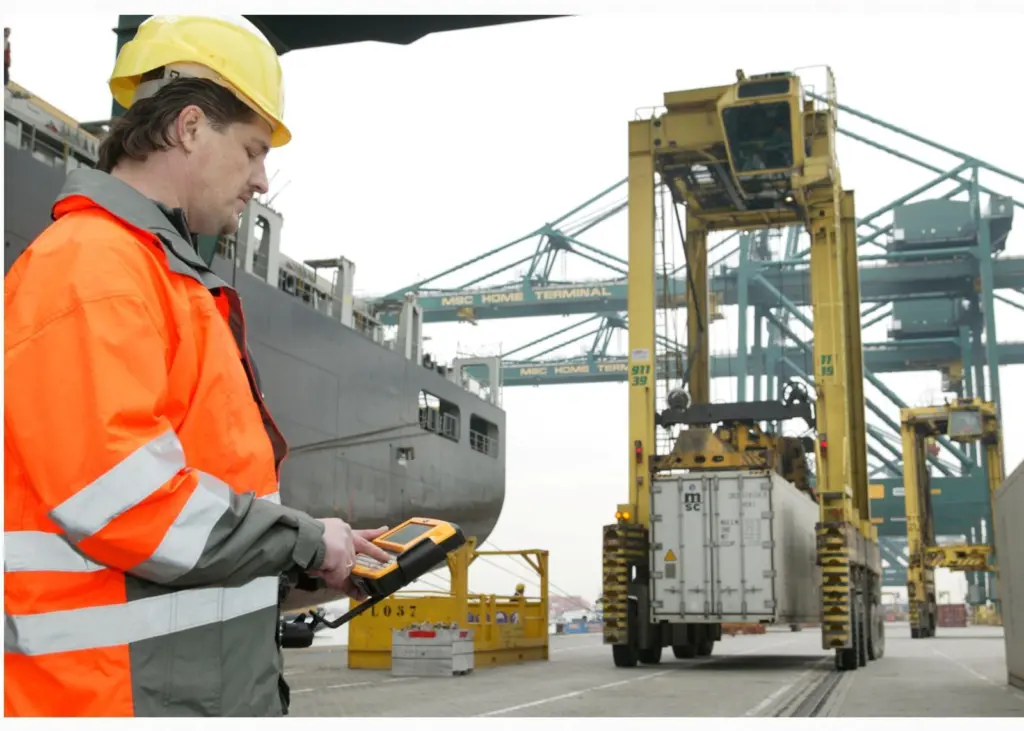
Communication is a key element in the world of ports and harbours; and in that respect wi-fi and radio devices can make life easier when it comes to security, administration and operations.
But at the same time, this sector is a potential minefield for operators because of the constant demand for better, upgraded solutions, not to mention the challenges of stability in the case of wi-fi.
“Wi-fi must be as resilient as possible,” says David Thompson, managing director of Siracom, UK distributor for Meru Networks. “But supposing a container brushes up against an access point and there is a gradual loss of alignment – the network could just fail without warning one day.”
Frans Kok, vice president and general manager, LXE Asia, Middle East and Australia, adds that ports need strong Wi-fi solutions that will stand up to adverse conditions. “To thrive in a port environment, terminals must withstand moisture, high humidity, salt air, dust, and a wide range of operating temperatures, including frigid temperatures in cold storage or freezer environments.
“Most ports operate 24 hours a day, so a mobile computer’s screen and keyboard must have features that enhance visibility in conditions ranging from brilliant sunlight to the dark of night.”
For their part, International Container Terminal Services Inc’s IT manager Berlin Samonte and IT technical lead, Rhandel Aguila advise that ports need to take a number of issues into account when choosing the right wi-fi solution. “The infrastructure should withstand the harsh outdoor environment of a port and should deliver a consistent throughput with exceptional interference mitigation. Wi-fi must ensure that there is no loss in communication and elimination of ‘dead spots’ even in between the parallel stacks of containers.”
A further potential problem is that wi-fi can be error-prone and susceptible to noise imposed by fading, interference and mobility.
Because ports normally use a wide selection of devices, each one with its own wiring, function and interface, and with its respective training and application, choosing the most efficient system possible is vital.
LXE is a key player in this field, with products that take ruggedness, connectivity and service into account. “In a large facility like a port, the ability to connect via 802.11 a/b/g/n or, as we’re seeing more and more of, WWAN networks, is essential,” says Mr Kok. “When it comes to service, technology alone will never completely suffice when it comes to a large and complex facility like a port. That’s why it’s critical to have experienced installation and service personnel who understand a port’s unique requirements.”
LXE engineers focus on the implementation of WWAN radios. These allow a device to connect from anywhere that a mobile phone can connect. “WWAN technology provides a good alternative to wi-fi in certain ports where a dedicated wi-fi infrastructure is not cost effective,” says Mr Kok.
If the port chooses the right technology, then wi-fi solutions allow for a number of benefits. “Wi-fi enables the convergence between different functions of a container terminal, from CY Operations to Security and Access Control, over an open standard technology,” says ICTSI’s Mr Samonte. “2.4GHz allows for a “best of breed” selection of products from different vendors, as compared with Narrow Band 900MHz which is tied-up to one vendor.
“And being IP-based, wi-fi allows for an easier network management resulting to a lower cost of ownership. The same IT support skills that maintain the LAN are reused for the Wi-Fi, and lessens the requirement for specialised tools and training from the vendor.”
Mr Samonte and Mr Aguila agree that with wi-fi, there is a wider choice of client devices. “What used to be dumb terminals that rely on emulation, now many makes and model of mobile computers may be used as terminals. A richer graphical user-interface is also more favoured than the old text-based screen.” They add that there is also support for wider and future-ready applications – “CCTVs have become a necessity, and these video-based imaging systems as well as voice-based applications such as IP Telephony cannot be handled by NarrowBand”.
A key factor however, is that ports will find that they need to review and maintain their systems. “They should be checked periodically for updating of patches for hardening the security,” says Mr Aguila. “There should be checks for new feature updates that may help improve performance and fix existing issues.”
However, looking for the latest technology innovations can prove to be something of a financial headache for ports – especially in a forbidding economic climate. But the other side of that coin suggests a different argument in that port operators should be investing wisely in the latest state-of-the-art solutions: if ports use their budgets shrewdly and invest in new, innovative products, then this can increase productivity and efficiency.
LXE’s Mr Kok acknowledges that finance is a hurdle with today’s economy in mind. “Certainly, there can be a reluctance to change, especially in today’s economy where every expenditure is measured and evaluated. However, the most influential technology innovations often come as a result of challenging economic times, as innovators look for ways to dramatically improve operating efficiencies. That’s one reason why it is very important for ports to continually review their wi-fi systems and other technology solutions.
“The other trend we are seeing is the increased influence of user experience as a factor in industrial environments. The unprecedented connectivity and technology we all enjoy as consumers sets certain expectations for how our workplace technology should behave, and we’ve seen that productivity can suffer when those expectations aren’t met.”
Mr Kok adds that one of the most important drivers for wi-fi updates is that of wireless security. “Data privacy concerns have convinced many port operators to upgrade to the latest wi-fi technology in order to have the most robust wireless security.”
For its part, LXE is responding to high market demands across its product lines, with touch screen vehicle-mount computers like Kärv and Förj that feature faster 1.6 GHz Atom and 1.7 GHz Core 2 Duo processors. Mr Kok adds: “At the same time, we are spending resources developing new form factors that pack greater, more efficient computing power into ergonomic footprint, with multiple data entry options, including touchscreens, full QWERTY keypads.
“We are also working on the launch of a new computer mid-2011 that will include a very innovative security feature – a biometric mouse. The biometric mouse reads the operator’s fingerprint to awaken or start up the unit, but while in operation, functions like a normal trackpad or mouse.”
Port communication devices – be they wi-fi or portable and mobile radios – are critical to smooth, efficient operation. Change can be daunting when it comes to updating products, but as Mr Kok says: “Change does not have to be a hassle, with the right partner. A port can gain productivity, as newer technology experiences less downtime, faster processors handle a larger number of scans or transactions over the course of a shift, and operators have greater satisfaction/user experience with their equipment.”
Related Articles
 OPERATIONS
 OPERATIONS
 PRODUCTS & SERVICES