


Co-ordinating customs checks
Technological advancements could improve testy port operator-customs relations, as John Bensalhia discovers
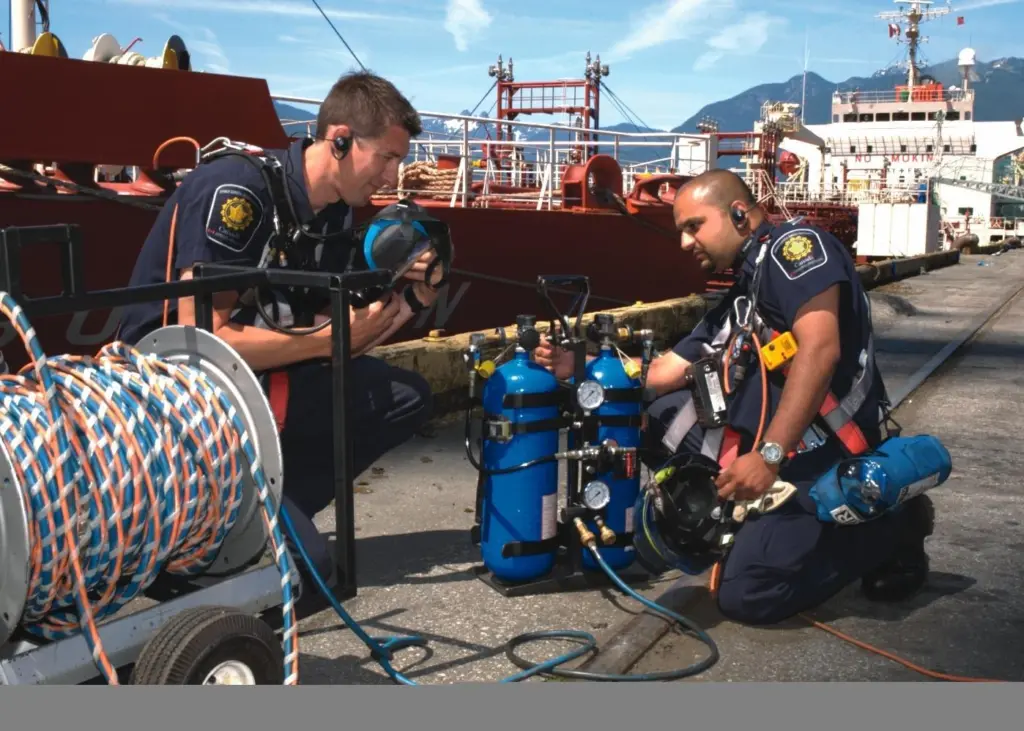
Whether it’s the eager anticipation of a holiday or the walk back through either the airport or ferry terminal after the holiday’s over, there will be one necessary duty to perform: security procedures.
In order to get your well-earned break abroad, you will need to pass through security. Remove all metallic items. Remove belts and shoes. Hand luggage on the conveyor belt. Stop and search. All part and parcel of the process.
And then if you’ve come back from a holiday stocked up with extra packages, you will need to declare them at the customs department.
It may seem like a gruelling process, but it’s still necessary in order to maintain security.
With port operators, that necessary process continues to be a bone of contention. Customs and security operations are undoubtedly a vital part of maintaining safety and making sure that anything illegal – drugs, weapons, contraband – is instantly spotted. The problem is, however, that these operations can both cause delays in shipments and disrupt carefully worked out berthing plans. If customs procedures hold up port operations for too long, this can cause many headaches, to say the least.
And more than a few port operators from around the world have recently vented their dissatisfaction. For example, Joseph Toney, chairman of the Port Authority of Trinidad and Tobago, reportedly told of his dissatisfaction with the relationship between the port and the Customs and Excise Division. Mr Toney explained that he had received a large number of complaints in relation to the alleged lack of co-operation from the Customs and Excise Division with the Port Authority, causing hold-ups in clearing the cargo.
Speaking just before last year’s festive season, Mr Toney said that the clearance of barrels, boxes and freight containers (a laborious and “cumbersome” process) had led to “flaring of tempers, protests, traffic jams and long lines at the port”.
There have also been reported issues at the new container shipping service that links the Indian port of Kochi to other ports in Europe. Problems arose when customs officials checked the seals on all transhipment containers that passed through the Vallarpadam terminal. As a result, the process caused considerable delays. In fact, it was reported that the second ship from the liner service called at Vallarpadam, but out of a potential 350 containers, only 250 were loaded as a result of the strict rules of verification – the containers had come from Tuticorin, where they had already been customs-cleared.
However, even with such stories making the headlines, it seems that elsewhere there is a notable effort to make the relationship between port operators and customs services as smooth as possible. The situation in Nigeria is one such example – recently, it was suggested that adopting the US system of checking cargo would be a recommended two-pronged effort to help thwart both bureaucratic red tape and instances of cargo delivery malpractice.
The Nigerian Finance Ministry’s Minister of Finance, Dr Ngozi Okonjo-Iweala, indicated that the extant clearing process at ports will be reformed in the future. In addition, there has been interest from the president of the Association of Nigerian Licensed Customs Agents, Alhaji Olayiwora Shittu, in a collaboration with the ministry to introduce acceptable, upgraded processes. Mr Shittu said that the US system of clearing goods was a secure, efficient and fully automated process, and one that would put a stop to fraudulent practices. Mr Shittu also said that that the method of paying a practitioner commissions from collected duties would end the possibility of fraudulent practices involving the clearance of goods at ports.
Similar pleas for improving customs operation have been requested by the European Sea Ports Organisation.
The organisation wants a ‘harmonised’ implementation of customs procedures for EU ports in the wake of problems caused by uneven legislation. A meeting took place in September 2011, as members of the ESPO Intermodal and Logistics Committee gathered in Brussels to discuss the existing problems. They found that customs legislation has made customs controls a “competitive factor” for EU ports. ESPO members have requested to the European Commission that Mediterranean EU transhipment ports are not harmed by customs legislation.
In addition, it was reinforced that intra-EU maritime transport and short sea shipping should be simplified further. The European Commission replied by saying that efforts have been undertaken to simplify administrative matters with respect to intra-EU maritime transport.
But simplification is the key watchword when it comes to efficient customs procedures. And with greater advances in technology, that simplicity can be achieved. A good example of this can be seen at the Port of Valencia. Co-operation between the Port Authority of Valencia and the Valencia Customs Office resulted in the introduction of notable customs procedures that delivered on security and efficiency.
A pilot project was launched at the Port of Valencia in 1992 – a Single Window facility that allows the user to lodge all data and documents with one lone entry point that takes care of all import, export and transit-regulatory rules. The pilot project was deemed to be a great success because it simplified the flow of data between Customs and the Port Authority, thus saving money and boosting efficiency levels.
The Port of Valencia has also seen two other notable technological aids for customs procedures. A paperless import clearance procedure was introduced in 2002, using barcodes to hasten and simplify authorisation. Five years later, paperless export control measures were introduced in order to simplify documentation exchange between shipping agents and cross-border police. Rather than present the original paper documents prior to loading, the shipping agents’ authentication could now be checked electronically – again saving both time and money.
Technology breakthroughs are also proving to be highly fruitful in both Canada and the US. The Canada Border Services Agency has introduced a number of advanced, effective technological facilities that have helped to step up customs procedures. For example, radiation detection equipment was introduced at the Port of Montréal in 2007, which finds and identifies any sources of natural or artificial radiation.
The equipment includes a radiation detection portal and a carborne unit. After a vessel arrives bearing containers, the containers are driven through the portal for automatic screening to detect the presence of radiation. A large number of containers can be screened thanks to the size and position of the portals, allowing for a faster process and high security. Secondary analysis of a container can be achieved through the carborne unit, a mobile screening system that can detect the precise radiation types and levels.
Similarly, US Customs and Border Protection have used radiation portal monitors at seaports to detect any radiation that may emanate from cargoes containing nuclear devices, bombs, isotopes or natural sources. The portal system can pick up on and warn the operator of any radioactive source present, as well as the strength of the level that is picked up.
Gamma-ray technology has also played a crucial part in detecting any suspect weapons, contraband or dangerous items when going through Customs. The Canada Border Services Agency has devised a mobile vehicle and cargo inspections system that can capture an image of a marine container. The end result is akin to an X-ray, and operators can pick up on any suspect items. In America, the US Customs and Border Protection operate VACIS – Vehicle and Cargo Inspection System – which scans vehicles and sea containers for any latent drugs, weapons or illegal currency with the aid of highly sophisticated gamma ray technology.
Additionally, the Canada Border Services Agency has used submersible cameras at marine ports for inspection of ships and containers, as well as density meters at major marine ports. These density meters can work out the density of an object or surface and can crucially alert the user to any hidden walls that may contain contraband, illegal goods or weapons.
With these inroads into utilising the best technological resources available, Customs authorities are making efforts to deliver faster, more reliable services. With the aid of affordable but sophisticated detection equipment and resources, port operators are looking at less delays and greater accuracy. The money spent will, in the long term, prove to be a shrewd investment, as cargo is allowed to pass through at a faster rate and with less room for error. Many of the Customs authorities evidently want the dialogue to take place between themselves and the port operators in order to continually improve and push services forward – it’s the latest technology that is giving them the voice to be heard louder than ever before.
Related Articles
 OPERATIONS
 OPERATIONS
 PRODUCTS & SERVICES