![PortStrategy[GreenPort]](https://www.portstrategy.com/wp-content/uploads/2026/09/PortStrategyGreenPort.svg)




Out of the ordinary
Investing in facilities, labour and space for project cargoes can reap rewards. John Bensalhia investigates
When it comes to quantity and quality, there’s no room for compromise in the project cargo sector; both are of equal importance.
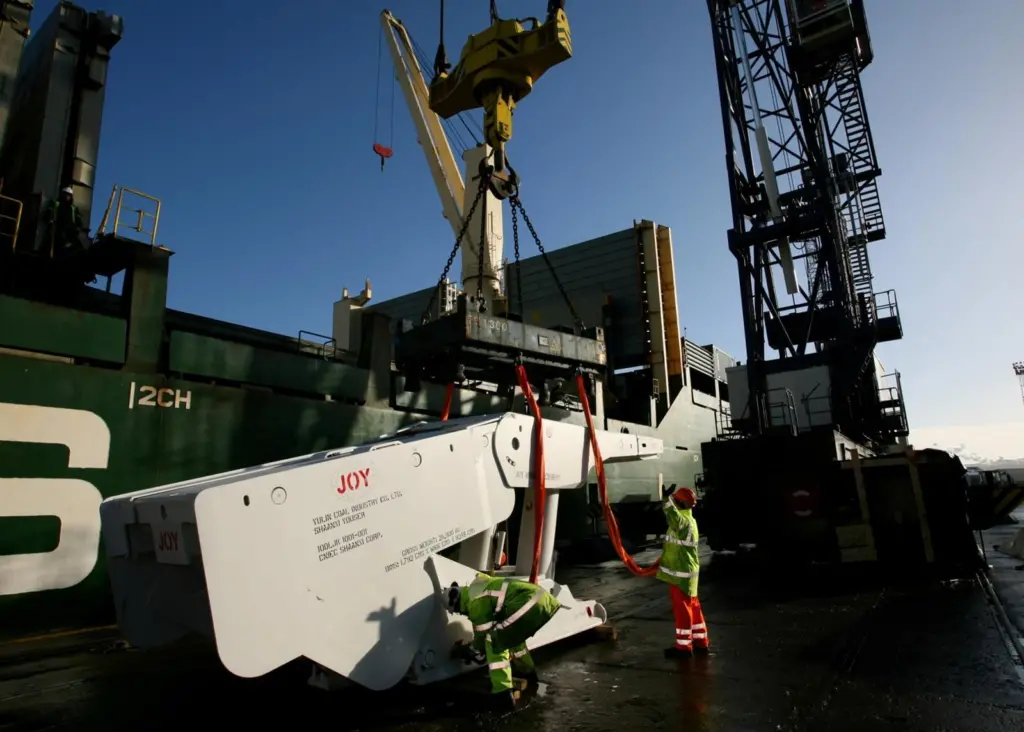
Project cargoes might mean pieces of big, heavyweight equipment; they may comprise a number of different elements that need to be disassembled and put back together after delivery is completed; or they may refer to high value goods.
Jerry Hopkinson, managing director of Bulks, Ports and Logistics at PD Ports, gives his definition. “Project cargo is generally accepted as a mixture of products which are non-homogeneous, of varying shapes and sizes and usually will include ‘out of gauge’ items in terms of either or both dimensions and piece weights.”
For Terry Buss, Compliance and Standards manager of Solent Stevedores, project cargoes refer to “anything out of the ordinary, one off or unusual”.
Neel Ratti, general manager of Tuscor Lloyds UK admits that “everyone’s definition is different”.
For him, it is a mixture of different cargo types and specifications which are all to be shipped together as part of an overseas project, for example in construction, manufacturing or infrastructure.
Win-win
However it’s defined, the project cargo sector is one that offers both financial potential and the opportunity to show the port’s true capabilities.
As Mr Ratti points out: “Volumes are depressed across almost all trades in shipping; it is rare to find a sector which is still growing.” It is, however, a sector that requires precise expertise, quality resources and financial investments.
Mr Buss adds that “the benefits of working on project cargoes are that it can show the company in a positive light, and it can show existing and potential new customers that we can adapt and are flexible and skilled enough to tackle anything that is asked of us in a professional manner. It can also lead to more work.” He says that project cargo work can also help to display the flexibility of the workforce and company.
Operational requirements have intensified too, in line with the growing market, according to Wolfgang Karau, director of the Worldwide Project Consortium (WWPC). He says that project cargo handling requires “special carriage over oceans, surfaces and through the air, and if larger modules are being shipped, short assembly times at final jobsites”.
Indeed, requirements are becoming more complex as more extreme shipments become technically feasible. With this high degree of specialism comes challenges in the form of a lack of knowledge and experience, which has become an effective barrier to new entrants into the market.
Small pond
“Ports with the professional expertise and associated handling capability for project cargo are becoming limited as more and more port operators shift the focus of their capability to pure bulk cargoes and unitised operations”, points out Mr Hopkinson. “Consequently port calls by vessels for project cargo represent good business for the ports that have the requisite resources to offer these services as handling of project cargo often requires specialist equipment and skills. However, project cargoes are often associated with infrastructure projects and are therefore susceptible to changes in the economic climate.”
The very nature of project cargo items, specifically the physical size and weight of individual pieces, means that selection of the appropriate port location is largely affected by the source or final destination of the cargo. “As the inland transportation of the cargo to and from the port are a vital, potentially difficult and expensive leg of the supply chain this will often dictate the selection of a port,” says Mr Hopkinson.
For its part, PD Ports handles a variety of project cargoes at Teesport and Hartlepool, using a combination of infrastructure and expertise. The Port of Teesport has a deep water facility which has 750m of quay: this is served by a fleet of mobile harbour cranes that can handle items of an individual weight up to 100 tonnes as a single lift and up to 150 tonnes as a tandem lift.
The Port of Hartlepool also features a purpose built heavy lift pad which can support ground loadings of up to 15 tonnes per square metre. “This gives the facility the opportunity to accommodate some of the largest mobile cranes enabling lifts in excess of 400 tonnes to be handled to and from vessels,” says Mr Hopkinson.
“The two ports share an operational management team and an experienced workforce. Extensive lay down areas are available for storage and/or pre or post shipment cargo preparation/fabrication which offers shippers additional flexibility into their supply chain.”
Infrastructure demands
When it comes to successful project cargo handling, ports must consider various elements: for example, space and equipment requirements. In this respect, Mr Ratti says that ports should provide upgrades to cranes and handling facilities. “Many projects involve movements of ever increasing sizes and weights of cargo. This puts demands on port equipment, from port trailers to cranes and transit sheds. Space for handling and proximity to berth are also factors in efficient cargo handling in port.”
The resources available to ports must be considered by ports prior to project cargo operations. Ports should, at a bare minimum, consider their usage of space.
“As space is at a premium, a lot of ports would find it hard to set aside the space needed for these projects which are few and far between,” says Mr Buss. He adds that ports must also consider other resources at their disposal, including men, time, plant/vehicles, equipment and planning. “They need to ensure that they can be carried out without too much upheaval to other port users and existing regular customers.”
Health and safety is also a key factor. “By its very nature, project cargo introduces a number of potential health and safety issues which need to be addressed,” says Mr Hopkinson. “These include issues around working at height, complex slinging arrangements and the configuration of the stow within the vessel. Our key preoccupation is ensuring the safe performance of this function. We have learned that effective and very professional handling methodologies, which guarantee the integrity of the cargo and the expedient handling of the ship, flow from a strong health and safety sensibility.”
Forward planning
If ports take the right measures to allow for efficient project cargo operation and invest in the right equipment, people and resources, this will boost future prospects in this sector.
“Port and terminal operators need to ensure that they are able to keep pace with the service level requirements of the owners of project cargoes and to make sure these are exceeded wherever possible,” says Mr Buss. “A wide range of inventory is needed of equipment and a multi-skilled workforce with proven experience of handling a multitude of project lifts is necessary. Ports themselves need to ensure that they are competitive in their costings to attract project cargo work.”
Mr Karau adds: “Through investment in proper infrastructure and good connections to motorway and railway systems, the port will play a vital role in the movements of heavy and outsized cargo.”
Related Articles
 CONTAINER & CARGO HANDLING
 CONTAINER & CARGO HANDLING
 BULK HANDLING