




Getting better with remote control
Remotely controlled operations are a hot topic when it comes to the great automation debate, despite the fact that many believe this type of equipment cannot achieve optimal performance with current automatics.
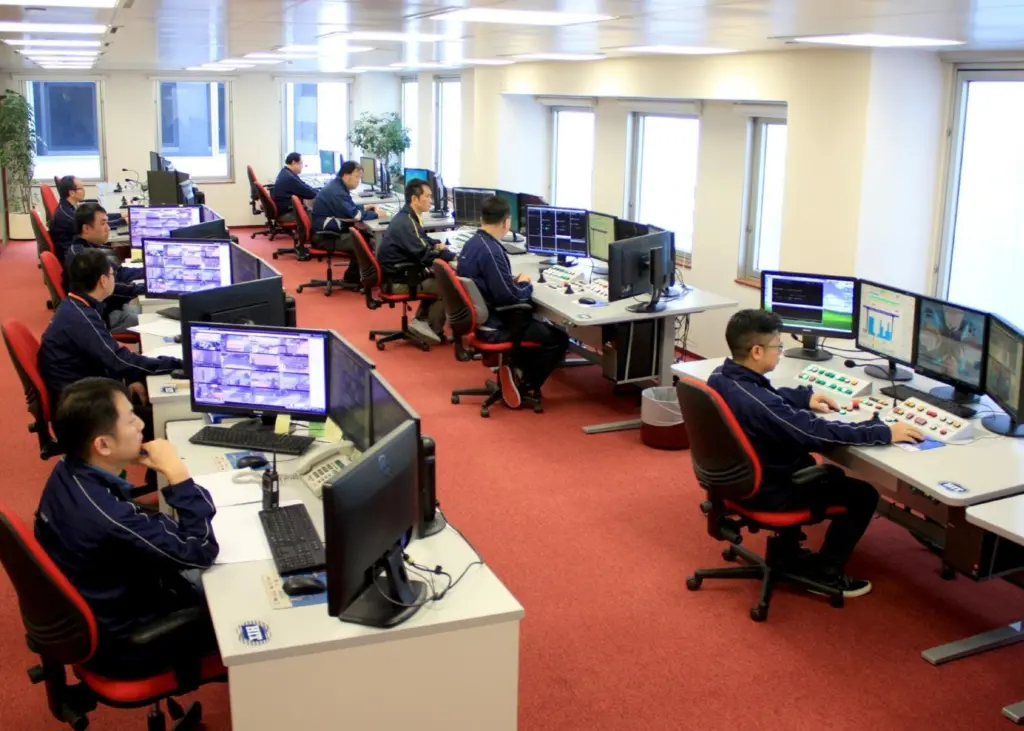
But Lappeenranta University of Technology in Finland, says it has the solution to overcoming the challenges of remote control, revealed by a recent Finnish Metals and Engineering Competence Cluster (FIMECC) study.
The university says that it is a global pioneer in scientific research in combining the sense of touch with machine engineering. It has developed two controller prototypes for testing in a virtual environment – one using engineering expert Sandvik’s loading simulator and one using Kalmar’s rubber-tyred gantry crane (RTG) simulator.
In Kalmar’s case, the remote control provides tactile feedback on the spreader’s oscillatory motion when a container is being lifted. Oscillation can be controlled more quickly by hand than by automatics alone.
“We are continuously looking at ways of making port operations more efficient. If we can shave just one second off the handling time for containers, this will significantly speed up the unloading of a 5,000 TEU container vessel. FIMECC provides us with an excellent opportunity to tackle important gaps in scientific and technological development,” said Pekka Yli-Paunu, Vice President, R&D Automation, Kalmar.
Port operators are latching on to the benefits of remote control slowly but surely. Hong Kong International Terminals (HIT), part of HPH Trust, has just signed an agreement with Mitsubishi Heavy Industries Machinery Technology Corporation (MHIMT) to install remote control operations for its 29 RTG cranes at HIT’s Container Terminal 9.
HIT says this project is the first time that remote control technology has been implemented for RTGs outside of Japan. The remote control project should not only increase operational efficiency but also industrial safety.
The first batch of remote control RTGs should be in operation by the end of 2014 with completion of the project in the first quarter of 2015.
Related Articles
 OPERATIONS
 OPERATIONS
 PRODUCTS & SERVICES