![PortStrategy[GreenPort]](https://www.portstrategy.com/wp-content/uploads/2026/09/PortStrategyGreenPort.svg)






No easy way in
While ports in emerging markets may be interesting for strategic reasons – especially if they are concerned with energy cargo – these facilities can be challenging for ships to approach.
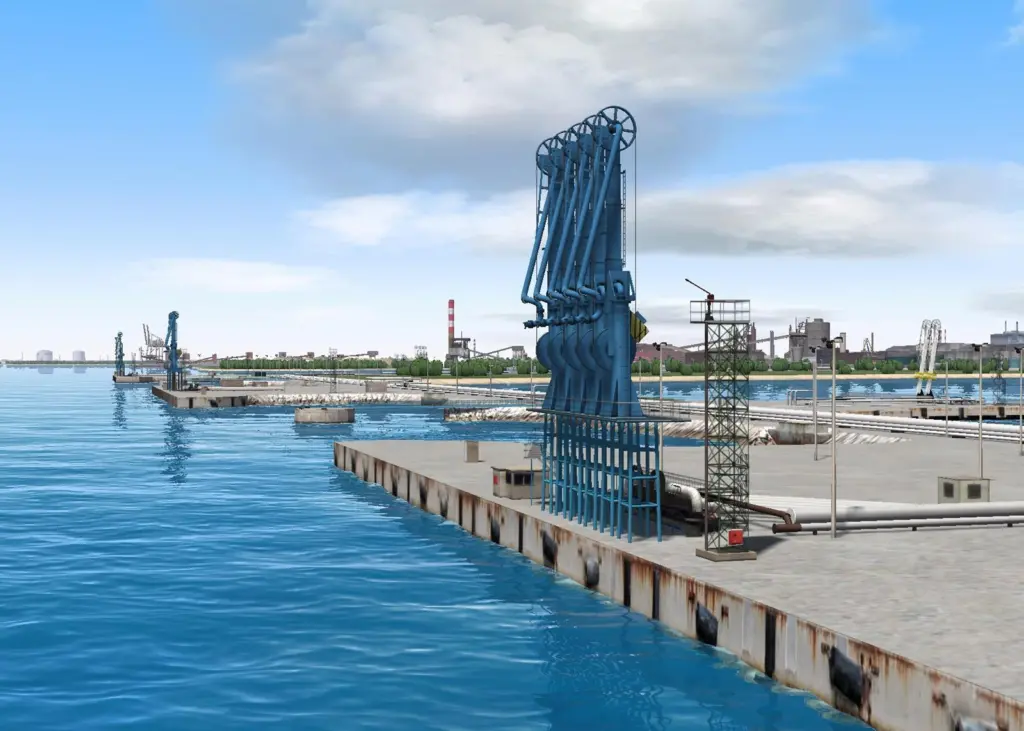
Alexander Ponomarev, Transas Marine International’s simulation department manager, points out: “While many ports do offer a pilot service, there are a small but significant minority which may not always have the resources to hand, resulting in the port authorities having to tell an incoming ship ‘you are on your own’.”
There can also be issues with large liquid bulk carriers manoeuvering, for example, through areas of tight navigation and choppy seas such as exist around ports such as Nigeria’s Bonny Island.
So, a new but ‘difficult’ port on a string could possibly find itself involved with the vessel owners in sorting out a virtual training arena. This means while a large simulator provider like Transas may already have the port depicted in its library complete with landmarks to help orient the crew, the port’s harbourmaster could still find himself flown in to have his brains thoroughly picked.
“Port approaches usually aren’t static and there may well be some updates that need attention. It could be anything from a rock fall that’s resulted in some nasty submerged protrusions or even just the normal silting up that’s reduced the depth in certain areas,” says Mr Ponomarev.
In any case, the value of the training is that “the crew can take perhaps a hundred practice approaches and get a feel for what the issues really are without endangering ship, berth or environment”.
Related Articles
 CONTAINER & CARGO HANDLING
 CONTAINER & CARGO HANDLING
 BULK HANDLING