


Federal funding rejection for Savannah deepening project
America’s Georgia Ports Authority (GPA) has been dealt a huge blow this week by the Obama Administration, which has decided not to fund the full deficit in the US$652m Port of Savannah harbour deepening project.
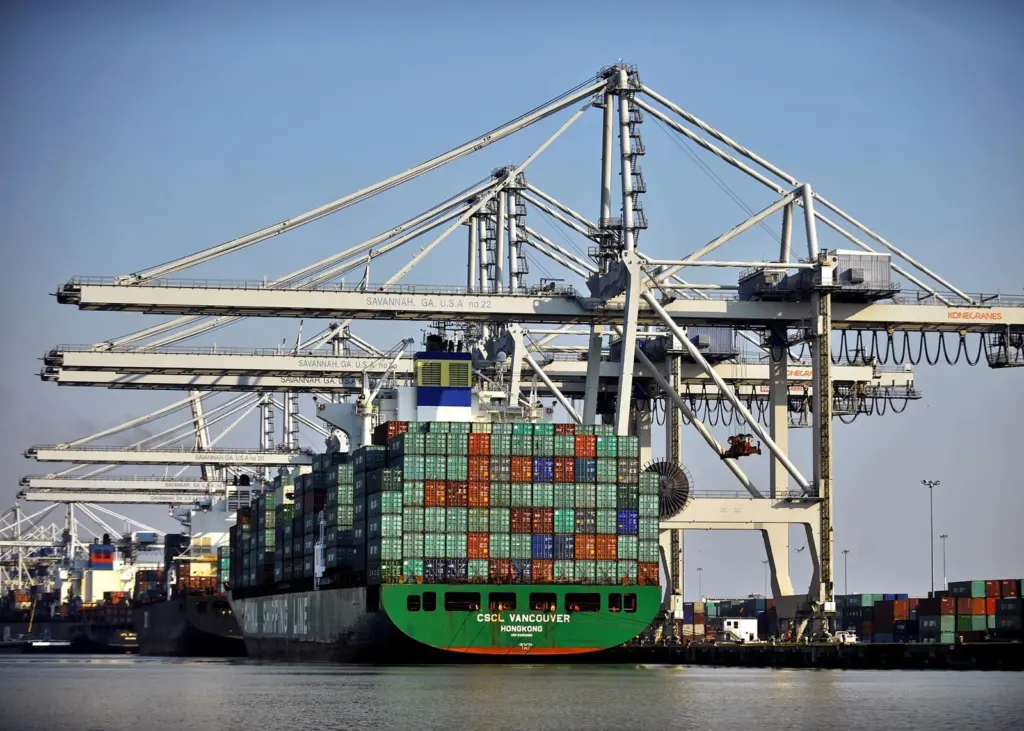
The news will have come as a huge blow to the GPA, which has waited 15 years to see the development plan come to fruition.
Savannah’s 47ft deepening project is necessary to enable the port to vie for an increased number of vessel calls when the Panama Canal extension is completed in 2015.
The decision to not provide full funding could not only hit the port hard but also have a knock on effect to the US economy.
Corps of Engineers studies show that post-Panamax vessels served by a deeper harbour in Savannah will lower shipping costs for containerised trade by $213m a year over the next 50 years. This in turn could lower the bottom line for more than 21,000 US businesses and thousands of international businesses shipping via the port.
The Port of Savannah secured funding of US$46.7m back in April 2012 to help pay for the deepening project. Then it was awarded new funds through the Governor’s FY2013 budget, bringing the total of dedicated state dollars to $181.1m.
But this figure even when added to the $231m of state funding also put aside for the project still leaves a deficit of $193.2m – and it’s unclear as to where this money will come from.
Questions are bound to be asked as to why full funding was not given as Vice President Joe Biden has pledged his support publicly to the project with President Obama himself specifically mentioning the ports of Savannah, Charleston and Jacksonville, as needing deeper harbours.
The President’s fiscal budget for 2015 earmarks just $1.52m for Savannah and Charleston and Jacksonville $2.26 and $3.15m respectively.
So far Georgia Ports Authority has not come back to Port Strategy to make comment on the issue.
But Georgian official, Governor Nathan Deal, has told the Associated Press that the project will still go ahead without federal aid, using the $231m the state already has set aside for its share of the project. Dredging is due to start later this year.
Related Articles
 PORT & TERMINAL NEWS
 OPERATIONS
 PORT & TERMINAL NEWS