





Konecranes turns RTG design on its head
Konecranes has launched a mid-priced rubber-tyred gantry crane aimed at the emerging markets.
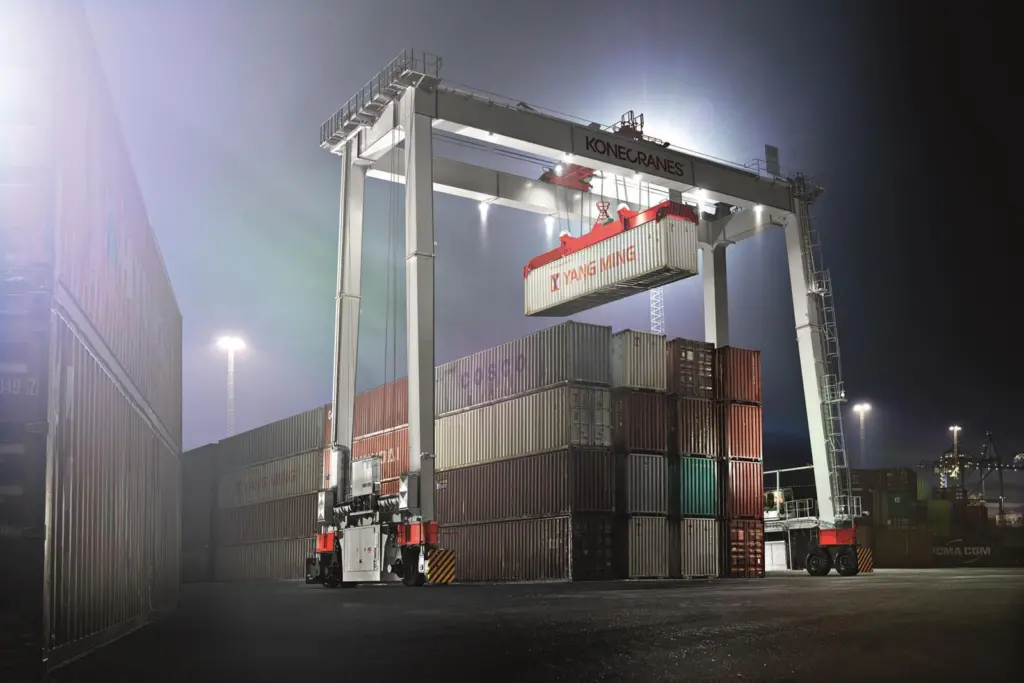
The manufacturer claims it has “reinvented the design” of RTGs with the new Boxhunter. The operator’s cabin – traditionally located at the top of the crane – has been moved to ground level, along with the most of the machinery used for driving the trolley and hoisting operations. The resultant savings on manufacturing costs make the unit more cost competitive.
“Traditionally, the operator’s cab in an RTG is located at the top of the crane. This is great for visibility over the containers, but with today’s sophisticated video technology it’s no longer essential,” said Mika Mahlberg, Konecranes’ vice president, Port Cranes.
The Boxhunter incorporates advanced video and laser technology already in use in Konecranes’ Automated Stacking Cranes.
The unit can move around 15+ container movements an hour, according to the manufacturer. Boxhunter also has a counterweight system that eliminates the weight of the spreader from every load lifted to save energy.
“There just isn’t a comparable RTG out there today that combines this level of innovation, this level of operator experience, and this level of reliable performance,” said Hannu Oja, Konecranes’ director, Port Crane Technology.
Related Articles
 OPERATIONS
 OPERATIONS
 PRODUCTS & SERVICES