![PortStrategy[GreenPort]](https://www.portstrategy.com/wp-content/uploads/2026/09/PortStrategyGreenPort.svg)






Don’t forget the hidden structure
Freyssinet New Zealand business development manager Kane Miller, whose firm specialises in construction, repair and maintenance in the civil engineering sector, emphasises that corrosion suffered by structural elements at ports can have costly flow-on effects.
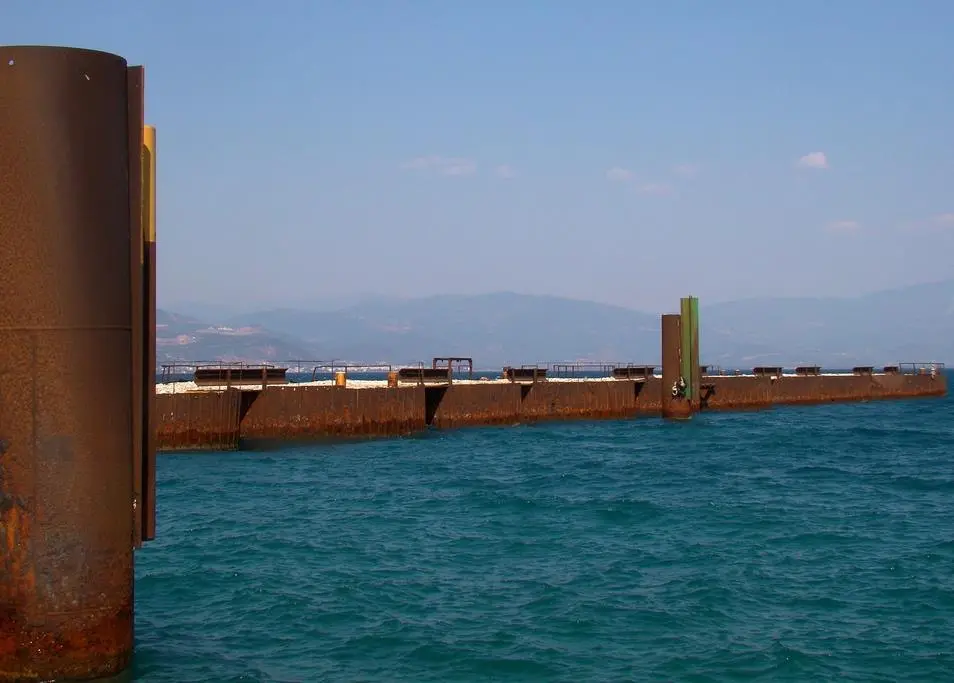
Noting that the main port areas where corrosion generally causes issue is with structural elements in tidal/splash zones, he says the resultant strength reductions suffered causes limitations on operational usage – for example underneath mobile cranes or ship loaders.
“The cost of installation and running of a corrosion protection system are generally low compared to the cost and logistics of providing access to the underside of a port/wharf structure, as well as the risk to the operations of the port facility if they need to reduce the efficiency of their operation because of structural deficiencies which can be exponentially more costly,” he says.
“Generally equipment which is located above the wharf slab will be protected by a painted system or similar. Often this is an appropriate measure depending on the use, visibility and access to repair the corrosion protection system (such as touch up paint).”
Mr Miller makes an interesting observation on influences of corrosion on port infrastructure.
“The rate of corrosion is determined by many factors such as chloride or oxygen levels, concrete quality, depth of cover concrete, temperature and so on. Therefore it is difficult to summarise corrosion rates of unprotected structures. However, it can take as little as five years for a reinforced concrete structure to be completely corroded in harsh environments.
“With a working corrosion protection system however the protection to the structure can be anywhere from a minimum of ten-plus years, say for a sacrificial anode system, up to 50-plus for an impressed current system with zero corrosion.”
Related Articles
 CONTAINER & CARGO HANDLING
 CONTAINER & CARGO HANDLING
 BULK HANDLING