



Russian ports performance
Deep sea vs transcontinental transit through Russia and the potential for further development was a hot topic for the TOC Container Supply Chain Conference (CSC) at this year’s TOC Europe exhibition.
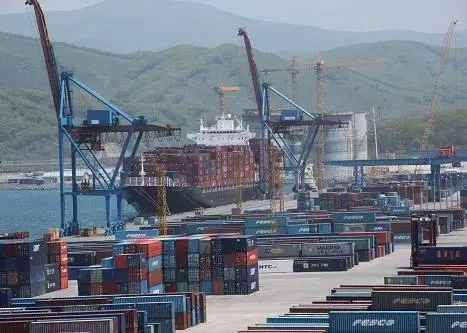
Ruslan Alikhanov, FESCO Transportation Group president and CEO, pointed out the recent trend is towards from deep sea to Russian transhipment. “More clients are now focused on the far east,” he said.
FESCO transportation grew by 13% in 2013 and in the first quarter of 2014 was up by 10%. Meanwhile, total throughput at Russian ports increased by 3.9% in 2013.
Although standard growth in container transportation is low when compared to Europe there is 7% increase expected up to 2015. Traffic is also growing at the Baltic and Black Sea ports, but not as much as at the far east ports, which include Vostochny, Nakhodka and Vladivostok.
Andrey Naraevskiy, director liner and business development, Global Container Service, warned that these figures look good on paper, he warned that the growth rate is not significant and is indicative of stagnation.
He also warned that the outlook is not good for imports either. “The figures for Russian ports show that while exports are booming, imports are stagnating.”
The drivers for this have included the acquisition of NCC by Global Ports Inc to form the largest stevedoring operation in Russia and the extension of several deep sea services from Saint Petersbourg.
“The outlook is that consolidation casualties will also continue,” Mr Naraevskiy added.
Added to this the possible economic sanctions from Europe, future growth of the terminal business in Russia looks shaky he said because imports will continue to fall.
Related Articles
 OPERATIONS
 OPERATIONS
 PRODUCTS & SERVICES