![PortStrategy[GreenPort]](https://www.portstrategy.com/wp-content/uploads/2026/09/PortStrategyGreenPort.svg)





Eurogate handles record volumes
The Eurogate Group recorded its highest ever container handling volumes in 2014, with a 4.2% increase, while revenue also rose by 5.3%.
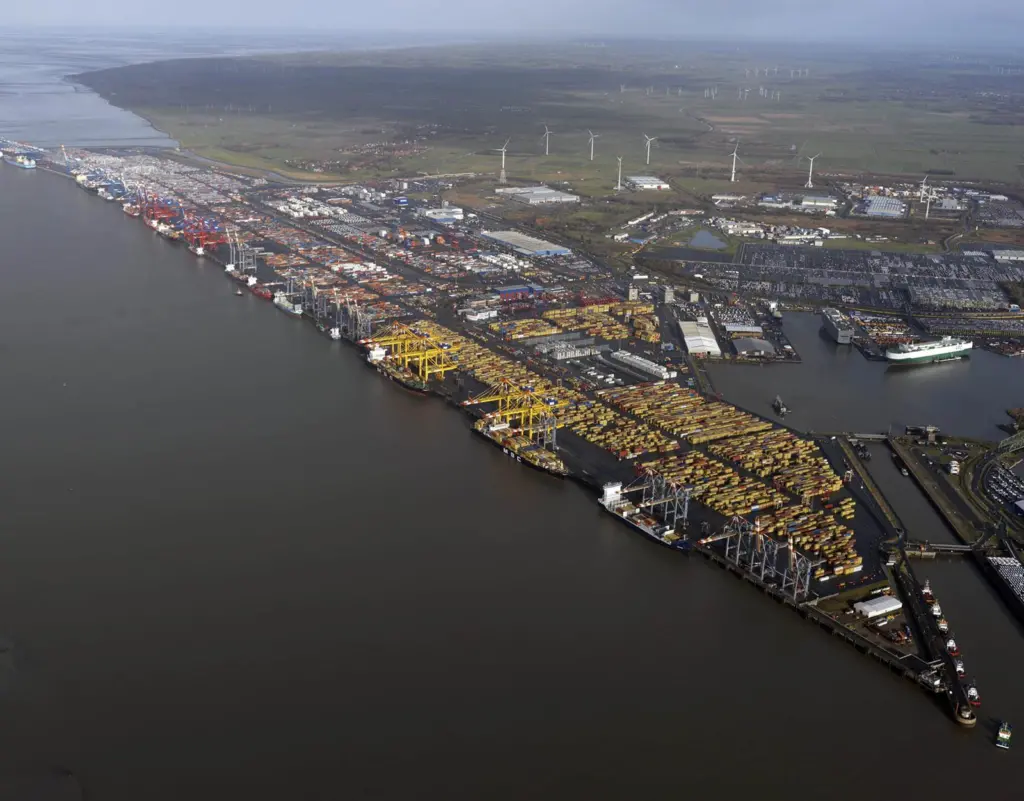
The overall development of container handling volumes at the various Eurogate locations was mixed in 2014. Between them, the German terminals handled 8.1 million teu and therefore sustained their market leadership. Bremerhaven, Eurogate’s largest German terminal location, stagnated at the previous year’s level with 5.8 million teu as the new generation of ultra-large container ships (ULCSs) of 10,000 teu or more set in earlier here than at other seaports, while Eurogate Container Terminal Hamburg recorded strong growth of 16.7% in 2014, handling 2.3 million teu.
“The Eurogate Group continues to be well-positioned to hold its own despite intensified competition,” said Emanuel Schiffer, chairman, Eurogate Group management board. “Wilhelmshaven is our answer to the ongoing trend towards ever larger vessels that we have observed over the past few years. In the meantime, the shipyards have mega container carriers with a capacity of 20,000 teu on their order books.”
On 20 February 2015, the first ship operating on the Far East – Northern Europe service of the 2M Alliance between Mærsk Line and MSC Mediterranean Shipping Company docked at Eurogate Container Terminal Wilhelmshaven. The 2M Alliance has included Germany’s only deep-water port in its schedule with two liner services on its Far East – Europe routes and three feeder services. Mærsk Line also started a third liner service between the Middle East and India. The seaport location is seeing increasing demand on the part of shippers.
Elsewhere, the development at the international Eurogate locations was on the whole positive, with Italian container terminals achieving slight growth of 0.3%, while 16,000 teu ships regularly called at the southern European terminals in the Eurogate Group.
“We are expecting that five years from now all Far East – Northern Europe services will operate with ships in the 16,000- to 22,000 teu class. This brings enormous challenges for the infrastructure of the ports. As a Group, however, we take a relaxed view of the situation,” Mr Schiffer added.
To facilitate handling of large container ships at LSCT La Spezia Container Terminal, the company has investing in23 container rows on deck, two new container gantries.
Meanwhile, the development of the Tanger container terminal has been successful, increasing handling volumes substantially by 33.2% to 1.4 million teu. Negotiations are currently underway about a further involvement of Tanger in the TangerMed II port extension area and increased terminal capacities at the site.
The trend in handling volumes also carried across to the Ust-Luga Container Terminal, which despite the Russia crisis recorded a rise of 68.1% to 103,521 teu.
Eurogate is also investing in ‘green power’ to operate its container terminals and earlier this year put its second wind turbine into operation at Bremerhaven. In the past few years, the Company has progressed in its efforts to save energy and lower CO2 emissions per container and since 2008, energy consumption per container has been reduced by 13% and CO2 emissions by 18%.
“Over the past few years, we have among other things worked hard to further improve our cost situation. And we will continue to enhance the quality of our service to enable us to set ourselves further apart from our competitors,” Mr Schiffer concluded.
Related Articles
 CONTAINER & CARGO HANDLING
 CONTAINER & CARGO HANDLING
 BULK HANDLING