



Decisive years ahead for Charleston
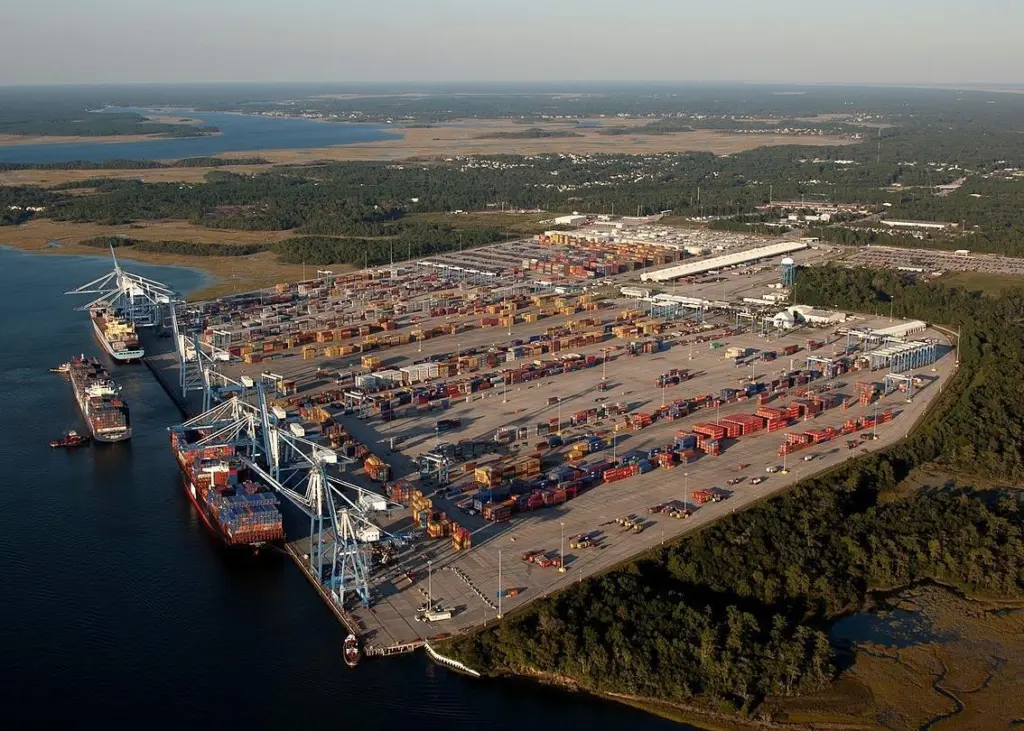
South Caroline Ports Authority (SCPA) says the next five years will be decisive times for Charleston port with increased container volume growth, harbour deepening and investing in infrastructure coming top of the agenda.
President and CEO, Jim Newsome, said that existing volume and revenue gains have well positioned SCPA to face the challenges ahead for achieving these objectives.
“Significant investment is required to be a major US container port and earning adequate return on capital will be a challenge for us in the years ahead,” he said.
“In addition to maintaining above market growth and delivering high value and reliability and cost for the service we offer, there are a number of actions required to realise these investments – an improved contractual structure and revenue model from port clients, firm prioritisation of capital expenditures and an inward focus on organisational streamlining effectiveness and productivity.”
Planning volume gains are linked to what SCPA calls a compelling opportunity to serve big ships calling on the east coast cashing in on the expansion of the Panama Canal and the raising of the Bayonne Bridge in New Jersey.
In addition to the completion of the harbour deepening project, which has just received final approval from the US Army Corps of Engineers, SCPA will focus on investments to terminal capacity and infrastructure, including construction progress on the Jasper Ocean Terminal (JOC), Navy Base terminal and Wando Welch Terminal wharf strengthening project, which will feature a new access road and intermodal container transfer facility.
Meanwhile, a university study highlights SCPA’s role as an economic driver for South Carolina. The port authority generates US$6.3bn in annual economic activity in the Lowcountry region and $53bn statewide.
The study, reveals that 1 in every 11 jobs in South Carolina can be attributed directly or indirectly to SCPA corresponding to US$10.2bn in labour income.
It’s clear that the port’s presence in South Carolina has broader implications for long term economic development in the state.
Related Articles
 PORT & TERMINAL NEWS
 OPERATIONS
 PORT & TERMINAL NEWS