![PortStrategy[GreenPort]](https://www.portstrategy.com/wp-content/uploads/2026/09/PortStrategyGreenPort.svg)






Time to tweet?
Some ports are more social than others, but to what end asks Felicity Landon
When singer Ed Sheeran told fans he was “taking a break” from social media recently, his announcement – made via social media, of course – made headlines.
Whether you’re a 21st century Luddite or totally hooked on Instagram, social media is everywhere. The question, then, is how can, or should, ports use social media to stand out from the crowd and how can they make social media work for them?
IT research company Gartner says that for about 25% of its business clients, the explanation of their social media strategy begins with: “We have a Facebook page, a Twitter account, and we’re on YouTube.”
“Beyond that, IT leaders are often unaware of the reasons why those accounts exist,” says analyst Jenny Sussin. “When we ask: ‘What are you doing with those accounts?’ we’re typically faced with responses such as ‘we’re not sure’, ‘marketing is in charge of that’, or (for the IT leaders that have more involvement), ‘increasing brand awareness’.”
Gartner says that in many cases, if the marketing department is solely in charge, the result can be rather disjointed social media strategies focused only on marketing within social media channels, with campaigns where the end objective is to have someone watch a video or click to share a post.
Business impact
Of course, in the case of the ports sector, increasing awareness of what ports do would be welcomed. But as Ms Sussin says, increasing brand awareness does not tell us how the business has been impacted in terms of increasing opportunities or leads, for example. She says in her report: “Organisations should use social media because it creates a business impact — not just because everyone else is using it. Social media strategies that have outputs based on clear metrics will see outcomes that actually deliver business growth. Companies that have clear objectives, but are not seeing an impact in the first six months, may want to consider if they are having a tactical execution problem, or if social media is not the right channel for them.”
Why should ports – or any business – use social media? Liz Tyler, PR and digital marketing manager at Ipswich-based Trebuchet Creative, says: “To strip it back to basics, it’s like considering all other marketing tactics. Whether it is useful depends on your target audience and if they use it. If your target audience uses social media, why wouldn’t you? Social media gives you the opportunity to connect with your target audience for free. If you get the messaging and the approach right, it can be very successful.”
Many companies think they don’t have time to do social media, says Ms Tyler, and that’s why the planning stages are so important. “Social media marketing needs to be planned for and strategised as much as any other marketing technique. It needs to support your business objectives and can be used in many ways – for example, to build a brand profile, engage with specific communities, send out news, increase website traffic, etc. In planning: who will manage it, what will be said, how often, are all questions that need to be answered and planned for. That way, you can manage social media in line with your resources. You don’t necessarily need a social media team.”
Different channels
People use social media for many different reasons, says Ms Tyler. “For example, Twitter is all about following your interests. It’s all about the target audience and who you want to reach and what you want to say to them. One user might want to find out information on port delays, but someone else might be following updates on their local port expansion. Someone else might purely enjoy spending time at Felixstowe port watching ships coming in and going out. It could even be a supplier, partner or another port.
“Something else to consider is that in addition to the ports using social media to send out messages, social media is a very valuable tool to ‘listen’ to what others are saying. There might be a particular topic that users are talking about and it’d be useful for the ports to see what people are saying about the topic.
“For example, if there is a port expansion and a number of Twitter users are sending negative tweets, the port may be able to identify the messages and respond to the users. This doesn’t mean the port can only see what is in their own timeline or the posts they have been mentioned in; social networks like Twitter have powerful search tools.”
In a recent report by data expert Spire, the Port of Long Beach was named the most sociable port for its overall media presence. This was an honour “because we strive to be the best at everything we do”, says Art Wong, the port’s assistant director of communications. “Technology is an important part of our work. That can mean using the latest zero-emission yard tractors to move goods in an environmentally responsible way, new cranes to handle today’s big ships, or, in this case, leveraging our social media accounts as another way to tell our story to the public and industry partners.”
On a mission
Educating the public about POLB’s role in the regional and national economy is part of its mission, says Mr Wong. “Social media has offered us a direct way to do that. A great benefit some people may not think of is that communication is two-way – it helps us to know what citizens and our business partners are thinking. All opinions are valued, even those that are less than happy, because it’s important to know the whole picture of our impact.”
POLB is active on Facebook, Twitter, Instagram, YouTube, LinkedIn and Google+. Among notable campaigns, he highlights a video which did well in terms of engagement. It showed one of POLB’s tenants, Total Terminals International, using nine cranes to work a single ship. “It was the first time that had been done at a North American port. The post had a tremendous number of views on Facebook, which isn’t reflected in the YouTube numbers. It’s a nice illustration of how you can use multiple platforms to share the same information and get different results.”
Mr Wong says: “A lot of people don’t realise that many of the things they buy and use every day come through our port; iPhones, for example, and we look for fun ways to let them know that.” One example POLB came up with was for the Star Wars: The Force Awakens. Containerised toy imports to the US increased 11 per cent in 2015, largely on the strength of toys associated with the film.
The Port of Dover uses Twitter (two accounts – corporate and travel), Flickr, YouTube and LinkedIn for business-to-business outreach, and is planning for Instagram too. “We want the ability to share information fast, frequently and to a wide audience – we feel Twitter is the best way,” says spokesman Antony Greenwood.
The travel account has been very successful, he adds – not only with those travelling through Dover, but also with people who live and commute around the port and to share information and support partners. Information is pushed out ‘daily and consistently’ – something that was incredibly important when strikes in Calais caused major delays in cross-Channel services.
“We still use conventional channels, albeit through the ferry operators – i.e. email, SMS and traditional media, TV, radio and web,” says Mr Greenwood, but he says the ability to share time-sensitive information with a large audience has become imperative as the port and traffic volumes grow.
Dover’s use of YouTube has also grown. “We update the account with several videos throughout the year and share these videos on the website/social media,” he says. “YouTube allows us to store and share videos on a variety of business areas – for example, our annual corporate video, cruise, the BPA Conference in 2016 and project development videos.”
Social media provides a way to engage, support and interact with individuals, community groups and business partners on subjects that are not the day-to-day running of the port – for example, the port’s CSR activities, says Mr Greenwood. But are there also drawbacks, such as members of the public having a platform to rant unchecked? “Yes, but that can be an opportunity to engage with a member of the community and show what the port has done that is positive. Also, it’s an opportunity to address customer comments/complaints if required.”
Stakeholder engagement
Gareth Lewis, corporate communications manager for Associated British Ports, says: “We regard social media as an important and growing component of our community and stakeholder engagement programmes.
“Social channels allow us direct contact with the communities both in and around our ports. We engage principally on Twitter over multiple channels and LinkedIn, while some ports run Facebook local pages.”
These channels allow ABP not only to supply important information as required but also be part of the conversation on a local level, he says. “We are frequently delighted by the level of interest out there in our business. We find there’s a genuine appetite for news and particularly images of visiting vessels as well as the day to day of port life.”
An important consideration when using social media is to ensure that your messages are right for the audience – and that you don’t ‘over-tweet’, says Angela Cook, recently appointed communications officer at Harwich Haven Authority.
Previously in her career, she recalls going on leave and an overenthusiastic colleague taking over the tweeting while she was away. “In the end, I switched my phone off because they were doing it all the time. Don’t just tweet ‘it’s a nice day’, because that just annoys people and they will probably unfollow you.”
Also, says Ms Cook, you may have thousands and thousands of followers, but who are they? “Make sure you monitor who is following you and who you are following, and make sure you are finding the right content.”
The key reason for HHA to use social media is engagement with its stakeholders, including re-tweeting companies’ press releases where applicable, she says. But being overwhelmed by Twitter can go both ways.
Angela Cook uses TweetDeck to keep control of it all. “You can create lists and keep an eye on separate streams – port authority news, industry news, etc. It makes it more manageable, because otherwise the important messages can get lost in the flood of information.”
MAKE A PLAN AND STICK TO IT
As well as supporting company objectives, social media needs to go hand-in-hand with all other marketing activity, says Liz Tyler at Trebuchet. It’s also important to plan ahead for the topics that the port can talk about and the variety of the content. “The more varied the messaging, the better. However, the messaging has to be useful – what is the reason for sending a particular post? Will the audience find it engaging and interesting? Is there a call to action – what do you want the audience to do after reading your post? It’s important that the activity supports business aims and marketing objectives.”
Care should be taken over writing and sending posts, she warns. “Once it is out there, it is out there, so make sure the person looking after your social media account can write well. A badly written tweet will not reflect positively on your profile and professionalism. Finally, negativity. It’s a worthwhile exercise to think ahead to how you would deal with someone criticising you online. That way you can respond quickly before a situation can get out of hand.”
In short, she says, if a port runs with social media before they can walk, and they don’t know how they are going to manage it, haven’t decided what they’re saying and don’t know why they’re saying it, there will be a problem.
VANCOUVER FLIES WITH HIGH LEVEL OF ENGAGEMENT
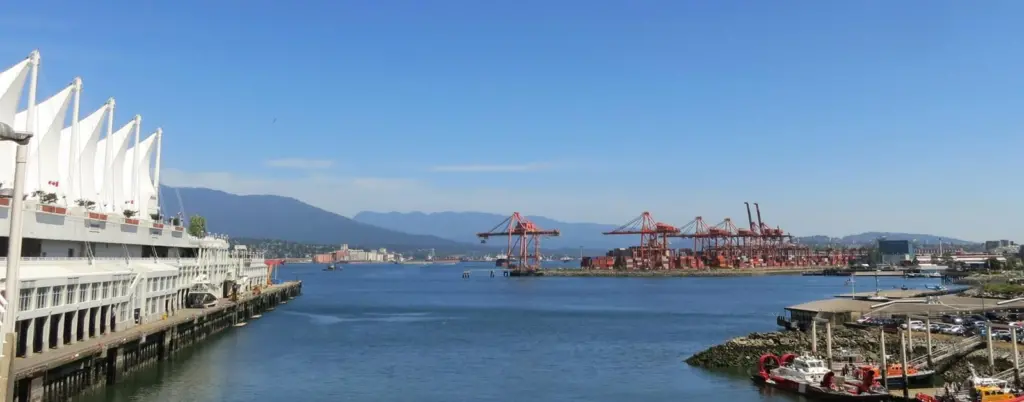
Port Metro Vancouver was named Spire’s port with the highest level of engagement via social media.
“We are honoured to have been ranked as one of the top five most social ports in the world and the port with the highest level of engagement on Facebook,” says communications and media advisor Rachel Wong.
“Vancouver is a port city and our public awareness initiative allows us to engage with and educate the public on the importance of the port to British Columbia and Canada in terms of jobs, trade and the economy. We continuously analyse what resonates best with our audience and develop content to answer most frequently asked questions and topical subjects.”
Vancouver maintains an active presence on Facebook, Twitter, Instagram, LinkedIn and YouTube. Each of these outlets is used to target different audiences and content, says Ms Wong. “We tend to use Facebook for community-focused topics and events, and Twitter for facts and current events. For LinkedIn, we provide our expertise on port matters and information on industry trends. Where possible, we will adjust our content to promote on multiple channels.
“We measure active responses on the social media channels as well as overall awareness of port matters in our annual community survey.”
She adds: “The feedback we consistently receive from the community is that people would like to know more about Canada’s largest port and our region’s maritime history. Our online channels are opportunities to educate and inform the public about our mandate, operations and the critical role the port plays in the community.”
Related Articles
 CONTAINER & CARGO HANDLING
 CONTAINER & CARGO HANDLING
 BULK HANDLING