![PortStrategy[GreenPort]](https://www.portstrategy.com/wp-content/uploads/2026/09/PortStrategyGreenPort.svg)




The importance of wind farms while developing green ports
The current development of ports and the rate of international product transmission entail huge pressure on ports operations. Certain maritime activities such as the reception and export of goods and the common performance and maintenance operations at ports are considered as the most power consuming in the industry, says Mansoureh Hasanzadeh from the Coastal Engineering Department at the Iran Ports & Maritime Organisation.
In Iran, the idea of managing port terminals with a significant reduction of costs, an enhancement of efficiency, and mitigation of environmental pollution has encouraged us to reflect on the discussion of “green energy” in ports.
There are many concerns about possible damage of port and marine operations to the environment. For example, a drastic increase in greenhouse gas emissions could certainly be expected along with the heavy raise in fuel costs. So, considering the use of renewable energy in this sector is not a luxury!
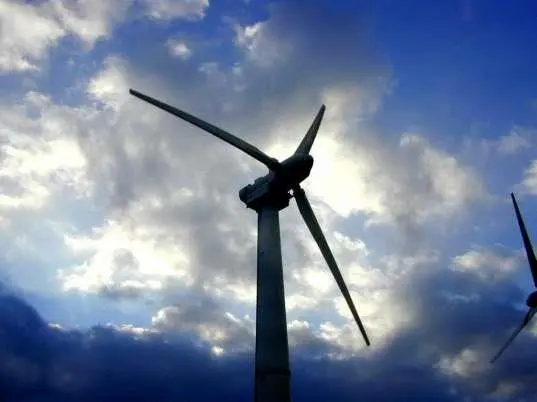
Wind energy is one of the most economically practical, technical and environmentally attractive of all the latest renewable energy options. So, we can say that the manufacturing of wind farms is innovative and important because it gives us the opportunity to respond to climate change while having the advantage of producing cheaper energy.
The construction of wind farms (especially in bodies of water and coastal regions) could have a unique role when we think about time saving and management improvement in shore infrastructures. In industrial countries, where results mostly depend on different factors like customer’s service, satisfaction and dissatisfaction on the one hand, and energy costs on the other hands, time management and costs reduction have an undeniable effect on the port existence and commercial benefits. Therefore, port managers should add wind farms on the list of essential energy suppliers. Wind energy is known among all potential types as a renewable clean energy in contrast to fossil fuel based energy sources which contaminate the lower layers of the troposphere.
Wind energy in the Persian Gulf
In order to meet the growing energy demands at Iranian ports, wind energy could be the appropriate source of energy in the Persian Gulf region. Offshore wind resource is more abundant, accessible, cleaner and of better quality, which results in higher electricity output in this region.
The geographical location of Iran along the Persian Gulf and its different features have attracted a lot of attention from all around the world! Marine structures at the Persian Gulf have faced many challenges. Sustainable energy consumption and the exploitation of environmentally friendly energy have very often been neglected in this area. Therefore, what could be the target of these power plants in offshore industries in such countries? That’s how our survey illustrates the productivity potential of wind farms. Iran is the destination of oil tankers and other type of ships and this has therefore created a high number of oil platforms on the Persian Gulf which has turned this region into high risk one. From an engineering point of view, catching wind power could be used in order to decrease diesel generator usage offshore. Creating “Salvage Units” for Salvage operations and fuel transfer is another crucial reason for the use of natural power at the Persian Gulf. This strategy leads us to carry out MARPOL’ Appendix 6, which cover the reduction of air pollution from ships (electric power). All these elements have been incentives to use wind farm in Iran.
But such new idea needs appropriate and thoughtful research on the technical level, instead of considering merely the fact of having enough wind speed.
These wind farms have to be built after a technical site selection on the Iranian coast, and after the consideration of the capacity of the environment of the water basin, we’ve assessed a high significant productivity potential of wind farms. However, the basics of offshore engineering and methods of trapping offshore wind power are facing some natural problems, such as variation in wind strength and wind direction which produces irregular power, or the significant differences in seasons and wind conditions.
Furthermore, some technical aspects should be taken under consideration. Within wind turbines, different facilities are equipped with wind-efficient fixtures. Accurate wind speed predictions are required for placing wind turbines and estimating their power generation capability. Such viable wind farm sites are located on special locations which acquire high wind speeds. Therefore, the topography of the coastal area has to be understood. We should synthesise wind speed time to trap it on time (with the attention to requirements for supplementary offshore wind farm installations such as meteorological measuring).
Both onshore and offshore wind industry standards are needed to utilise time domain simulations, which facilitate to take all conditions of the turbine operation into account.
Controlling the stability of electric power systems
A potential site should have a precious and full-time wind condition simulation that doesn’t neglect any radical or insignificant difference. Having a perfect knowledge of the wind conditions can help us to use wind energy conversion systems appropriately. Hence, in order to sett wind farms in motion, we need extra investments at sea as on land. On the other hand, orographic and financial factors are influential, too. In order to improve the cost-effectiveness of offshore wind, possible risks must be undertaken and mitigated, and critical design parameters must be optimised.
Nevertheless, the most significant issue is controlling the stability of electric power systems to conduct the balance between generated and consumed power. This refers to the fluctuating nature of wind speed, especially when wind turbines are geographically concentrated in large wind farms.
The best distribution system is the one that ensures the following overall goals: safety, minimum initial investment, maximum service continuity, maximum flexibility and expendability, maximum electrical efficiency, minimum maintenance cost and maximum power quality. Furthermore, when an electrical distribution system is designed for a particular customer and facility, the electric power is delivered to all electrically operated devices.
In view of the fact that these wind farms may act as a joint venture along with the “increase of effectiveness” and “efficient management” of coastal and marine terminals, and having the expectation to cease air pollution while using clean, safe and clearly different energy resources, we could proudly conclude that Iranian ports at the Persian Gulf have the ambition to be governed under a real multilateral and “green” management, especially if these ports desire to have one day a green award certificate.
Related Articles
 NEWS
NEWS
 MIDDLE EAST GREENPORT
 MIDDLE EAST GREENPORT