


Just the job
Third party maintenance is still attractive at lower volumes, as John Bensalhia finds out
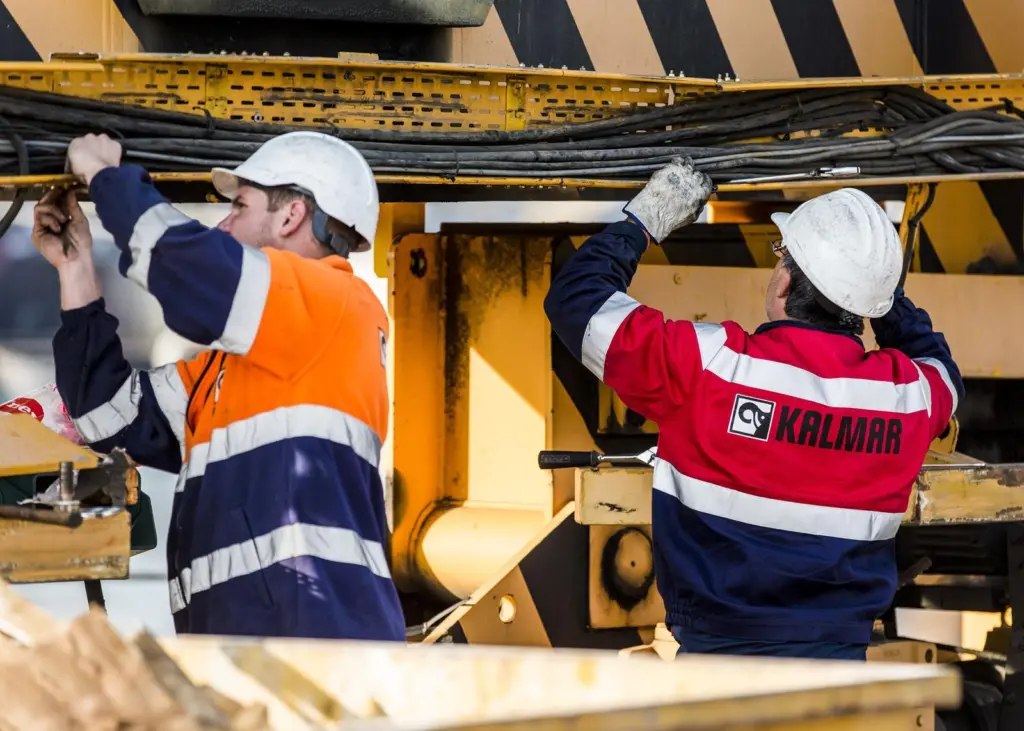
If you want a job done well, do it yourself, the old adage goes. It’s a common sentiment, but in the real world, does it hold water? When it comes to port maintenance, the question is whether you do it yourself in the hope of saving money, or do you employ a third party to do the work, banking on them being better equipped to do the job.
In an industry that relies on high availability of equipment to support productivity, maintenance is, of course, absolutely crucial. As bremenports’ Rüdiger Staats explains, high standards of maintenance mean customer confidence in the port.
“A world port such as Bremen/Bremerhaven can only succeed in the face of competition if its infrastructure (i.e. its roads, bridges, terminal railway facilities etc) are in good condition,” he says. “The maintenance of this public infrastructure has to be organised and executed in such a way to ensure that port availability is kept at virtually 100%, 24 hours a day, seven days a week, 365 days a year. If that does not succeed, the port runs the risk of losing the confidence of its customers.”
Machinery and equipment manufacturers do offer their own maintenance services. Peter Klein, senior manager, marketing at Terex Port Solutions, explains what TPS provides: “Individual solutions, starting with maintenance and repair in specific cases up to full maintenance contracts for machines or entire fleets.” Mr Klein says that TPS customers can benefit from experienced and qualified technicians and also original equipment manufacuturer know-how for condition-based maintenance and repairs.
Kimmo Kallioniemi, vice president, service operations at Kalmar, comments: “We serve our customers both through long term Kalmar Care service contracts and by providing on-demand maintenance. We serve customers through a global network of 1,500 service and support staff in 120 countries, and are trusted to maintain over 5,800 machines.”
Lower volumes
High standards of maintenance are crictial, even for lower cargo handling volumes: “In times of reduced cargo handling volumes, proper maintenance is vital for high availability of machines and needs to be performed with the same carefulness as in times of high cargo handling volumes,” says Mr Klein. “A reduced number of machine operating hours certainly reduces the total efforts for regular maintenance. For example, the service interval of a diesel engine will be stretched over a longer period.”
But he adds that terminal operators can take advantage of reduced cargo volumes by investing in preventative overhauls of machines or their components. “In these times, the regular terminal operation will not be interfered with by taking machines out of operation for overhauls. Terminal operations therefore can count on serviced, overhauled or modernised machines once the cargo handling volumes rise again.”
“The greater the cargo volumes handled by the port, the greater the strain on its infrastructure,” adds Mr Staats. “This inevitably means higher demands on port maintenance. One example of this is the approx. 225-kilometre terminal railway at the ports of the Federal Land of Bremen. Bremen’s government is currently investing huge sums in upgrading the tracks and railway facilities in Bremerhaven to enable the terminal to cope with the growing numbers of container and car carrier trains in future.”
Kalmar’s Mr Kallioniemi add: “In terminals where cargo volumes have decreased, we see a trend of outsourcing terminal services. Those terminals are tempted to focus more on their core business and outsource terminal maintenance to companies specialised in services, like Kalmar. The benefits gained from outsourcing are flexibility of maintenance and reduced capital employed with integrated spare part supply.”
Predictive trends
A notable concept in the maintenance field is condition-based monitoring, or CBM. This involves the monitoring of the condition of a piece of equipment or machinery to determine what maintenance is required. When there are indicators of potential failure or worsening condition, maintenance should be carried out. This strategy can have both benefits, but also, drawbacks, as Mr Staats explains.
“We monitor the status of our technical facilities in good time to ensure that they are in proper working condition at all times. By doing so, we avoid lengthy down times. Needless to say, problems can crop up at any time (for example, unforeseeable defects that have to be remedied as soon as possible).”
“Usually maintenance schedules are based on experiences with components and machines and expressed in intervals of operating hours,” says Mr Klein. “These intervals are defined with the target for better availability of machines, which means that intervals are not pushed to its limits.”
“Following the condition-based monitoring idea means to push the maintenance intervals to its limits. Very careful monitoring of machine component conditions opens up the possibility to enlarge intervals without increasing the risk of unplanned breakdowns. The challenge is to define the right balance of enlarged maintenance intervals, cost of conditions monitoring and risk of unplanned breakdowns.”
Mr Kallioniemi says that condition-based monitoring is a major component of predictive maintenance. “Monitoring of Kalmar equipment makes it possible to schedule maintenance to prevent failure from happening. Based on our experience, we are able to read early signals of a failure from the equipment and react to this immediately in the next scheduled maintenance break to prevent interruption of the operations.”
He adds that for automation, condition-based monitoring becomes more important. “Manual crane systems can work even if the equipment is not in perfect condition, since human operators can usually compensate for the quirks and deficiencies of each individual piece of equipment. By contrast, automated equipment always needs to be in 100% working condition to deliver its full potential.”
On the subject of condition-based maintenance, Mr Klein concludes that this will be the way forward for handling high cargo levels: “Terminals with high cargo loads will more and more invest in condition-based maintenance to improve maintenance intervals. This will be supported by remote solutions for condition monitoring and failure diagnosis. Remote failure diagnosis offers the possibility to involve specialist know how in troubleshooting without the need to have the specialist on site. This will save time and cost.”
“Organisation will become even more professional, data collection and evaluation more intensive,” adds Mr Staats. At the same time, public port infrastructure operators will be faced with increasing outlay, both organisational and financial: “This is a consequence of the continuing growth in ocean freight throughput and increasing transport volumes, for instance on the terminal railway tracks.”
Looking to the future, Mr Kallioniemi says that the trend towards terminal automation requires a major change in practices and attitudes towards maintenance operations. “With automatic operations, the emphasis shifts to more frequent preventive maintenance and 24/7 support. However, as this maintenance is usually done at planned intervals, the caused impact to the operation is minimal.”
“As collisions and other accidents due to human error will be eliminated, the need for ad hoc repairs will also reduce dramatically, bringing cost savings in the long term. Automated equipment can also provide continuous updates on their status and can send alerts when any early traces of potential faults have been detected.”
STILL A PLACE FOR THE ON-SITE ENGINEER
While bringing in a third party to work on maintenance, on-site maintenance still has its advantages. Kalmar’s Kimmo Kallioniemi explains: “Next to remote connections, on-site maintenance remains extremely important for terminal operators as time is a crucial factor when there is a vessel at the quay.”
A big plus point of on-site maintenance is the experience that a worker (or team of workers) can bring to the job. “The port management company bremenports is responsible for four large sea locks at the ports of Bremen and Bremerhaven,” says the port’s Rüdiger Staats. “If one of these locks cannot be used because of technical problems, we put our trust in the expertise of our company’s own specialists. Our technical team is made up of numerous engineers, skilled workers and craftsmen who have been familiar with these complex facilities for many years – and in some cases even decades. This experience cannot be overestimated. Our team can contribute detailed knowledge of the plant and equipment and is on call 24/7, even at night, weekends or on public holidays if need be.”
Another reason for continued on-site maintenance is practicality. “Due to the size of most port equipment, regular maintenance is performed on-site,” explains Terex’s Peter Klein. However, he adds that this is different when it comes to preventative overhauls of components. “Due to the environmental conditions in ports, for example, with possible high loads of dust or humidity in the air, components like gear boxes or hydraulic cylinders are disassembled and transported to dedicated workshops. Additionally, workshops are usually equipped with lifting equipment, tools and equipment to ease the work and improve the quality.”
Related Articles
 OPERATIONS
 OPERATIONS
 PORT & TERMINAL NEWS