![PortStrategy[GreenPort]](https://www.portstrategy.com/wp-content/uploads/2026/09/PortStrategyGreenPort.svg)






Changing state
What can port operators do to reduce the risk of cargo liquefaction asks John Bensalhia
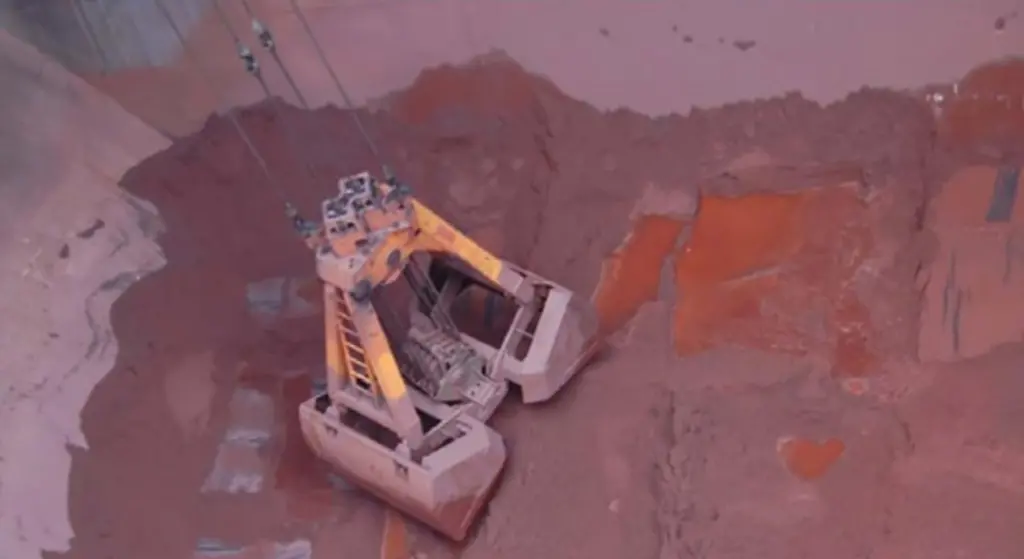
Ruined or damaged cargo is certainly a headache for port operators, but cargo liquefaction as a result of poor handling or inadequate storage is a far greater problem, which can ultimately lead to a tragic loss of life. If dry bulk commodities liquefy, then, if undetected, this can lead to the ship sinking with often fatal consequences.
In Autumn 2010, bulk carriers, Jian Fu Star, Nasco Diamond and Hong Wei were lost over a six-week period, having carried nickel ore from Indonesia. In early 2015, the Gearbulk-owned Bulk Jupiter also sank. Having departed from Kuantan in Malaysia on December 30, 2014, days later, the vessel (carrying bauxite) sank, leading to the deaths of 18 crew.
“Cargo liquefaction is probably now the most significant factor in lives lost at sea for bulk carriers,” says Morten Løvstad, Business Director of Bulk Carriers at DNV GL. “While the general safety level of modern bulk carriers has been significantly improved over the last decades, recent incidents have shown that cargo liquefaction remains a major safety issue.”
The International Maritime Solid Bulk Cargoes Code, introduced by the IMO, ensures that cargo storage and shipment are as safe as possible by highlighting potential dangers connected with specific solid bulk cargoes. Instructions are given for the procedures that must be implemented to ensure maximum safety.
Mr Løvstad comments: “The IMSBC Code is very clear that ‘Concentrates or other cargo which may liquefy shall only be accepted for loading when the actual moisture content (MC) of the cargo is less than its Transportable Moisture Limit (TML).”
Amendments have recently been made and will be compulsory from January 1, 2017. Specifically, sub sections 7.3.1 and 7.3.2 under section 7.3 ‘Provisions for cargoes that may liquefy’, have been amended with respect to specially constructed or fitted cargo ships for confining cargo shift. A new sub-section 7.3.3 has also been introduced which addresses specially constructed cargo ships for dry powdery cargoes.
One of the most notable changes concerns iron ore fines. Iron ore fines pose a greater risk than just iron ore as they come under the Group A category. Group A cargoes contain 10% or more of fine particles less than 1 mm in diameter and 50% or more of particles less than 10 mm in diameter. With that in mind, the IMSBC Code amendments will include a new draft amendment to Appendix 2 for the inclusion of the Modified Proctor/Fagerberg test procedure (used to detect the TML) for iron ore fines.
“The new schedule for ‘iron ore fines’ helps in identifying the risks and possible mitigation measures for this cargo,” explains Mr Løvstad. “Especially the ‘Modified Proctor/Fagerberg test procedure for Iron Ore Fines’ as described in the IMSBC Code is seen as an improvement for reliable determining transportable moisture limit (TML) of Iron Ore Fines.”
For bauxite, a notable risk factor is that in some cases, before shipment, it is sieved to remove any lumps. The problem with this process is that it uses high pressure water to force the ore into rotary sieves.
High risk
Meanwhile, nickel ore, one of the riskiest, is dug from open pit mines. It actually has low nickel content of around 1%, with the remaining 99% a fine grained soil featuring clay-like properties. Because nickel ore is sourced from open pit mines, monsoon season brings extra risks of heavy rain. Wet, fine grained material such as this is susceptible to liquefaction.
In order to prevent liquefaction risks, port operators need to take a number of precautions, the nature of which should be decided in communications between ship and terminal, prior to loading the cargo. The first is that of proper awareness and competence about the potential risks, at both terminal and ship.
Next is ensuring that cargo is correctly identified (using the Bulk Cargo Shipping Name) and that the cargo properties, including TML and actual moisture content, are properly documented. By rightly logging the identified cargo, any possible risks can be identified immediately. If the right name isn’t used, any potential risks won’t show up and the risk of liquefaction increases.
“A main issue is to ensure that the cargo certificate contains correct information and reflects the cargo to be loaded, especially that the MC<tml,” says="" mr="" løvstad.="" “in="" order="" to="" determine="" the="" average="" moisture="" content,="" samples="" have="" be="" representative="" of="" whole="" shipment.="" this="" means="" that="" entire="" cargo="" has="" available="" at="" load="" port="" prior="" start="" loading.="" it="" is="" also="" important="" are="" taken="" from="" full="" depth="" stockpile.”
The IMSBC Code’s BCSN (Bulk Cargo Shipping Name) is designed to ensure that all cargo is labelled and identified correctly. While commercial or trade names can be used as a supplement, they cannot be used as a substitute name.
In cases where cargo is not listed in the IMBSC Code, then the port authority must provide the right documentation prior to loading. The documentation should rate the level of safety of the cargo, and should refer to the cargo’s properties and required conditions for carriage and handling.
Loading delay
Another key precaution is to ensure that the time interval between testing for moisture content and loading is no more than seven days, and that retesting is done in the event of rain.
“In case of rain between the time of testing and loading, tests should be conducted again,” says Mr Løvstad. “To avoid increased moisture content before and during loading, special care should be taken if loading is carried out during heavy rain. Cargo hatches should be kept closed, except when opened for loading. If barges are used for transportation of the cargo from the stockyard to the ship, rain and waves may add water to the cargo as well, and require extra precautions and potentially re-testing of the moisture content.”
“Trimming the cargo is a well-known method for reducing the risk of cargo shift or cargo sliding. In addition, the stability and the weight distribution are improved. Both during loading and voyage, the cargo in the holds should be monitored for excess water or other signs of liquefaction risk, such as flattening of the cargo or fluid flow.”
Appointing an independent surveyor or cargo specialist performing independent tests to verify the actual moisture content is also recommended. An expert can be useful for areas such as the decision to choose which testing method should be used for finding the Transportable Moisture Limit (TML) of the cargo. There are three testing methods to find the TML value of each cargo ore: Flow Table; Penetration and Proctor/Fagerberg. It is recommended that operators seek advice from the relevant authorities as the three methods are respectively suited to specific types of cargo.
Mr Løvstad concludes that both regulating bodies and various organisations have put cargo liquefaction on their agenda, resulting in several research studies to better understand the phenomena and to possibly introduce new regulations.
“For port operators and shipping companies involved in the dry bulk industry, it is recommended to include awareness campaigns and training programmes on cargo liquefaction for their crew. Both P&I Clubs and some class societies have recently issued publications giving more in-depth insights into cargo liquefaction, with more illustrations and practical guides than currently incorporated into the IMSBC Code.”
Ultimately, increased awareness and competence both at ship and terminal side will help to reduce the risks of liquefaction and avoid these tragic losses of ship and lives.
FROM A SOLID TO A LIQUID STATE
Liquefaction is a phenomenon in which a soil-like material abruptly transforms from a solid dry state to an almost fluid state. Many common bulk cargoes, such as iron ore fines, nickel ore and various mineral concentrates, are examples of materials that may liquefy.
“If liquefaction occurs on board a vessel, the stability will be reduced due to the free surface effect and cargo shift, possibly resulting in capsizing of the vessel,” says DNV GL’s Morten Løvstad. “The ship structure may also be damaged due to increased cargo pressures.”
Mr Løvstad says that there are two principle causes of cargo liquefaction:
“For granular materials (e.g. iron ore fines, iron concentrates/sinter feed, bauxite) cargo liquefaction happens due to ship motions causing compaction of the cargo, causing increased water poor pressure and eventually loss of frictional forces in the cargo. There are two prerequisites for liquefaction to occur: Firstly, the cargo must contain some fine particles in addition to the granular particles. Secondly, MC > TML.”
“If one or both of these ingredients are missing, liquefaction is not possible for granular material. It is worth to note that liquefaction problems involving granular materials are most likely to occur shortly after loading (a few days), and that usually only parts of the cargo will be liquefied at the same time. For non-granular materials (such as nickel ores), liquefaction is not triggered by increased pore water pressure, but rather a sort of fatigue of the material.”
Liquefaction problems are most likely to occur several days or weeks after loading, and liquefaction usually happens for all the cargo on board simultaneously.
Related Articles
 CONTAINER & CARGO HANDLING
 CONTAINER & CARGO HANDLING
 BULK HANDLING