

New Baltic Sea NOx Study published
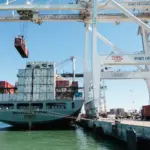
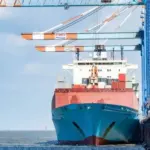
Annual ship emissions of nitrogen oxides in the Baltic Sea could be cut by around 270,000 tons by 2015 by the application of an emissions charge, according to a new study entitled Market-based instruments for NOx abatement in the Baltic Sea.
Emissions of nitrogen oxides (NOx) are a major environmental issue, with shipping accounting for a large and growing share of these emissions, including eutrophication of the sea (water bodies receiving excess nutrients that stimulate excessive plant growth), and, on land acidification and potential damage to health.
Despite the somewhat strengthened emission standards for new ships adopted in 2008 by the International Maritime Organization (IMO), NOx emissions from international shipping in European sea areas are projected to increase by nearly 40 per cent between 2000 and 2020. If no additional abatement measures are taken, this means that by 2020 the emissions from shipping around Europe are expected to equal or even surpass the total from all land-based sources in the 27 EU member states combined.
A problem with the new IMO NOx standards is that they only apply to new ships, and the turnover of the fleet is slow with ships tending to have a life of 25–35 years before being scrapped.
Thus, in order to not only limit the growth in ships’ NOx emissions, but to actually reduce them, there is a need to both cut emissions from existing vessels and to speed up the introduction of efficient NOx abatement technologies in new ships built before 2016.
The new study has investigated a series of different market-based instruments that could be used for this purpose, and also assessed the potential additional emission reductions that could be achieved by applying such instruments. The study focuses on the Baltic Sea, but the general conclusions are likely to be applicable to other sea areas.
After having analysed several types of economic instruments – such as emissions trading, differentiated fairway and port dues, and emissions charging – the report proposes the introduction of a NOx-differentiated emissions charge, largely along the lines of the current Norwegian NOx charge. The level of the charge could be similar in size to that of the Norwegian NOx Fund, i.e. €470 per ton NOx, and – as is the case in Norway – the proceeds could be recycled to the shipping industry and used to finance NOx-reduction projects.
A rough calculation of the emission reduction potential indicates that application of an emissions charge, as outlined above, could cut NOx emissions from ships in the Baltic Sea by around 60 per cent. This would correspond to an annual reduction of about 270,000 tons, from an expected business-as-usual level of approximately 460,000 tons in 2015.
For further information:
Christer Ågren: +46-706-337906: christer.agren@airclim.org This email address is being protected from spam bots, you need Javascript enabled to view it
Bill Hemmings: +32-487-582706: bill.hemmings@transportenvironment.org This email address is being protected from spam bots, you need Javascript enabled to view it
Dragomira Raeva: +32-488-583023: dragomira.raeva@eeb.org This email address is being protected from spam bots, you need Javascript enabled to view it
Market-based instruments for NOx abatement in the Baltic Sea (Nov 2009), APC-report No 24.
By Per Kågeson. Published jointly by AirClim.
Related Articles
 ALTERNATIVE FUELS GREENPORT
 NEWS
NEWS