


Gijon monitors its ecological footprint
MC3 methodology has been used for the past nine years to measure the Carbon Footprint of the northern Spanish port
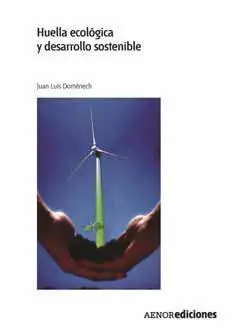
The term “carbon footprint” is relatively recent, but it is a term which nevertheless has been used for almost ten years in certain installations in northern Spain, such as the port of Gijón (Asturias). The term “ecological footprint” has also been used since its invention by Mathis Wackernagel in 1996, as the carbon footprint, usually expressed in tons of CO2, has to be calculated previously in order to establish the ecological footprint, expressed in hectares.
The need for a new approach
The creators of the MC3 methodology (method made up of book accounts) to calculate the carbon footprint of companies and organisations –which derives from Wackernagel’s original method applied to territories- believe that the concept should be used as a catalyst for an organisation’s entire sustainability, as it makes it possible to integrate both everything that leaves the system (waste) as well as everything that enters it (use and consumption of resources). Applied appropriately, it enables us to extend such sustainability to the entire value chain and logistics network, from the production centres to the consumer, via ports, shipping companies, logistics nodes and intermodal transportation. The labelling of goods and the gradual appearance of “low-carbon products”, on the basis of the environmental behaviour of all the actors involved, is one of the authors’ chief aspirations. However, these aspirations clash with serious setbacks: the diversity of calculation methods, the constant proliferation of new carbon “calculators” and arbitrariness when establishing CO2 inventories, especially for the so-called “other indirect emissions”, which some standards call “scope 3”, and which prevent us from comparing some results with others, some organisations with others and some products with others.
Other existing initiatives
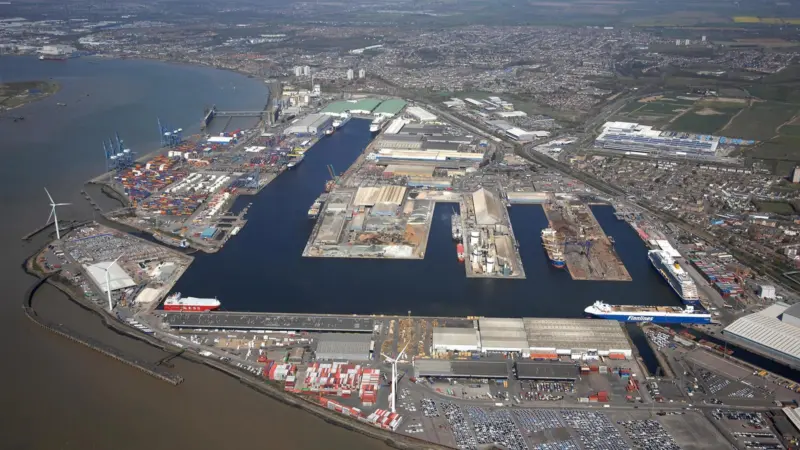
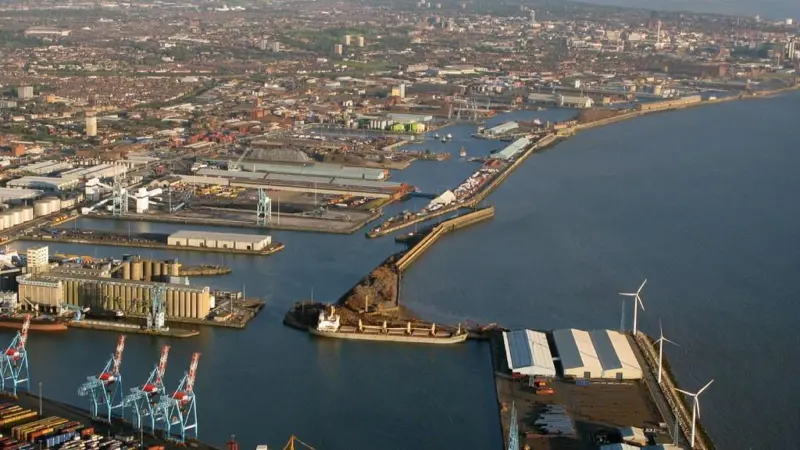
The November 2009 issue of GreenPort Issue gives details of numerous initiatives and the huge interest this concept arouses, in ports such as Oslo (one of the first European ports to calculate its carbon footprint), Stockholm (CO2 emissions down 45 percent), Houston (green energy), Long Beach and Los Angeles (zero emissions, TAP Programme), Rotterdam (container terminal with electricity generated solely by wind power), London (improved access to the port to reduce CO2 emissions), Gothenburg (Onshore Power Supply), Belfast (to reach Carbon Neutral Company status); also, the Maersk Line, the world’s largest container shipping line (the Quest Project to reduce CO2); the MS Beluga SkySails project, to propel merchant ships with kites; or the network of APM Terminals based on eco-efficiency (48 container facilities, 10 port projects in 34 countries). CLIMEPORT is a European project in which the ports of Valencia, Algeciras, Marseilles, Livorno, Piraeus and Koper participate, one of the aims of which is to calculate their carbon footprint. The WPCI Carbon Footprinting Project is an initiative enabling ports, lines and operators to collaborate in creating sustainable logistics chains. And the IMO package for reducing shipping’s CO2 is another interesting initiative under way at present.
MC3 methodology, a new point of view
In this context MC3 emerged, aiming to publish its second version this year, which will include most of the improvements which have been detected in recent years, after the appearance of version 0 in 2002 and version 1 in 2004, such as how to count the life cycle of fuels; the other non-CO2 greenhouse gases; the use of public infrastructures; the dangerous waste footprint; the footprint corresponding to the use of urban, agricultural or marine areas, the incorporation of new factors regarding emissions and energy intensities with recognised data bases; or improvements in nuclear electricity and cogeneration, among others. All of the above enables us to calculate the carbon footprint of the 10 footprint categories which should be included in a comprehensive inventory: fuels, electricity, materials, works, services, agricultural resources, forestry resources, water footprint, land use and waste. Three of MC3’s main characteristics are the acquisition of data based on the organisation’s book accounts, their origin in the Published book about ecological footprint and carbon footprint. Soon a new book developing the new version 2 shall be available ecological footprint and the “focus on the organisation”, which makes it possible to calculate the company’s footprint first and then extend it to products or services, without the classic “cut-off criteria” of the “process based” methodologies.
Applications of MC3
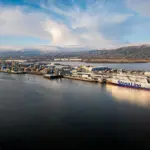
The port of Gijón was one of the first ports in the world, if not the first, to calculate its carbon footprint (2002), having detected all of the direct and indirect emission sources, which made it possible to establish reduction strategies. However, many case studies now exist, in all kinds of companies, such as agricultural and fishing companies, service companies, businesses, waste treatment plants, sewage treatment plants or car dealers. A Coruña’s Sustainable Engineering Laboratory (LIS; www.lis.edu.es) has also undertaken a project to detect the carbon footprint of a cement factory. It is undoubtedly time to standardise a single calculation methodology which is both solid and properly developed and which facilitates the circulation, comparison and coordinated planning of projects to reduce and mitigate emissions. It might even be appropriate to establish alliances between methodologies based on the organisation, such as MC3, and those based on the analysis of the life cycle of products, such as PAS 2050, as complementary data might be necessary when establishing international calculation standards. This would be hugely advantageous for the new “zero-carbon” product market which is emerging.
Related Articles
 ALTERNATIVE FUELS GREENPORT
 NEWS
NEWS