

Legal uncertainty hinders Polish port development
Ports in Poland are now applying environmental policy – even though there is often confusion between European and Polish legislation. Kasia Kurek, of Erasmus University, Rotterdam, reviews the environmental initiatives that are being undertaken
Polish ports are facing an increasingly wide range of challenges. The impact of the economic crisis is one such challenge. But, in addition, the European Commission is increasingly placing environmental requirements – including intermodal transportation management, the need to maintain a dialogue between all port stakeholders and respect for Community rules of sustainability and competition.
The European Commission’s Green Paper constitutes the main guidelines for ports of Poland regarding environmental management and sustainable growth. The sustainability issue is becoming important for Polish Port Authorities, especially with regard to the European Commission Directives now taking over national environmental policies and requirements.
EC Directives
Implementation of those directives has been a difficult task for Port Authorities and sometimes more challenging than the financial constrains. With its social sensitivity, European Directives imposed on Polish ports run the risk of adaptation into Polish legislation frame. In order to take on for instance Directives 2000/59/ EC, 2003/4/EC and 2001/42/EC there have been issued national acts supporting those documents. Without these relevant national acts, European Directives could have been dysfunctional.
The introduction of environmental directives into Polish system of environmental awareness has cost Port Authorities a reduction in the annual tonnage fee. However, a tonnage fee is compensated by an additional environmental fee, a common practice as a part of a port’s sustainable policy; although it is debatable if this fee is sufficiently profitable to cover the environmental costs of a Port Authority.
Environmental “no-special-fees”
One of the most difficult Directives to implement was the 2000/59/EC on port reception facilities for ship-generated waste. Polish ports’ adjustment to the Directive led to a loss of some 5 percent of its annual revenue (Baltic Ports Organization research) and imposed additional legislative requirements of reception facilities. The costs of ship waste reception to be carried by port authorities could have been paid off by ecological or organic fees. But there have been problems in bringing these fees into the Polish system of port fees. Regulation of “no special fee” for the waste receipt had to be imposed on every ship berthing regardless of the waste it transported. The system of “no special fee” as an answer for controlling waste left in the port area started in 2005, but is less successful than in other Baltic Sea countries.
Intended to be attached to the tonnage fee, the “no special fee” in Poland is frequently separated from general port fees and lodged separately by ship captains. Waste management is relatively poor in Polish ports. Further studies show that waste receipt fees and the “no special fee” system work properly and in line with EU regulations only 3 out of 7 cases in Baltic Sea countries. Polish waste management in ports has less attention paid by the maritime policy makers. So far none of the Polish port Authorities has announced a raise of tonnage fee or any ecological fee to compensate the waste management costs.
In the case of Poland, a relatively young member of European Union, the cost of adjusting to the Community’s environmental requirements have so far outweighed the benefits of a dialogue with nature. Sustainability is still expensive in case of Polish ports. However, ESPO hopes that with obligation of European Commission maritime regulations, ports in Poland will become more proactive in the application of environmental procedures motivated by EU subsidies and resources dedicated to environmental improvements.
Polish port picture
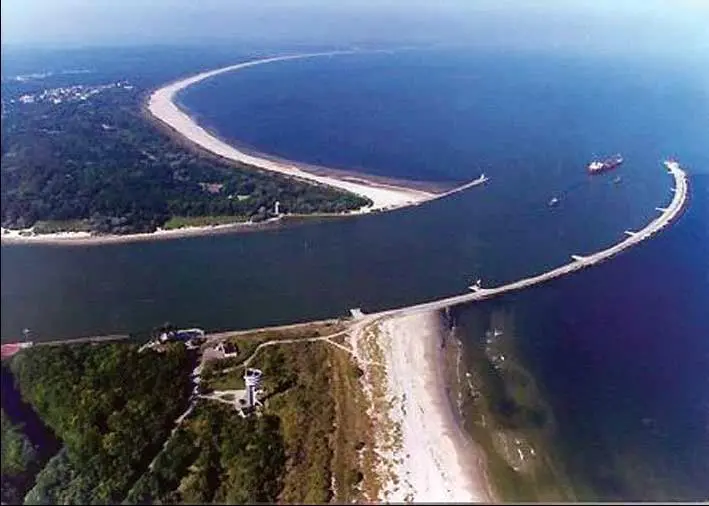
The Polish maritime scene is dominated by the three main ports of Gdansk, Gdynia and Szczecin- Swinoujscie located on the Baltic Sea.
Last year, throughput decreased by about 10 percent for the ports of Gdynia and Szczecin- _winouj_cie. The Port of Gdansk, although affected by the recession, managed to increase its cargo by one percent compared to the previous year. The forecast for Gdansk was underestimated, with an additional 500,000 tonnes being handled. This success is due to the unexpected revival in bulk cargo – mainly grain – that has reached over 1 million tonnes. Overall, in 2009 Polish ports handled 5 million tonnes less than in 2008, but compared with other Baltic Sea ports they still remain the leaders. The Ports of Gdansk and Gdynia have seen a 20 percent decrease in containerised cargo in 2009. However, it appears that the second half of 2009 was better than the first, as cargo throughputs began to climb. Although this drop is blamed on the worldwide economic crisis, some industry voices claim that the decrease in container business has been caused by a lack of investment in infrastructure. Other problems include the confusing port management system in Poland, as well as the continuing struggle to adopt EU maritime regulations, which affects Polish port strategies and leads to a reduction in investments.
Port of Gdansk: Green accessibility
Poland is linked with the TEN-T network that has its principal influence on maritime transportation via Polish ports. Ports need to be accessible by a network of roads and railways. This accessibility is still one of the most sought-after areas of investment in ports. The infrastructural projects carried out in the Polish ports, with significant support from the European funds (between 2007- 2013 the major Polish ports on the Baltic sea can receive support from the Cohesion Fund and the European Regional Development Fund to an amount of approx. EUR 440 million), give Poland a chance of becoming a central element of the transport route connecting Northern and Western Europe with such countries as Austria, the Czech Republic, Slovakia, Belarus and the Black Sea region. However, it would be impossible to connect these regions with an intermodal transport route without signifi – cant investment in the Polish road and railway networks. The European Commission has announced that it will dedicate 50 million for transport development and environment improvement under the Operational Programme Infrastructure and Environment 2007-13. Port of Gdansk is actively involved in implementing projects linking infrastructure development and improving access both within the port area and to the national/international network. Environmental requirements can strongly influence the development process. The Port of Gdansk is one of the beneficiaries of the Cohesion Fund. By 2013, three accessibility projects have been scheduled.
“Modernization of the road and rail infrastructure of the Port of Gdansk” as part of the Operational Programme Infrastructure and Environment aims at internal road, rail and bridges infrastructure without harming the environment. The Port Authority is aiming for an “environmental friendly port” label. A high priority is to join EcoPorts; however environmental management in Gdansk is supported and financed by European Commission and its funds.
Port of Szczecin-Swinoujscie LNG terminal
The controversial establishment of an LNG terminal is planned to be launched this summer. Despite a difficult tender process and the complicated procedure of gas supply agreements between Poland, Russia and Norway, the official opening is foreseen for 2014. This is the first investment of this scale in Poland and it will act as a “guinea-pig” for environmental management of liquid bulk in Polish ports. The Port of Szczecin-Swinoujscie faces a big challenge regarding this LNG terminal project, and what makes it different from other investments is the ecological weight of total funds dedicated to the project development. Krzysztof Pilarski, Marketing Manager, admits the fact that the only grants for environmental protection come from the original investment plan. The Port Authority has had difficulty in generating extra money for the environmental protection and ecological improvement in the port area. “All special equipment for waste management or ship unloading is maintained from the general investment budget,” he says, explaining that that there is no separate budget dedicated explicitly to the environmental management of ship waste and terminal pollution.
The Port of Szczecin-Swinoujscie is an environmental pioneer among Polish ports. In 2004, it was the first to introduce system of waste receipt from ships and sewage utilization within the port area. Due to the obstacles caused by the EC Directive 2000/59/EU of ship waste reception (mentioned above) the Port Authority has initiated the relevant Polish regulation the Parliament, thereby enabling the Directive to enter Polish maritime legislation successfully. Poland’s first LNG terminal in Poland now meets the environmental tests and due to the regional environmental protection agency, it will not be damaging nature. The project was checked against the Natura 2000 Network. Although the project fitted into the Natura 2000 frame of conditions, it has been told to cause regulative constrains.
Beata Platkowska, Environmental Officer of the Port of Szczecin-Swinoujscie, summarises the process of environmental licensing of the LNG project. A clash between European Commission Directives and Polish environmental regulations for the LNG terminal led to delays of months in environmental approval by the local authorities.
“Environmental approvals or building permits are rooted in Polish legislation that is still not coherent with some EC Directives, especially in the cases of port project,” says Mrs. Platkowska. “That is why investors encounter troubles with asking for EU funds or grants as they are not aware of these legal complications”.
Fortunately for the LNG terminal, there have not been any objections from the local community. Based on a number of studies, the project is located far enough from urban areas and special protected areas will not be affected by the LNG gas handling. In addition, the investor has committed to planting trees and to monitor nearby habitats of specific plants and animals.
Gdynia looks ahead – ecologically
Extension of the ro-ro terminal in the port of Gdynia is an important part of the TENT network development, improvements of the Short Sea Shipping and Motorways of Sea projects. Thus this investment is a strategic priority of Polish authorities and the European Commission and it has been included in the Operational Programme Infrastructure and Environment 2007-13. With EU financial support of 8 million, the Baltic Container Terminal is determined to complete the project before 2015. The roro terminal’s current capacity of 2 million tonnes is being reached and forecast ro-ro cargo growth underlines the need for the extension.
Ecologically speaking, the ro-ro terminal is not optimal for the environment and the extension has faced ecological tests. The biggest challenge was the European Union Natura 2000 regulations. Detailed research in 2008 over the natural habitat for protected area close to the terminal plan did not bring up any obstacles to the project. Indeed, it is has stimulated the sustainability approach. For the first time, in 2009 the Gdynia Port Authority undertook a series of social consultancies for people living near the port area. Locals were asked for the social approval of the investment, while also being informed about the ecology, protected areas and port development. This process can definitely be considered a milestone for a Polish port in the process of sustainable development and social and ecological awareness, for which Gdynia should be congratulated. It can be seen that a necessary – and “environmentally unfriendly” – project can meet very strict regulations such as Natura 2000, thus forcing investors and the Port Authority to seek innovative solutions. The ro-ro terminal will include modernization of quays and building a network of roads and railways accessing the new terminal.
The Port of Gdynia recognises the importance of an environmental approach to its investments. It is taking further steps to engage in environmental protection programs. Since 2009, the Environmental Department has been involved in the Baltic Master II European Union Study Project, with a 40,000 study budget. The Port of Gdynia is managing the study with regard to maritime safety and the dialogue with the ecological groups and investors. Under the umbrella of this study, the two biggest research projects of 2009 focused on: “Improved on land response capacity to oil spills” and “Enhanced prevention of pollution from maritime transport”. Based on the outcome of the second issue, the Port of Gdynia has initiated the establishment in 2012 of the EU policy of Convention of Ballast Water Management.
Another environmental initiative of Gdynia is the project of Contaminated Sediments in Baltic Sea Region. New technology of neutralizing polluted sediments is to be tested together with Maritime Institute of Gdansk. This project is to be undertaken over the next 3 to 5 years, starting in 2010 with funds of about 300 000, mostly covered by European Development Regional Fund.
Summary
Applying ecological initiatives in Polish Ports is expensive. Authorities themselves cannot carry the costs of the projects within environmental guidelines. Despite the positive attitude to environmental programmes, no ecological development can be undertaken without financial support coming from European Funds. However, the European Union is willing to grant ports investment in Poland, although the European Commission maritime regulations can be different to polish ones. Because of the conflict of interpretation – mainly in the area of waste and ship reception technology – much investment that could take place is blocked by opposing regulations.
Port authorities are trying to initiate new Directives, but the process of introducing new environmental policy is usually long and complicated. Investors have found it less of a problem to develop port accessibility because the environmental guidelines for operational programmes are easier to implement.
Where does “green” money come from? As already mentioned, the European Union is the main sponsor of ecology in ports. Another one is an investor that dedicates some funds to the project development, in line with environmental regulations. But the real problem is that Poland is still struggling with lack of clarity in environmental policy and legislation.
Related Articles
 ALTERNATIVE FUELS GREENPORT
 NEWS
NEWS