



Gothenburg saves emissions
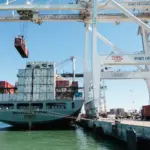
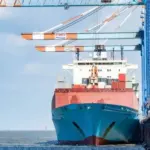
The Port of Gothenburg is investing heavily in expanding rail traffic to and from the port. Last year 42,000 tonnes of carbon dioxide were saved by transporting goods in and out of the Port of Gothenburg by rail instead of by road.
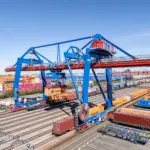
This is equivalent to 200,000 flights between Gothenburg and Stockholm or the annual emissions from 14,000 passenger cars. Together with rail operators, industrial companies, forwarding agents, shipping lines and the National Rail Administration, the port has built up a system of rail shuttles. Ten years ago, the first shuttle began operating to Karlstad. The number has now risen to 22, with daily departures to 21 towns in Sweden. Rail shuttles make it possible to establish a direct route between towns throughout Sweden and the largest port in the Nordic region. Instead of the companies themselves moving their freight to the port, it is driven to the nearest inland terminal before being loaded onto a train bound for Gothenburg. “In reality we see no limit to this explosive rate of development,” says Eric Nilsson, head of the Port of Gothenburg Rail Center (PGRC). “The demand for rail shuttles is enormous. Certain shipping lines even insist that their goods are forwarded by rail.” Last year, PGRC handled 190,000 containers. In seven years, volumes have more than trebled and each month new records are set. In total, 38 percent of container goods to the Port of Gothenburg arrive by rail shuttle, a figure that is unique by international standards.
The Port of Gothenburg has received another environmental award for its shore-to-ship electricity supply initiative. The Clean Seas Award was presented by Lloyd’s List newspaper.
Related Articles
 ALTERNATIVE FUELS GREENPORT
 NEWS
NEWS