


Clean sediments and the EU Waste Directive
On 8 April 2008 the Environment Committee of the European Parliament adopted in second reading again the amendment on the proposal for a Waste Framework Directive which foresees exclusion of nonhazardous sediments.
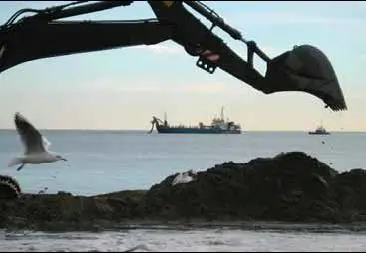
Commenting on the Van Oord Poole Harbour dredging announcement, ESPO Secretary General Patrick Verhoeven stated that “This amendment would finally leave behind the idea that clean sediments are waste and should be treated accordingly. This would lead to high costs for port authorities, which need to carry out dredging operations in order to keep the ports safely accessible, but without a lot of environmentally addedvalue.” He continued: “Obviously heavily contaminated sediments should be subject to proper controls and safe disposal (in land-fills if necessary), but clean sediments are a natural and vital part of the hydromorphological system of water bodies. Regarding these clean sediments as waste does not fit anymore with the current thinking of estuaries and/or rivers including sediments as one ecological system.” The Rapporteur of the Parliament Caroline Jackson pointed that she envisages a second reading agreement with Council on this Directive proposal. This implies she will have to negotiate with the Council Presidency (Slovenia) on all outstanding issues between Parliament and Council. The exclusion of clean sediments is only one of the points on which a compromise needs to be found. In the first reading, a Common Position of the Council a similar exclusion was adopted but only for those sediments which remain in the water (while Parliament adopted a complete exclusion). ESPO favours the Parliament approach as situations may occur in which clean sediments cannot be relocated elsewhere in the water because of the distance or lack of available alternative locations where shipping is not endangered. Moreover, clean sediments can also be taken on land for alternative use such as land reclamation, restoring mudflats or construction purposes. Again, if these clean sediments are being regarded as waste, such alternative use becomes much more difficult because of related administrative procedures.
Related Articles
 ALTERNATIVE FUELS GREENPORT
 NEWS
NEWS