



Converting diesel RTGs to electric
The conversion of RTGs from diesel to electric power (or to switchable diesel/electric power) is an emerging trend in container ports around the world. The port of Los Angeles and a significant number of other ports worldwide, feel the need to reduce use of diesel engines at their terminals.
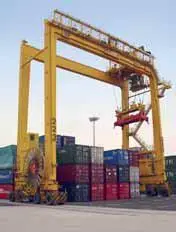
Diesel engines in RTGs represent more than 50% of fuel consumption in terminals and have a negative effect on air quality in container ports. With increasing fuel costs, RTGs are becoming more and more costly to operate. Therefore, many terminals are investigating the use of RMGs instead of RTGs, whenever feasible – as might be the case at a new terminal or larger terminal expansion; or the conversion of their existing RTG fleet to electric power or diesel/electric (or the purchase of new RTGs that offer this option). The answer to reducing the dependence of RTGs on diesel power is relatively straight forward. While the RTG is working in a container row, it can run on electric power only and the diesel engine can be switched off. When the RTG is changing aisles or moving to the maintenance area, the RTG can be disconnected from the electric power source and the diesel engine used just during the move. Conductix Wampfler has determined through extensive field testing that two mobile electrification solutions are feasible: Electrification using a motorized cable reel installed on the RTG; and electrification using a special conductor bar system Depending on the terminal layout and the logistics concept, one or the other option might be the best solution. Both systems have proven to be reliable in different applications. Unlike rail mounted crane systems that have a fixed travel path, operating an RTG with electric power gives rise to some technical issues that need to be addressed: – The movement of the RTG along the aisle is not as precise as it is with RMGs – RTG movement has to be carefully monitored to prevent a collision between the vehicle and the electrification system – The interface between RTG, electrification system, and container yard has to be defined with the RTG manufacturer and the yard operator. – Necessary adaptations of the main power supply must be discussed with the terminal operator Conductix Wampfler has completed several projects at terminals in China and South Korea, totaling 380 RTGs in more than 10 terminals. Both cable reel systems and conductor bar systems have been used, depending on the customer’s expectations and the terminal size and layout. Bigger terminals tend to prefer the conductor bar solution. Smaller terminals that need more flexibility in their terminal layout and have less standardized container handling procedures tend to prefer the cable reel solution. The economic advantage of powering RTGs with electric power is very significant. The payback period in most cases is from 1 year to 1.5 years, according to customers’ estimates.
Related Articles
 ALTERNATIVE FUELS GREENPORT
 NEWS
NEWS