![PortStrategy[GreenPort]](https://www.portstrategy.com/wp-content/uploads/2026/09/PortStrategyGreenPort.svg)





Predictable planning
Simulation can help dry bulk ports operationally and commercially, explains John Bensalhia
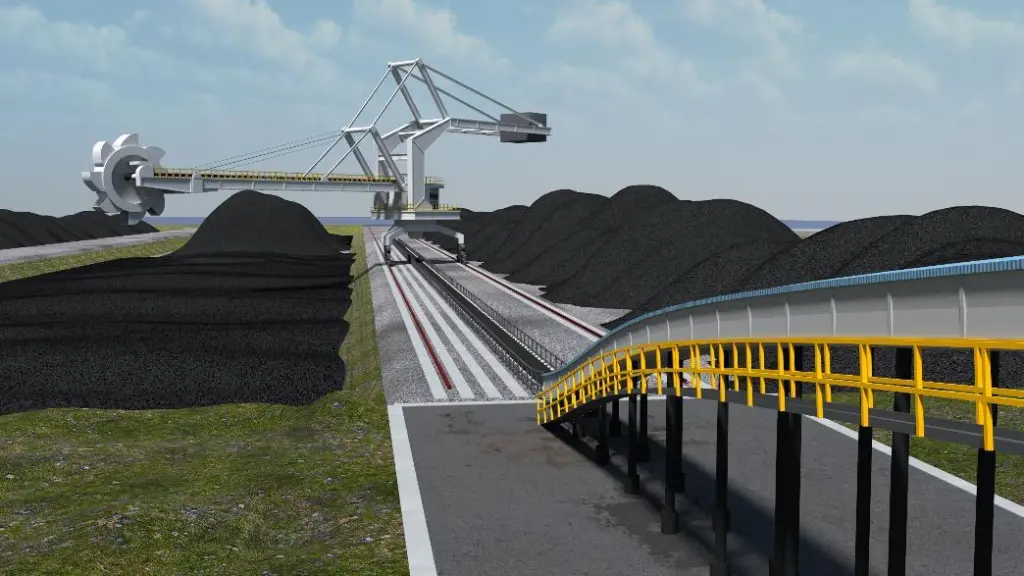
Once, the future was an unknown quantity. For centuries, many attempted to figure out what tomorrow holds, analysing the movements of celestial bodies, tarot cards or good old-fashioned tea leaves. But as times have changed, technology has progressed to the point where it’s now possible for decision makers to plan ahead for the future. Simulation is the modern day crystal day, but infinitely more accurate.
Through simulation, a computer model can represent a terminal, helping terminal operators to investigate the consequences of different input parameters. Dr Ir Teus van Vianen, consultant and simulation expert, comments: “What-if scenarios can be simulated that help the operators to answer questions like: What will be my terminal performance if ship sizes change in future? Or what will be the improvement of the ship’s port time if an extra crane is installed?”
Dry bulk port operations can gain considerably from simulation. For example, the Iron Ore Company of Canada used Ausenco for the QNS&L rail system project which ferries around 15m tonnes per annum of iron ore concentrate and pellets to its port from the mine. Ausenco’s simulation model of the system from mine to port determined current capacity, and cost-effective methods to increase throughput.
Meanwhile, independent software consultancy firm, Systems Navigator, has also created solutions for terminals including Cameroon’s Mbalam Iron Ore Terminal. Here, simulation was used to assess downtime of the offshore export terminal by comparing different alternatives such as berth location and navigational strategies to help the client rate the best scenario and layout.
Answering questions
Guilherme S de Sá Peixoto, regional director at TBA, says that there are two ways in which a simulation approach can be applied: firstly, to answer questions that will come up during the terminal design and/or expansion implementation phase, and secondly, operational problems that are connected with process improvement and performance optimisation. “Simulation, when used with a sound level of knowledge and expertise, is a powerful tool to support the most significant strategic decisions and operational measures on a bulk terminal.”
Mr de Sá Peixoto says that generally dry bulk terminals seek the highest efficiency and operational performance in a highly integrated and usually complex network system. “A simulation approach can offer a systematic and holistic view of the entire terminal, breaking down each process, i.e. waterside operations, storage and landside operations, and gathering the relevant ones in a model that can also take into account stochastic constraints and dynamic variables that are quite difficult to consider in a static calculation.”
Matthew VonSchilling, senior simulation analyst at Ausenco, says that the major benefit of simulation is that it allows an operator to visualise a complex system (such as a dry bulk port) in a holistic manner and understand the impact that each piece of equipment or infrastructure has on overall operations. “This understanding helps to ensure that a terminal can be operated, built or expanded efficiently to minimise bottlenecks, optimise investments, and reduce risks.”
“ Beyond the dry bulk port facility, it is important to consider both upstream and downstream logistics components in the simulation model to maximise the benefits to the operation,” adds Joel G. Shirriff, Ausenco’s vice president and global practice lead, Terminals & Transportation. “Not only will this highlight where potential bottlenecks might be within your control, it will advise on areas where commercial negotiations in external contracts may improve your overall production.”
Powerful tool
When it comes to underpinning investment proposals, Dr van Vianen says that simulation is a powerful tool. “Consequences of increasing terminal assets can be quantified. A simulation tool provides a visual representation which makes it easier for investors to understand the proposal.”
“Simulation assists to validate investment decision by quantifying actual throughput, operating performance and the impact of different investment and operating options,” adds Mahim Khanna, TBA regional director, Asia Pacific. “Even in operating brown field sites terminals and for assessing improvement options, simulations are most useful.”
Ausenco’s Mr VonSchilling says that simulation modelling can provide informed advice on where (and when) to make capital investments in dry bulk terminal facilities. “This added level of intelligence in facilities planning will target capital where it is most truly needed to maximise results, without simply chasing a bottleneck to another area of the system. Timing of expansion plans and their associated investments can be optimised with modelling.”
Developments in simulation technology have resulted in improved software and greater computer power: as a result, accuracy, detail and speed have been boosted. Dr van Vianen says that there is enough computer power available to develop complicated simulation tools without spending too much time on simulation runs. “Simulation for container terminals is much further in the development: 3D simulation with virtual reality devices are not rare anymore. The dry bulk industry is not as far nowadays: most simulation studies I know, are 2D simulation models. Such models work fine to have an overview of the entire terminal. But for sure, it will follow the direction of tools developed for container terminals.”
Mr de Sá Peixoto agrees that there is definitely more access to solid and reliable models today that can save a lot of time and money. “Actually, simulation models are becoming more complex and complete, with more variables and constraints implemented, but giving results in less time than the previous generation. Specifically for bulk terminals, one of the most relevant developments that can be seen in simulation technology is the utilisation of specialised simulation models, which can represent with high fidelity the behaviour of equipment and the variances on handling performance for different commodities.”
Proving foresight
A problem with traditional analysis methods and intuition is that it cannot give an accurate picture or provide optimal guidance for making decisions on complex systems, which can then result in financial problems. “When designing or expanding a dry bulk port, relying on such “intuition” can result in massive opportunity costs or unnecessary direct costs if you over-invest,” says Mr VonSchilling. A well-made simulation will provide crucial foresight into how a system will operate and will help ensure that the decisions made are based on data and a sound understanding.”
Simulation also offers the chance to anticipate results in a level of detail that probably would otherwise only be known when the terminal is operating and the investment already made. In that respect the return on investment can be set against the avoidance of costly errors through simulation early on in the project.
Mr de Sá Peixoto says that in both cases, normally, return on investment is good, as the additional cost of having the simulation model is usually much lower than the benefits from the decisions it supports. “If a terminal can optimise operational routines and postpone the investment on additional handling equipment or avoid acquiring additional capacity that will not be used due to process bottlenecks, then the investment in a simulation model is easily returned.”
But despite the evident benefits simulation is not always employed; it is more typically an investment reserved for support of longer term decision making and planning at dry bulk ports. But given the amount of historical data being collected by terminal operators on a day-to-day basis there is nothing to stop the building of a detailed simulation model with the correct software for use in everyday operations planning. “The right model could incorporate up-to-date (or real-time) information about equipment, personnel, ships, and inventories on a daily basis and enable an operator to make data-driven decisions for short-term planning,” says Mr VonShilling.
Another underexplored avenue is the use of simulation models in presentations to boards of directors or potential investor groups to justify requests for project funding. Ausenco’s Joel Shirriff hopes that validating recommendations such as there through simulation modelling will soon become a ‘standard of proof’ within the industry.”
MEETING THE OBJECTIVES OF OPTIMISATION
Simulation does not need to be restricted to periodic and strategic decision making, it can also be utilised on a tactical level for operational decision-making.
Hunter Valley Coal Chain Coordinator (HVCCC) in Australia employs simulation for day-to-day co-ordination of rail, but also as a tool for optimisation.
There is, however, a difference between simulation and optimisation. Whereas simulation is generally considered for hypothetical ‘what if’ solutions, optimisation technology assesses the best choice from a series of precise business considerations such as goals and restrictions.
Quintiq’s ports SME, Phil Duff comments: “The operational benefits for optimisation used at ports are usually measured in increases of throughput, due to the more efficient alignment of resources.
“If cost considerations such as crews for resources are also considered, there is an opportunity to minimise costs. Where there are multiple paths, such as conveyor systems, or inbound and outbound rail and road with specific constraints, each of these can be considered. Interfaces with the resources which serve the port such as suppliers/distributors, transport operators, shippers and port authorities allow for a single integrated planning environment for private ports, or for multi-user ports.”
Mr Duff says that optimisation utilises the resources in the most efficient way and improved equipment utilisation can delay the need for new resources and the associated expensive capital investment. “The key goal for those taking up this technology is the continued integration with disparate players in the supply chain. Particularly in a multi-user port, there can be many players and many systems and additional benefits can be gained for each data source which is truly integrated.”
Related Articles
 CONTAINER & CARGO HANDLING
 CONTAINER & CARGO HANDLING
 BULK HANDLING