


London Gateway creates new wildlife habitat
DP World London Gateway has completed its creation of a new important intertidal habitat which will provide feeding ground for wading birds and fish.
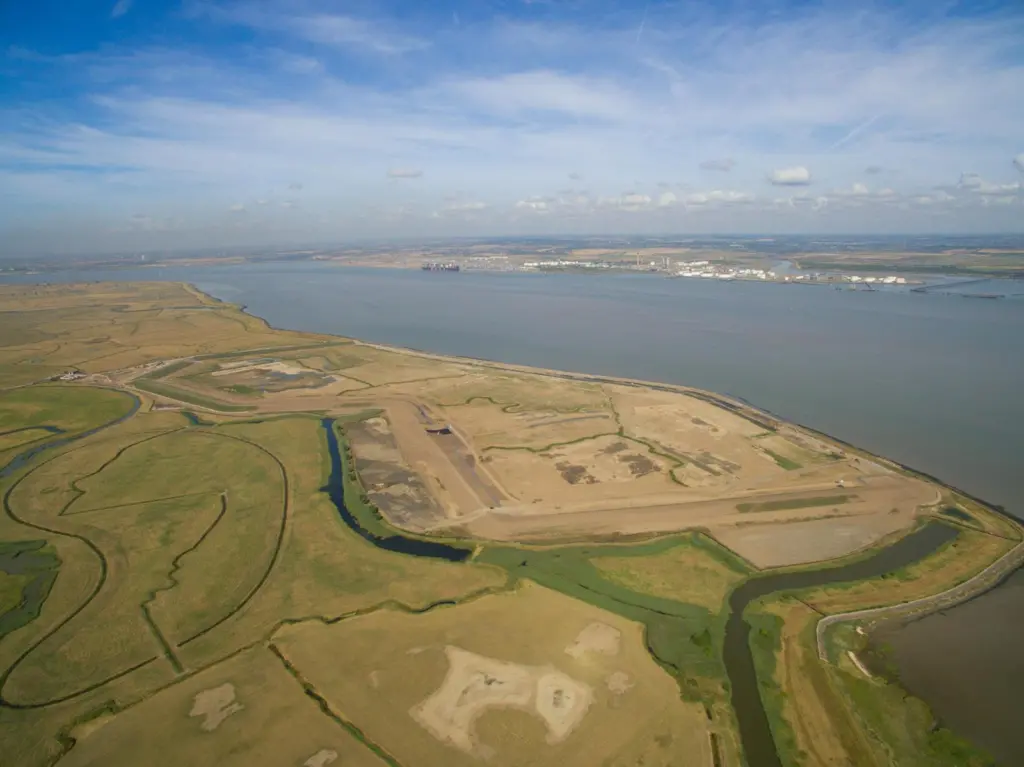
Located on the south bank of the River Thames, Salt Fleet Flats Reserve compromises 59 hectares of mudflat and six hectares of saltmarsh.
DP World created additional new mudflat habitat to compensate for habitat that was predicted would be lost during construction of the new deep-sea terminal.
Steve Bewers, project manager at the Environment Agency, said: “More habitat has now been created than was required by DP World to compensate for losses that were predicted to arise through the creation of the port.”
He added: “Over 800ha of additional tidal storage is considered to be required in the Thames estuary by the end of this century. Some 30ha is needed within the next 20 years and the extra area provided in the new intertidal area at Cooling will make an important contribution to the target.”
The Environment Agency made a financial contribution to the project through a partnership agreement with DP World.
Some of the newly constructed habitat will count towards its requirements to compensate for intertidal habitat loss caused by predicted rises in sea levels.
Salt Fleet Flats Reserve was created by constructing a new 2.4km-long sea wall, inland of the existing one, before that was breached along a 700m section to enable the land to flood with the tide.
The mudflat is the second that DP World has created in South East England. In 2010 it completed the Stanford Wharf Nature Reserve, on the north bank of the Thames, which provides 27 hectares of new inter-tidal mud flat habitat.
Rachael Jones, environment manager, DP World London Gateway, added: “We’re delighted that members of the public have been able to help us in naming the new site. It was a very close vote between Salt Fleet Flats and Willow Wick Reserve, but we are really pleased with the name Salt Fleet Flats, which refers to the name of an important existing water body next to the site.”
She concluded: “The new wetland habitat is already attracting wading birds and we will be monitoring how it develops and establishes over time.”
“We are looking forward to seeing how the site is used during the overwintering bird season and the first fish surveys at the site will start next month, working in co-ordination with the Environment Agency.”
Related Articles
 ALTERNATIVE FUELS GREENPORT
 NEWS
NEWS