

Creating the conditions for change
The way cargo is handled, ships are constructed and ports are used has improved tremendously during the past years. This is what one could conclude from the Green Port Congress, which was held early October in Marseille, the former ancient Greek merchant port and one of the biggest port cities on the Mediterranean Sea, reports Daniëlla Arbyn Havugimana, GreenPort Editor.
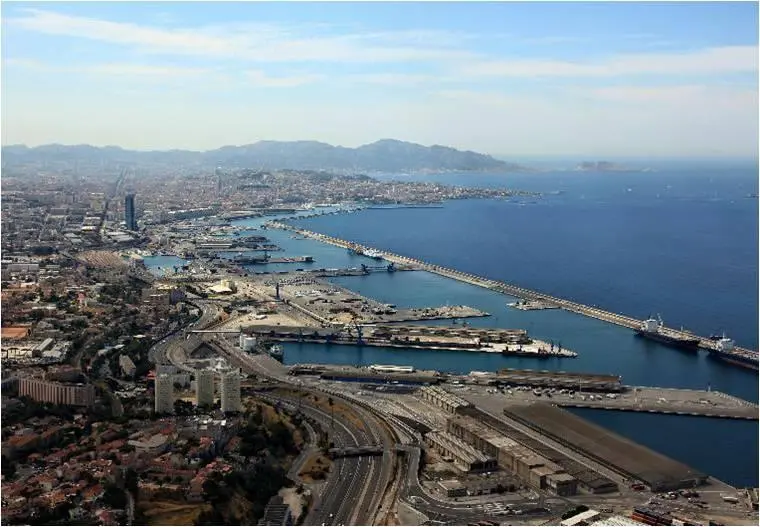
The 7th edition of the annual Green Port Congress offered the opportunity to nearly 200 environmental experts, to discuss best practices in port environmental management and the role of ports, terminal operators and shipping companies in working towards a continuous commitment to sustainable operations. However, two days of presentations of new technologies, equipment, systems and concepts were useful for the sector’s current environmental challenges, many speakers highlighted their conviction that port authorities have a key role to play in reducing the environmental impact of shipping, but port are not the only ones.
PORTS HAVE AN ESTABLISHED INTEREST IN MAINTAINING THE IMAGE OF A GREEN SECTOR
The theme of the first day revolved around ‘Managing the impact of emissions and discharges from ships’ and ‘Innovative solutions for Green terminal operations’. During the opening session, European Commissioner for the Environment, Janez Potočnik stated in his video message that port authorities need to play a pro-active role in order to deal with emissions, waste and nature conservation. In his welcome speech, Jean-Claude Terrier, CEO of the Port of Marseille Fos referred to the current economic and financial crisis which confirms the urgent need to review port development methods, as ports have an economic and social responsibility for the regions they contribute to. During its speech, Pole Mer PACA Managing Director, Patrick Baraona stressed the fact that seaport activities will continue to grow with the population density in coastal areas and therefore, stressing even more the social, economic and environmental pressure. In addition, ESPO Chairman, Victor Schoenmakers, emphasised the need for guidance and implementation of Treaty rules while referring to the European Ports Policy Review.
The first session focused on emissions and discharges from ships. In its keynote speech, ESPO Secretary General Patrick Verhoeven stated that the image of the industry needs to change since the shipping and ports sector have a good story to tell on port performance. According to Mr Verhoeven, the priority is to protect the people living near the industrial port, paying particular attention to the quality of air, and the Port Authority could not be better placed to initiate these environmental policies. Furthermore, he pointed out that the shipping sector is best placed to take the lead in reducing CO2 emissions, especially because it is a global industry which physically touches almost all parts of the planet and contributes to most world trade in goods. The session on “Ship Emission” was held at the same moment the European Commission announced to look for international solutions to reduce Greenhouse Gas Emissions (GHG) of ships. In a joint statement, Transport Commissioner Siim Kallas and Climate Action Commissioner Connie Hedegaard implicitly said that the Commission will for the time being not be looking to introduce a specific European market-based instrument to reduce greenhouse gas emissions from ships. The statement also included a call to the industry to take its responsibility.
Green Port Congress was also an opportunity for HAROPA, the largest French port system, to present the ‘Le Havre application’ of the ESI – Environmental Ship Index. During his presentation, Jean-Paul Raffini, Deputy Head of the Environment Department of the Grand Port Maritime du Havre, presented in detail the chosen direction to link the ESI with the granting of an environmental award to the most environment-friendly shipping companies and the development prospects on the river Seine artery. It’s worth emphasising that the ESI approach set up in Le Havre, which is a member of HAROPA together with the ports of Rouen and Paris, has been taken over in the 2012 ESPO Green Guide which highlights the best environmental practices of ports.
The second session during the first day emphasised the ‘Innovative solutions for green terminal operations’. The coordinator of EU research project Green EFFORTS, Jacobs University played a significant role. It was the only university to be directly involved in the conference program with Jens Froese, Kieserling Stiftung Distinguished Professor of Maritime Logistic at Jacobs, moderating this session with the topic ‘Green Terminals’. Hanna Blanchet, Environmental Manager at Eurogate and Guy Janssens, Policy Manager at the Port of Antwerp opened the session with a keynote speech followed by a response from the industry on innovative solutions and examples of good joint efforts between ports and terminal operators.
The presentations included the Mitchell Ports environmental impact assessment of green plus transhipping in the Great Barrier Reef World Heritage area. The port of Santa Marta presented the sustainable development of a coal terminal in the heart of the Colombian bay. Furthermore, Royal Haskoning talked about ‘Improving sustainability in container terminals’, Phoenix Products Company presented its LED technology and why it is the perfect complement to the trends of RTG electrification and crane automation. Finally GEOGREEN introduced its ‘Vasco project’ which emphasised the reduction of CO² emissions in the industrial area of Marseille and the last presentation focused on the Port of Marseille Fos’ ‘Girel project’ and the management of infrastructure for the ecological rehabilitation of the coastline.
TOWARDS EXCELLENCE IN PORT ENVIRONMENTAL MANAGEMENT AND SUSTAINABILITY
The last session of day one focused on the presentation the new ESPO ‘Green Guide’, which is an example of how industry can work pro-actively together towards improving its environmental performance and sustainability. The Green Guide; Towards excellence in port environmental management and sustainability’, fully revises and updates the last ESPO Environmental Code of Practice that was produced almost ten years ago. Going a step further than previous editions, and after re-establishing the ports’ vision in sustainability, the Guide introduces a common framework for action under 5 Es; Exemplify, Enable, Encourage, Engage and Enforce. This action framework is applied to five selected environmental issues; air quality, energy conservation and climate change, noise management, waste management and water management.
The Green Guide is accompanied by two dynamic online annexes which will be as such subject to periodic review. Annex 1 includes good practice examples that provide the evidence of the good work that is being done in European ports. The current version of annex 1 consists of 70 good practice examples provided by 23 European port authorities from 11 countries. Annex 2 provides a summary of European legislation related to the environment that influences the management of European Ports. Annexes 2 is also meant to be dynamic and reviewed on a regular basis in order to reflect changes in the applied legal framework. The ESPO Green Guide is available in hard copy, in PDFformat or through the flipping book on www.espo.be.
At the end of day one, the ports of Calais and Moerdijk were presented with their EcoPorts PERS certificate Awards. The certification verifies that the ports’ environmental management programmes are in line with the requirements set by the EcoPorts PERS, the only port sector specific environmental management standard. Laurent Devulder, Director of Strategic Development, Port of Calais and Jacco Rentrop, Manager Environment and Security, Port of Moerdijk received their certificates by the former Chairman of ESPO, Victor Schoenmakers.
Day one was closed by François Lambert from the French Ministry for Transport. He gave a keynote speech on the role of ports with respect to Energy. According to him, port areas appear to be a strategic place for the development and transport of certain renewable energies, moreover, some European ports use modern production material such as biomass-based energy. In his speech, François Lambert also pointed out at the management of port heritage. He said that, whereas, port development does not only relate to employment and economic activity, it also has to enhance the environment. “Port activity is by definition sustainable”, he said. Mr Lambert concluded his speech by identifying Blue Growth as being indispensable for a sustainable and innovative 20th century, which requires action from each one of us.
On day two, the conference continued with a session devoted to Marseille which focused on ‘How to enhance port-city integration’. During this session, different players from the ports of Marseille and Fos introduced the numerous ongoing redevelopment projects being undertaken in conjunction with the City. Projects focussing on the “Continuous dialogue on the development of the port of Fos industrial zone” and on “A new cohabitation between urban uses and port activities”. Other project in presented by the port of Marseille include the research and application of environmental solutions for diversifying their energy mix, their atmospheric impact and biodiversity and the Euroméditerranée, an integrated port development and urban regeneration project.
Since the successful implementation of the French ports reform, the port of Marseille Fos is increasing the diversity of its service through maritime, river and railway connections as well as pipelines. Marseille Fos is involved in various important projects which aim to improve air and water quality and protect the remarkable biodiversity found around certain of the port’s sites. The port sees cooperation with local delegates, associations and the general public as vital to its large-scale modernisation work. Finally, the port is planning to hold a public consultation in order to discuss Fos 4XL, a new terminal for containers.
At the end of the session, Marseille invited delegates to come back to the Mediterranean city next year, since Marseille will be European Capital of Culture in 2013.
TALKING ABOUT GLOBAL CHANGE AND POPULATIONS
The penultimate session of day two covered the ‘Green logistics chain’, in which Dimitrios Theologitis, Head of Unit for Ports and Inland Navigation at DG Move gave an overview of the different steps DG Move has taken in creating the legislation for the transport sector. He also referred to the ongoing Ports Policy Review and the consideration of DG Move to have a Green Certification for ports.
In his keynote, Bill Burns, Fellow of the Chartered Institute of Logistics talked about the way to integrate a new state of the art port project and connect it to the European transport scheme. He acknowledged that besides the need to increase and improve the current infrastructure, the must also be a need to continue to remove barriers that hampers the movement of goods and the need to develop systems that allow for improved communication and the transfer of information. Moreover, he stated that the identification, exchange and implementation of best practices at all levels will contribute greatly to the integration process, while at the same time a healthy competitive environment needs to be guaranteed.
During this session, the Port of Marseille Fos presented its Rail road combined terminal, while CMA CGM raised the question ‘How to create a green supply chain with intermodal connections, using the new CMA CGM subsidiary Greenmodal Transport as an example. The Port of Rotterdam talked about the planning, strategy and development and organisation of the Maasvlakte 2, which is the biggest civil engineering project in the Netherlands since the Delta Works, and which is expected to open in 2013. Furthermore, the Motorway of the sea concept for innovative port projects was presented and Dirk Vande Velde, Environment and Social Business Affairs Director, MSC concluded the session by presenting its new Sustainable Ports and Shipping Network.
The day ended with presentations illustrating ‘Ongoing port environmental sustainability projects’, a session that was moderated by Susann Dutt, Sustainability Manager at the Port of Gothenburg. The Environmental Port Index, which has the objective of ensuring steady progress towards a coherent and comprehensive approach to reduce air emissions and greenhouse gas emissions from international shipping, was presented in this session. In addition, Groningen Seaports presented its Green Port Vision 2030, which sets out the economic ambitions being pursued by Groningen Seaports and how the company is responding to sustainability and local interests. The Port of New York and New Jersey presented their ‘Clean air strategy’ and the challenges they face in accommodating port growth, with all the economic benefits that it brings, by accomplishing it in a way that protects and improves the environment and specifically, air quality.
Finally the concept “Green corridors” was introduced, an action of the “Freight Transport Logistics Action Plan” of the European Commission, which pursues a corridor approach in developing integrated, efficient and environmentally friendly transportation of freight between major hubs and by relative long distances.
Concluding the debate, Christopher Wooldridge, of Cardiff University, summarised the progress made since the first edition of Green Port Congress: “This year, the most recurring themes were the use of consistent networks, the collection of data, tools, methodology, the interrelation with stakeholders and the exchange of experiences. In the past, we talked about biology and micro-organisms, now we talk about global change and populations,” he said.
ANTWERP TO HOST 8TH GREENPORT CONGRESS
The week started at the Welcome Reception, hosted by Marseill Fos Port Authority, who also hosted the Conference dinner, and it ended as it began, with much discussion and networking. The Port Tour started in the Vieux Port, the heart of Marseille, and from here delegates went on to see the many faces of this busy Port. More than 50 delegates enjoyed the Tour and all on board enjoyed the opportunity to enjoy the sun and fresh air after two days of listening to presentations and participating in discussion and debate. Delegates discovered the new buildings for the “Euromediterranee” port-city project and ‘Marseille- Provence capital of culture in 2013’. Furthermore the port tour offered the opportunity to see the passenger ferry terminals, RoRo and Ropax terminals, vehicles handling, ship repair, container activity and cruise in front of the famous sea wall Digue du Large.
Next year, the GreenPort Congress is heading to the North Sea, where the Port of Antwerp will be hosting the 8th Congress in October 2013. During the hand over in Marseille, Guy Janssens, Policy Manager at the Port of Antwerp, accepted the baton from Geraldine Planque, Advisor to the president of the Strategic Development Council at the Port of Marseille Fos.
Related Articles
 ALTERNATIVE FUELS GREENPORT
 NEWS
NEWS