![PortStrategy[GreenPort]](https://www.portstrategy.com/wp-content/uploads/2026/09/PortStrategyGreenPort.svg)





OECD: Need for integrated port policy in Sweden
A study on the impact of mega-ships on Gothenburg by the Organisation for Economic Co-operation and Development (OECD) says that an integrated ports policy is needed in Sweden in order to ensure Gothenburg stays competitive in future.
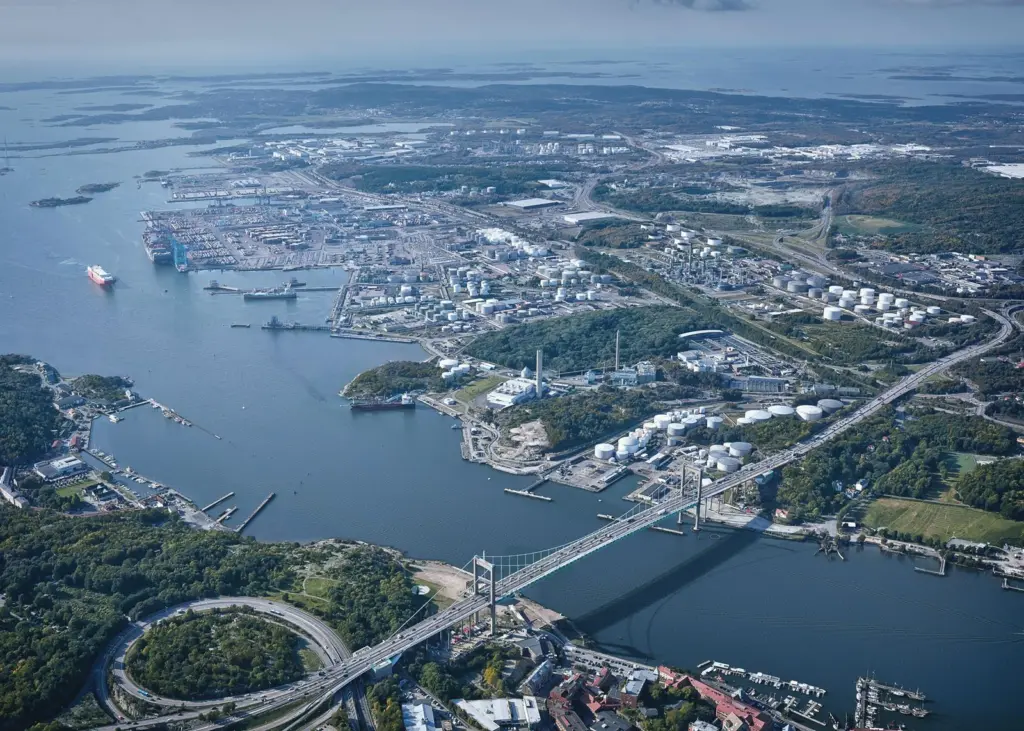
This action needs to include improvements to the maritime access to the port. This is important to tackle the constraints to the depth of the port access channel and the depth of the container berths, which mean that many ship types cannot call Gothenburg when fully loaded, or even half loaded in some circumstances.
OECD recommends that assisting the Port of Gothenburg’s to attract more direct calls should include “Developing a proactive approach to the project to deepen the fairway and container berths.”
It added that this should be realised in clear public investment decisions, eg with respect to improving maritime access, hinterland connectivity, dry port development and short sea shipping.
The study said that handling of mega-ships can be accommodated by facilitating longer trains and by resolving remaining bottlenecks in the railway network. In order to increase utilisation of infrastructure, projects to increase containerisation of main export products such as forestry products could be stimulated.
Another barrier in the way of Gothenburg’s competitiveness is that despite the port’s dominance in the national ports system, various new container port projects have emerged in Sweden, backed by local governments that own them and want to make them local revenue sources.
This fragmentation could mean a duplication of infrastructures and risk of de-concentration of cargo flows with the risk of undermining the Port of Gothenburg’s ability to attract direct calls, for which sufficient cargo volumes are needed.
OECD recommends that a national ports policy be developed for Sweden which includes a clear articulation of the roles each port is expected to fulfil for the Swedish economy, as well as in which sector.
A common understanding should be developed between local, region and national governments, so that a national focus will not be undermined by local planning permits for port expansions.
The study was carried out as part of a programme on the impact of mega-ships at the International Transport Forum (ITF).
Related Articles
 PORT & TERMINAL NEWS
 EXPANSION & DEVELOPMENT
 PORT & TERMINAL NEWS