
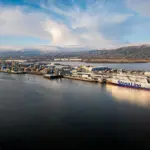

From Marseille to Antwerp
It will be a difficult task to surpass last year’s GreenPort Congress in Marseille. In terms of content, the numerous visitors were offered an extensive overview of sustainable solutions regarding port-related operations and management. But Marseille also demonstrated its plans and assets during those early October days, not to forget the lovely sunny days that will be remembered by many of us. However, this latter may be hard to be repeated in Antwerp this year, says Guy Janssens, Policy manager at the Antwerp Port Authority.
ESPO Green Guide
By presenting their brand new Green Guide to the European Commission and the public, the European seaports reaffirmed in Marseille their engagement towards incorporating the major 21st century sustainability issues in their day-to-day port management. The timing of the new ESPO Green Guide seemed to be well chosen in the light of the number of important European policy developments since the Marseille Congress, directly or indirectly providing a range of concrete “green” challenges to the European port sector. The Directive regarding sulphur content of marine fuels – and its lively implementation discussions – paved the way for a broader and ambitious Clean Power for Transport package. This package, in turn, is connected to the current comprehensive revision of the EU air quality policy which will normally result in a revision of the Ambient Air Quality Framework Directive and the NEC Directive. On the field of climate policy, the discussion on the contribution of the shipping industry to the reduction of greenhouse gases (GHG) could result this year in a draft Regulation regarding the monitoring, reporting and verification of GHG emissions from maritime transport, as a first step towards measures to reduce these emissions. Outstanding ship recycling issues – another hot topic when it comes to the sustainability of the shipping sector – recently put port authorities in the centre of the political debate, since a proposed financial mechanism imposing tax collection through the port charging system has split the European Parliament in two while voting on the draft Regulation.
It’s without any doubt that there will be a lot of “food for thought” at the upcoming Antwerp GreenPort Congress, and an excellent opportunity to apply and implement the Green Guide principles in a range of concrete policy cases.
Fifty shades of grey
Environmental legislation, very often from European origin, is indeed conditional to almost every port investment or port activity today. But the current challenges go beyond the mandatory follow-up of (new) rules. Port authorities in particular are triggered to start initiatives to anticipate regulatory changes, to facilitate feasible ways to deal with new ambitions, to mitigate negative economic impact, to safeguard the level playing field with competing ports. The ESPO’s Green Guide offers tools and instruments to tackle these challenges by clarifying the potential role of an average European port authority.
This role is of course linked to the port industry perspective. For private port actors, the main investment criteria such as cost, quality and (fuel) efficiency generally remain unchanged. But often, environmental issues such as emission and noise levels are popping up indirectly: as part of considerations related to (lifecycle) cost, safety, labour conditions, community acceptance or marketing. More than ever, ‘fifty shades of grey’ apply to the relation between economic arguments and sustainability arguments. In a flat European market situation, the alliance between environmental and commercial considerations will often be a precondition for successful innovation. This urges port actors to rethink business models from a fully integrated approach.
The Antwerp Port Authority
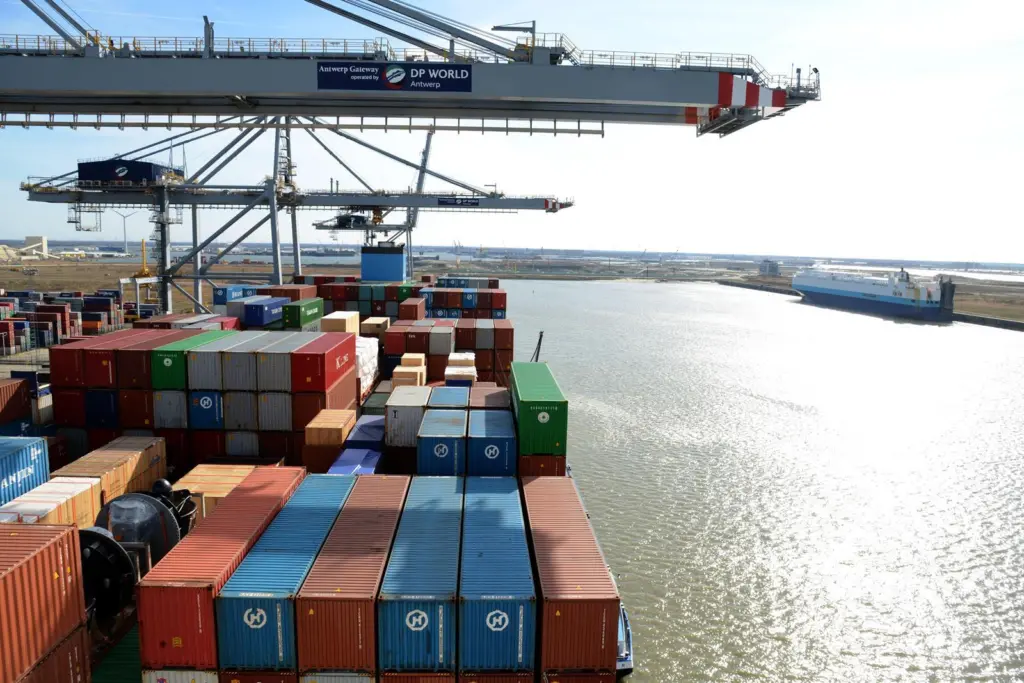
The port of Antwerp is managed by the Antwerp Port Authority under a typical landlord model. The port is characterised by a large cargo-generating capacity and a high level of synergy between maritime, logistic and industrial activities. This multi-functionality delivers high added value for the city of Antwerp and the whole region of Flanders.
One of the highlights in the port of Antwerp’s environmental policy is the ambition to take maximal advantage of its geographical location deep inland, as waterborne transport reduces both transport costs and environmental impact per ton or TEU. The port of Antwerp is indeed located about 80 kilometres inland, and thus close to the dense production and consumer centres of North West Europe, its natural hinterland. Furthermore, the port of Antwerp can rely on an advantage of scale, since the generated cargo volumes render it possible to bundle major cargo flows. This cargo consolidation offers opportunities to make an efficient use of the well-equipped inland waterway and rail network.
More generally, sustainability is high on the agenda of the Antwerp Port Authority. In order to evolve towards a more sustainable port in good interaction with the port stakeholders, it was decided to draw up a sustainability report according to the international Global Reporting System (GRI) standard. In 2010, the first global port Sustainability Report was launched in a joint effort of the private Antwerp port community and the Antwerp Port Authority. Indeed the report came through intensive collaboration with a group of key stakeholders that have strong corporate, social and economic ties with the port of Antwerp. Therefore it is not the report of an organisation; it is the expression of a port-wide public and private engagement to take up a fair amount of environmental responsibility. At the same time, the report, which will be regularly updated, is a commitment to transparency.
In line with the ESPO Green Guide, the Antwerp Port Authority is committed to take up its role in moving towards a more sustainable port. The role of port authorities however is multi-layered and very different throughout the EU since the formal status of European port authorities varies significantly. Nevertheless, most port authorities can play a major role through an innovative environmental policy of investing, stimulating, supporting, anticipating, facilitating and informing. This was one of the key messages embedded in the ESPO 2012 Green Guide. According to the “5 E theory” presented in the Green Guide, port authorities can trigger environmental breakthroughs within their port areas by exemplifying, encouraging, enabling, engaging and enforcing. The Green Guide in fact argues that, notwithstanding the different port managing models throughout the European Union, every European port authority is able in some way to show environmental leadership.
And this is where recent European policy developments come in. Namely the recent regulatory initiative of the European Commission regarding the ports policy review, explicitly mandates the ‘managing bodies of the ports’ to address different important aspects of port management, regardless of their legal structure under the national law. The European Commission indeed seems to be willing to adjust a range of competences and responsibilities to these managing bodies of the ports. It will, by doing so, potentially level the playing field between differing European port authorities. Indirectly, this regulatory initiative could enable port authorities even more to take up a leading role in a range of “green” port-related challenges.
GreenPort in Antwerp
The potential leading role of port authorities is deemed to be one of the main themes of the upcoming GreenPort Congress in Antwerp. Thematic sessions will even be structured along the 5 E’s – i.e. five ways for port authorities to make a difference – of the Green Guide. As a result, the Antwerp Port Authority intends to trigger a challenging debate on the ways to integrate an ambitious sustainability agenda in a highly competitive market. Sustainability reporting and communication will also be high on the agenda.
Sustainability reports, (thematic) environmental policies, annual environmental reports or environmental management systems are of indisputable importance to anchor commitment, set priorities and monitor improvements, but, of course, do as such not assure environmental performance. As always, the proof of the pudding is in the eating. Therefore the Antwerp GreenPort Congress will also focus on best practices in terms of intelligent solutions for day-to-day port operations – and on possible triggers to accelerate the market penetration of promising technologies.
We truly look forward to welcoming you as participants at the Antwerp GreenPort Congress and to share with you environmental experiences and viewpoints on modern port management. The new interactive set-up of the conference will undoubtedly contribute to a fruitful debate and shared knowledge building.
Related Articles
 ALTERNATIVE FUELS GREENPORT
 NEWS
NEWS