

The port of Cork’s future plans for redevelopment
Since it first developed its Environmental Management System in 2006, the Port of Cork can now demonstrate the significant progress that has been made in managing and reducing the impact of its port operations on the environment, says Finbarr Kearney, Environmental Officer at the Port of Cork Company.
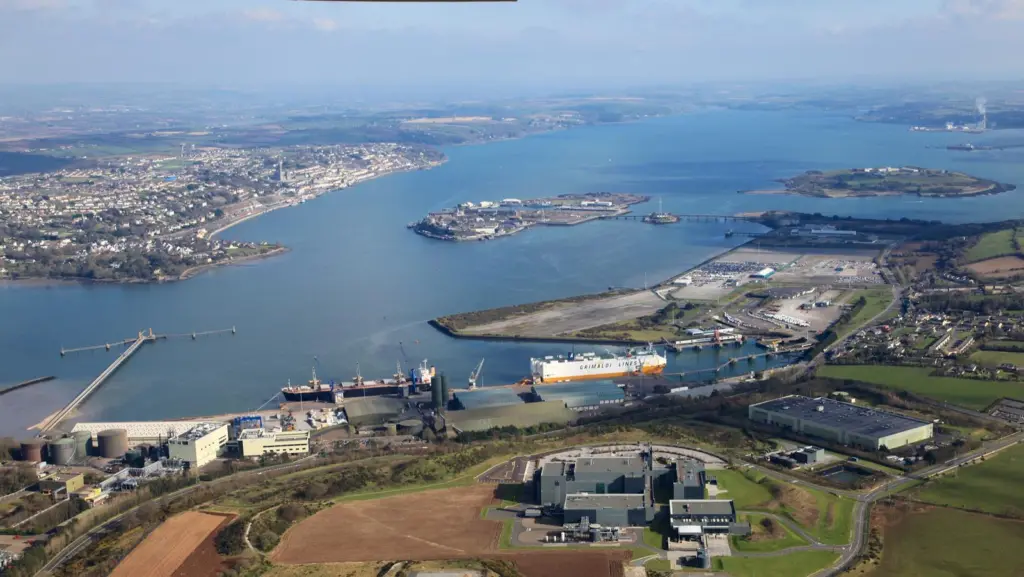
The port of Cork is the premier port on Ireland’s south coast offering sheltered deep-water facilities close to the main shipping lanes to Northern Europe, the Mediterranean and North America. The port handles all six shipping modes including Roll on Roll off, Lift on Lift off, Dry bulk, Liquid bulk, Break bulk and cruise. Total traffic through the port of Cork in 2013 reached 9.1 million tonnes compared to 9.05 million tonnes in 2012. Like most ports worldwide, the port of Cork has experienced very challenging trading conditions in 2013, however some cargos have shown an increase compared to 2012 levels and this is very encouraging, according to the port of Cork.
Our environment and how we manage it
The port of Cork is committed to the development of modern and efficient systems, with the maintenance of an Environmental Management System identified as a key strategic challenge which the port continuously strives to achieve.
As such, environmental management is dealt with as a prime business consideration across all of our operations. The port of Cork commits itself to lead the wider port community to minimise environmental impacts through co-ordinated environmental management, respecting the principles of environmental sustainability.
Since first developing the Environmental Management System in 2006 the port of Cork can now demonstrate the significant progress that has been made in managing and reducing the impact of port operations on the environment. Our Environmental Management System is now accredited under ISO 14001, the international standard for Environmental Management Systems. The system involves the setting up of objectives across the full spectrum of our operational activities together with a series of tasks and action plans in order to achieve them. The port of Cork continues to be active in the EcoPorts initiative which is a network of ports throughout Europe seeking to work together, exchanging experiences and promoting best practice with a view to achieving continual improvement in mitigating the impact of port operations on the environment.
The port of Cork is also working within the principle of the ‘5 E’s’ as set out in the ESPO Green Guide (Exemplifying, Enabling, Encouraging, Engaging, Enforcing) in the key areas of Air Quality, Energy Conservation & Climate Change, Water Use & Quality, Noise, Waste, Ground & Seabed Contamination and Habitats & Ecosystems:
• Exemplifying: Setting a good example towards the wider port community by demonstrating excellence in managing the environmental performance of our operations, equipment and assets;
• Enabling: Providing the operational and infrastructural conditions within the port area that facilitate port users and enhance improved environmental performance within the port area;
• Encouraging: Providing the incentives to port users that encourage a change of behaviour and induce them to continuously improve their environmental performance;
• Engaging: With port users and/or competent authorities in sharing knowledge, means and skills towards joint projects targeting environmental improvement in the port area and logistics chain;
• Enforcing: Making use of mechanisms that enforce good environmental practice by port users where applicable and ensuring compliance.
The port of Cork firmly believes that this approach will facilitate the port in the drive towards environmental excellence. In 2006, the port was successful in certifying its EMS to the PERS standard and is in the process of submitting an application for its third re-certification. Furthermore, the EMS is certified to ISO 14001 since 2009 and will be subject to its second re-certification in 2015.
Through its Environmental Policy commitments, the port has identified stakeholder engagement as critical to sustainable environmental performance improvement. In addition, a key objective of the port’s Corporate Social Responsibility (CSR) Strategy is to ‘enhance environmental and social performance through proactive engagement with key stakeholders’. Practical examples of the above commitments include:
• Establishing a Community Liaison Officer Position
• Extensive public consultation on Strategic Development Plan Review
• Close liaison with Cork County Council environmental regulators
• Membership of key industry and trade associations
• Network partner of the EcoPorts Foundation
• Corporative links with local Community Associations
• Publicly available environmental performance report
• Interactive stakeholder initiatives:
Ø annual schools project – aimed at educating and informing primary school children around the harbour on different aspects of the port of Cork
Ø Communicating with all port users and customers
Ø company social club – to engage staff in social events
Ø Port of Cork City Marina – to open up Cork City to the wider leisure community
Ø community projects support
Ø Supporting leisure events around Cork Harbour
Ø employee welfare, health and safety, and environmental initiatives
Stakeholder engagement will form a large part of the plans for any future redevelopment of the port infrastructure. Our Environmental Management System complements our other initiatives in the areas of Corporate and Social Responsibility, Community Relations, Health, Safety and Welfare.
Future Plans for Redevelopment
Looking forward, the port of Cork will lodge a planning application in April 2014 with An Bord Pleanála for new and improved port infrastructure in Ringaskiddy. As part of this planning proposal, the port of Cork will engage with stakeholders to allow feedback to be given on the proposal. An environmental impact statement on the proposed development will be submitted as part of the planning application. Feedback from public consultations will feed into this EIS statement and where possible, the port of Cork will mitigate against issues raised. The port of Cork is confident that this planning proposal will succeed; allowing the port to enhance its competitiveness and offer improved facilities to port customers, and bring a much needed stimulus to the local economy.
The port of Cork as a Tier 1 National Strategic port plays a key role in the movement of goods to and from European and World markets. Recently, the port secured funding as part of the TEN-T programmes which now positions the port of Cork as a priority TEN-T Core Network port. This foundation block will drive the port to meet future connectivity needs and supports the development of the wider regional and national economy and is of key importance to the port.
Schools Initiative
The port has also significantly invested in growing an excellent Schools Initiative over the last nine years which is aimed at educating primary school children in the harbour area of the port’s operations and functions. Annually, over 500 children participate in the initiative which invites schools to submit projects on a chosen theme. This year’s theme –‘Shipping Containers – Cork’s Connection to World Markets’ will encourage school children to look at the type of cargo that arrives into a port in a container and most importantly the necessity of containers and ports, particularly for Ireland, as an Island nation. Each participating class receives a boat tour of Cork harbour, compliments of the port of Cork.
Building on a thriving cruise business while seeking out new business
The port of Cork is the only port in Ireland with a dedicated cruise berth in Cobh. The port can also handle cruise liners in Ringaskiddy Deepwater Quay and smaller liners in the City Quays at Cork City. In 2013 62 cruise liners visited the port between April and November bringing over 123,000 passengers and crew to the region. With an average spend per in-transit passenger of approximately €73 per day, the cruise business has a very positive impact for business in Cork and is estimated to create 197 full-time equivalent jobs. By bringing some of the world’s largest cruise liners to Cork the cruise terminal in itself proves to be a popular tourist attraction with crowds flocking to Cobh to see the magnificent vessels. Waste from cruise liners, and all vessels that call to the port, goes to Greenstar for disposal and recycling. Greenstar upgrades and trades a total of over 200,000 tonnes of recyclable materials annually such as cardboard, paper, plastic and metals and is the largest exporter of recyclable commodities on the island of Ireland. Efficient waste management is critical in such a busy port, like Cork, which sees over 3,000 vessels entering the harbour each year.
The port of Cork has plans to upgrade the current cruise facilities in Cobh and is also committed to looking at the option of a second cruise berth in Cobh. Currently Cobh is Ireland’s only dedicated cruise berth. The port of Cork is committed to seeking out new business opportunities for the port and in particular, the agri-food business will be a key sector which the port of Cork is keen to develop. The Agri sector presents huge opportunities for the port’s exports, with the lifting of the Common Agriculture Policy production limits in 2015. Another area which proved successful in 2013 and one which the port will be actively progressing, is the offshore supply services and renewable energy sector. The port of Cork is experienced in handling large project cargo and has been at the forefront in offering services in the exploration and development needs of the various multi-national companies in this sector.
Going Forward
The port of Cork is justifiably proud of its environmental performance history, especially since establishing a certified EMS in 2006. Best Environmental Practice is now the standard for our daily operations and services. We recognise that the journey towards excellence is continual and the Senior Management Team has identified further key requirements for 2014 which will allow us to take the next steps.
Related Articles
 ALTERNATIVE FUELS GREENPORT
 NEWS
NEWS