![PortStrategy[GreenPort]](https://www.portstrategy.com/wp-content/uploads/2026/09/PortStrategyGreenPort.svg)





At your service
Providing value-added services can be worth the time and effort, as John Bensalhia explains
The 21st century can arguably be described as the era of extra value. Think about the value that you get today from items or services that used to only perform one lone function. Once upon a time, a phone was only there for making phone calls.
Adding extra value is also a service that ports can monetise. A good number of ports already offer services ranging from bagging to automotive management.
If ports have the facilities, expertise and skill to provide value-added services, they can not only benefit from increased revenue, but also from securing future custom.
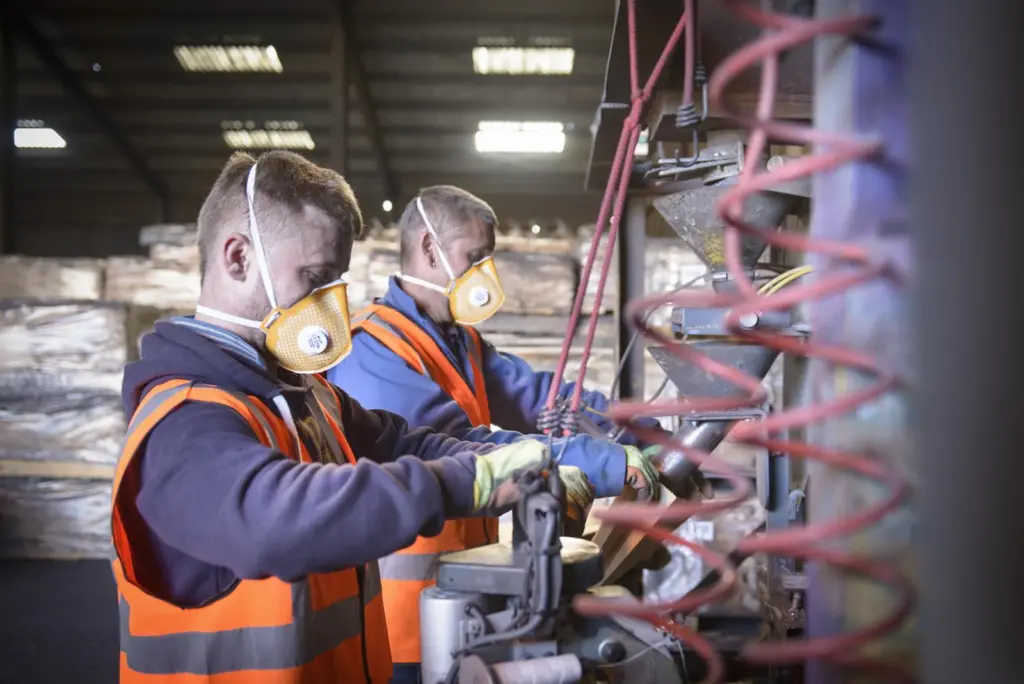
Taking the example of bagging as a value-add service, efficient, adaptable equipment and machinery has made this a popular choice for ports. Shujjat Alikhan, vice president, International Marine & General Services (IMGS), says that the versatility and convenient shipment of modern bagging machines are important factors. “Housed in standard shipping containers, they can be made operational very quickly on the most restrictive of berths.” And of course, their container housing makes them simple to ship.
IMGS makes use of Canadian-designed Rapidpack machines which offer digital scales and precise weighment calculators to ensure bag weight accuracy. “Importers of cargo can sell direct to market with confidence that the brand equity is protected, both in terms of quality and weight,” says Mr Alikhan. He adds: “The more cargo that is safely and efficiently handled by the port, the higher the throughput. This throughput increase contributes directly to the profitability of the port and, perhaps more importantly, to its global reputation.”
Mobile bagging
TW Logistics, which owns and operates the UK’s Port of Mistley, as well as additional sites near the Humber River estuary, handles bulk materials shipped conventionally, bulk parcels shipped through the main UK container ports, and also provides a range of value-added services such as bagging and material processing at its various sites.
Bagging presents many benefits according to Isoldt Harris, business development manager of TW Logistics: “Bagging at the point of export can be beneficial as it can reduce contamination during shipment by providing some protection/weatherproofing and it is often easier to ship packed goods in containers than bulk.”
Bagging at the point of arrival also provides advantages. Ms Harris says that goods can often be stored in bulk format more efficiently at the arrival port, then bagged as required for the UK markets which gives greater flexibility in terms of weight, size and marking to suit specific customer requirements.
Financially, bagging at the point of import has benefits, too. “There are generally lower handling costs in moving bulk and usually lower sea freight costs for conventional shipments,” says Ms Harris. On a more general note, Ms Harris adds that bagging services can give ports an additional revenue stream as it provides the port with regular workloads for space, equipment and labour which can fit with the peaks and troughs of shipping, particularly for the smaller ports.
“Mobile bagging is much more efficient as a machine can bag at speeds up to 140mt per hour,” says Mr Alikhan. “With this, the cost of the machines is marginal compared to large fixed lines… therefore a huge cost/benefit advantage.”
One stop shop
From an operational point of view, services such as bagging provide clients with a ‘one stop shop’ through an existing known provider, so the supply chain is simplified and/or reduced, says Ms Harris. “Bagging services also ensure that the material is packed to order with often prompt availability, and ultimately, these services will strengthen links with clients.”
Poland’s Port of Świnoujście draws upon its experience, resources and qualified staff to provide handling services for bulk goods and general cargo. Many cargo-related services are offered, including handling services for bulk loose cargo such as coke, coal and manure, domestic cargo, and general cargo that ranges from steel products to heavy duty items that have a maximum weight of 250 tonnes. The port also weighs cars and wagons, provides equipment rentals, and offers sorting, stowage, fastening, banding and binding services.
When it comes to value-added services, one of the biggest players is the Port of Antwerp. It offers a wide range of logistics services – especially in the perishables, steel and automotive sector – such as packaging, storage, sorting and maturing.
The Port of Antwerp’s expertise in cargo handling has made it a logical choice for services such as unloading fruit and the port is known as the biggest banana unloading port. Terminal operator Belgian New Fruit Wharf of the SEA-invest group unloads millions of tonnes of bananas, and other fruits such as apples, pears, melons and pineapples at the Port of Antwerp’s fruit terminals.
“Antwerp is known for its specialisation in cargo handling,” says SEA-invest’s Johan Claes. “We can unload, store and deliver very large volumes at short notice. In practice, we’re talking about at least six reefers per week. In addition, we have our own ripening capacity in the port.”
Paper reel
Paper management is fast and efficient at the Port of Antwerp, and this is why it was chosen by Lumipaper, part of major paper producers, the Stora Enso Group. Since 2012, Stora Enso has shipped its paper rolls from Finland to Antwerp. Once the paper reaches its destination, the port’s advanced logistics chain sets to work. “Here in Antwerp, the transport traffic and its follow-up are perfectly geared to each other,” says Ivan De Donder plant manager, Lumipaper. “This has the gigantic advantage that we can offer our customers an excellent and fast service.”
The combination of good transport networks, trained expert staff and detailed facilities has led to high acclaim for the port’s Manufert terminal, one of the biggest sugar handlers in Antwerp. It has a storage capacity of 260,000 tonnes of bulk refined sugar and an ISO 17025 accredited ‘Sugar Lab’ that is responsible for on-site quality control. The dedicated staff and the transport links then get the bulk sweet shipments quickly and efficiently to their destination, either in bags or containers.
“It’s this network that is of crucial importance,” says Jan Bruyneel, terminal manager of the Manufert division of Euroports Terminals Antwerp. “Not only are there good transport connections by rail, road and barge between the port and the European hinterland, but also the Port of Antwerp has the highly trained personnel with the necessary technical qualifications to create clear added value.”
DON’T UNDERESTIMATE VALUE OF LOCATION
A key advantage of value-added services is location. As one of the world’s largest terminal operators for dry bulk, fruit and liquid bulk, SEA-invest has connections with six ports in four countries, and of these, Antwerp is especially useful because of its position.
“Antwerp is very easily accessible due to its strategic and inland location,” says Johan Claes of SEA-invest. “It has also excellent connections to the European hinterland enabling us to deliver the fruit quickly and as close as possible to the customer.”
In the case of brewer, AB InBev, the connection with global ports is an important consideration. The AB InBev group ships 15,000 teu of beer via the Port of Antwerp to overseas export markets every year. Beer (including brands such as Budweiser, Stella Artois, Hoegaarden and Beck’s) is exported to countries such as France, Luxembourg, Canada and the US.
It is because the beer is ferried across the Atlantic Ocean that the position of Antwerp is a notable benefit. Arthur van Och, logistics director Benelux and France, says that this is not only “because the port is closest to our breweries in Belgium, but also because of its central location. The Port of Antwerp allows us to ship to any port in the world.” Recently, AB InBev extended its logistics contract with Antwerp-headquarted logistics service provider Katoen Natie for another five years.
Related Articles
 CONTAINER & CARGO HANDLING
 CONTAINER & CARGO HANDLING
 BULK HANDLING