![PortStrategy[GreenPort]](https://www.portstrategy.com/wp-content/uploads/2026/09/PortStrategyGreenPort.svg)






The state of the inland waterways
It has been a couple of years since the European Court of Auditors (ECA) flagged up problems with the development of inland waterways in Europe, Anne-Marie Causer investigates where we are at now.
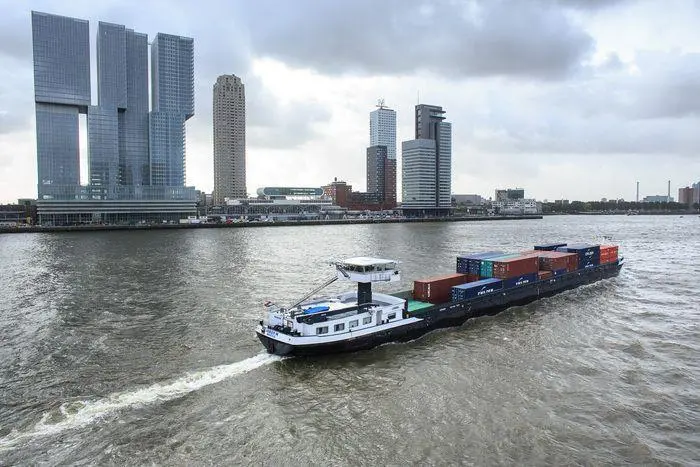
It is well known that waterway transport offers a powerful sustainable answer to expensive road congestion, with a smaller carbon footprint and an 85% reduction in air pollution.
Some or Europe’s largest seaports already use inland waterways to tackle increasing congestion and the lack of rail capacity, including Rotterdam, Antwerp and Hamburg.
But the inland waterways network has been marred by a reputation of slow progress in development over the last few decades.
At least, that was the view of a 2015 report by the European Court of Auditors (ECA), which showed that projects co-funded by the European Union have not been implemented effectively with gains made at the expense of road transport minimal.
Alexander van den Bosch, director, EFIP agrees. He told GreenPort: “The inland waterway network has a number of critical bottlenecks of which many can be considered cross-border sections as they are situated in border regions between core nodes.”
A priority
The European Commission had set inland waterways as a priority back in 2001 with its report Inland Waterway Transport in Europe.
It said back then that it would concentrate on funding projects with advanced plans for eliminating bottlenecks. But the trouble is, according to the ECA, that the cost of eliminating them is in excess of the funding available from the EU budget.
Several European organisations, including the European Sea Ports Organisation (ESPO), the European Federation of Inland Ports (EFIP) and the European Barge Union (EBU) have previously published an open letter regarding their concerns over possible funding concerns.
The ECA’s new report (http://www.greenport.com/news101/Regulation-and-Policy/prioritising-inland-waterways) recommends that the EC analyses the potential benefits of inland navigation and use this to co-ordinate the implementation of core European TEN-T networks across member states.
It also wants member states to be required to produce detailed national inland waterway maintenance plans.
Bottlenecks
Some examples of these bottlenecks include the low level of bridges in the 19km long canal of the Port of Brussels to the strategic important E40 waterway which connects the Baltic Sea with the Black Sea (through Poland, Belarus and Ukraine).
If this issue was tackled, Mr van den Bosch says, it could open up a market of 100 milllion people and potentially 4 million tonnes of cargo annually.
Today the E40 is partly unnavigable along the section between Warsaw and Brest, but a canal needs to be built to unlock this potential.
Meanwhile, the Rhine-Danube Corridor, which provides the main east–west link in Europe connecting France and Germany, Austria, the Czech Republic, Slovakia, Hungary, Romania and Bulgaria along the Main and Danube rivers to the Black Sea, is suffering from its own troubles.
Its main missing link concerns the navigability on the Danube River which must be improved in order to offer a real modal choice for freight transport, says Mr van den Bosch.
On-going actions on the Danube include the refurbishment of navigability in the section east of Vienna until the border with Slovakia is successfully dealt through practices currently being tested via a pilot project inside the natural protected area.
The old bridge in Bratislava is being lifted up in order to allow the transit of vessels at category VI and in Hungary, a study has been performed to evaluate the necessary intervention in thirty-one sites. But works have not yet started as the study is apparently being kept on hold for environmental reasons.
Studies have also been undertaken in the section that forms the border between Bulgaria and Romania. An inter-ministerial committee has been set up in order to coordinate the efforts and to develop a strategy for a territorial development of the region along the Danube.
In Romania, at Calarasi-Braila, an experimental monitoring programme, supported by the ICPDR, has been set up to evaluate the impact on the flora and fauna during and after the construction of the infrastructures meant to redirect part of the flow from the Bala branch to the main branch of the river.
Going forward
The trouble is, Mr van den Bosch says, is that the job to sort out inland waterways infrastructure is mainly the task of waterway managers. There are only a few ports where both the waterway manager and port authority are committed to lift bottlenecks which stand in the way of seamless navigation.
Creating a stable investment pipeline when public budgets are under pressure is a huge challenge for the sector especially taking into account the demanding European objectives for inland waterways.
With the emergence of Network Corridors and the Ten-T Comprehensive and Core Networks, inland ports have increased opportunities to influence the environmental management of the hinterland connections and performance of logistic services.
As seaports have taken on the remit of environmental considerations to include port-city links and the logistic chain, so the brief for inland ports has evolved exponentially to include considerations far outside the immediate port area. The connection to inland waterways is also crucial for inland ports to turn into multi-modal hubs and poles of regional development.
By the year 2030, The European Commission wants as much as 30% of the European Union road transport to be diversified to include other means of transportation, including inland waterways (a target of 50% has been set by 2050).
Mr van den Bosch says in the EU, inland waterways transport with its 40,000 km navigable waterways, has a commendable 6.9% share of freight volume in the EU, which is considerably higher in countries with good waterway infrastructure – The Netherlands, Belgium, Germany.
But there is still a lot of potential to be untapped, especially on The Danube and the Oder.
If it is ever to discover this untapped potential, greater effort is needed to create a connected Europe with a sustainable transport strategy, Mr van den Bosch concludes.
Related Articles
 ALTERNATIVE FUELS GREENPORT
 NEWS
NEWS