



PCS approaches evolve
Dean Davison assess the use of Port Community Systems across two of Europe’s largest port complexes and contrasts this with the approach taken by terminal operators in the UK
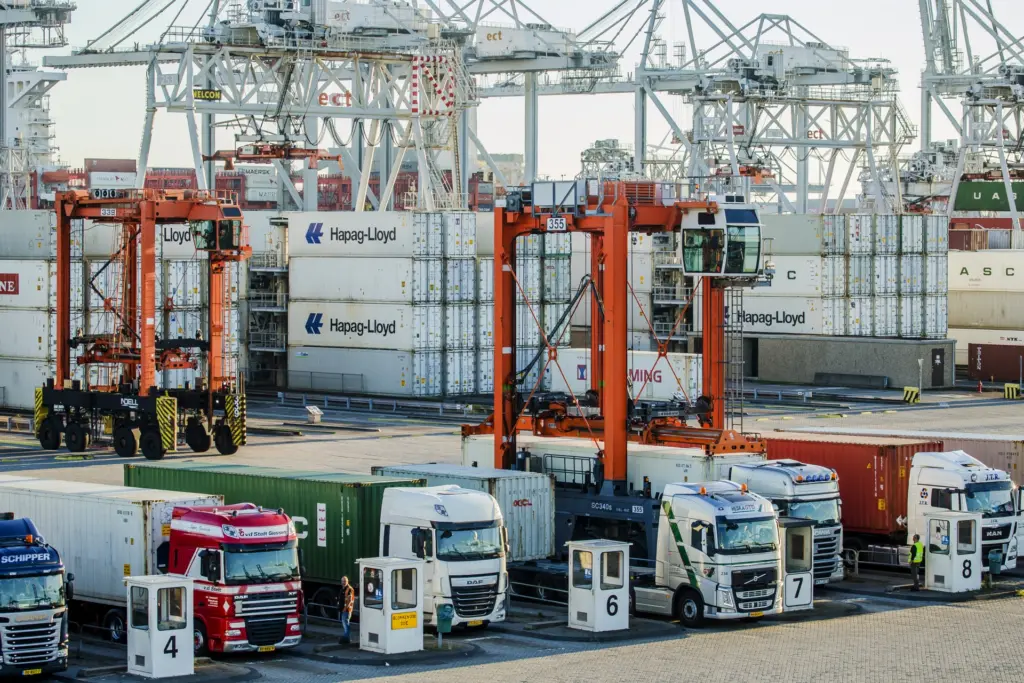
The World Bank has a clear definition of Port Community Systems (PCS) and the objectives being targeted: “A digital collaborative platform that enables the seamless exchange of information among a port’s many stakeholders, including customs agencies, port management, shipping and logistics companies, and freight forwarders. These platforms reduce the paperwork and administrative red tape often associated with port logistics, leading to quicker decisions and streamlined operations.”
Based on this explanation, it is very clear that that collaboration between all interested parties is an essential requirement – and especially at the moment it seems!
“In 2025, one thing became clearer than ever: only through collaboration in the supply chain can ports remain safe, efficient, and resilient. Geopolitical tensions, new legislation, and ongoing digitalisation are increasing our mutual interdependence, underlines Portbase, the executive not-for-profit organisation of the Port of Rotterdam Authority and the Port of Amsterdam for digitally connecting its wider port community.
To achieve these aims, Portbase (and any similar organisation) must offer a robust and efficient PCS capable of delivering key requirements such as functional depth, ease of adoption, interoperability, security standards, scalability, and long-term vendor support, while ensuring that existing digital processes can deliver smarter decision-making through analytics and automation.
On a day-to-day basis key factors that need to be met include vessel arrival and departure coordination, electronic document exchange (manifests, bills of lading, gate passes etc.), customs and regulatory submissions, cargo tracking and visibility and billing, invoicing, and port charges management.
Axel Mattern, CEO of Port of Hamburg Marketing, highlights the key benefits a fit for purpose PCS can deliver. “The digital exchange of release information reduces paperwork, accelerates cargo handover, increases transparency, and enhances security throughout the supply chain. For terminals, logistics providers, and cargo owners, this translates into faster, more reliable, and more efficient container handling.”
Hurdles to overcome
Portbase says that there are several ongoing factors that make the PCS process complex, particularly because there are a range of different organisations seeking uniformity. These include compliance with legislation and regulations, transparency of, and insight into, supply chains, making each participant’s operation and the chain more sustainable and, finally, IT maturity, standards, and digital security. All can have their challenges.
As part of monitoring the functions being undertaken, Portbase regularly conducts an in-depth user survey and its 2026 results, gained from 343 responses, offers a good summary of the process, and reveals what users value most. For them, one aspect stands out above all else: services must be reliable and function without hitches. Availability, stability, and rapid problem resolution are crucial in this regard.”
Three-point plan
In response to the feedback, Portbase confirms it pursuing a three-point plan moving forward. This comprises:
- Smooth service usage – The duration of PCS sessions will be extended from 60 to 120 minutes. Additional focus will be placed on clarifying error messages.
- More support options – With new Customer Service tooling, users can indicate when their question has been answered and close their own ticket. It will also soon be possible to submit questions via a form on the support website.
- Information during disruptions – Portbase monitors the performance of services and their integrations. Automatic detection helps identify disruptions or delays in the chain more quickly. Development teams follow their own planning.
The Port of Hamburg also reports good progress with respect to services offered via its PCS. “Hamburg’s Port Community System is operated by DAKOSY and continues to drive digital collaboration across the logistics chain. A recent milestone was the successful completion of the North Sea Ports project, which introduced a fully digital container release process between participating ports” confirms Mattern.
UK catch up
According to one experienced industry source, who is familiar with the role of PCS in the UK for one of the largest container terminal operating companies, there is another angle to be considered.
“A good PCS connects all stakeholders in the port, but the UK approach is slightly different. Portbase in the Netherlands is not-for-profit and owned by the local city and community. In the UK, there is a monopolistic approach with no competition. Ask major container shipping lines and they will say that charges are higher in the UK than on the North European Continent,” he explains, while requesting anonymity.
There is, however, modernisation underway in the UK. In December last year Community Network Services (CNS) commenced rolling out the latest phase of its new PCS. With this in place in initial terminals, expansion into other terminals including DP World Southampton & London Gateway is in process. Progressive benefits are anticipated from this new generation system that is said to offer a modern, user-friendly interface that improves navigation, boostS productivity and streamlines critical workflows. The system replaces the CNS Legacy Compass system, a first-generation PCS.
Related Articles
 DIGITAL
 DIGITAL
 DIGITAL