



A dangerous game
More dangerous cargoes in greater volumes place more demands on the people who must load and unload them, as Stuart Pearcey discovers
Stored, handled and shipped incorrectly, even a sack of humble pistachio nuts can become a fire hazard – although spontaneous combustion of a pocket snack item is hardly likely to be a major threat to the international ports industry.
That said, it’s a measure of the way hazards are to be found in the most apparently innocuous of places, quite apart from the more obvious ‘culprits’; and therefore by association, a measure of the high degree of vigilance required from port operators.
Around the globe the number of hazardous cargoes being shipped on a daily basis grows continuously, driven by the pace of global economic development. It’s a trend that puts increasing pressure on port operators, especially those in the less-developed parts of the world.
Sustaining safe operation is therefore a permanent challenge for everyone with an interest, from Governments to jetty-based employees. But they arrive at the issue from different standpoints. Governments change regulations, ports have to keep abreast of those changes and make sure their employees are aware of the behaviour expected of them as a result, and jetty-based employees are under pressure to complete their task as efficiently as possible to make sure ships can arrive and leave on schedule.
Forty-five years after its first publication, the International Maritime Dangerous Goods (IMDG) Code remains the framework for all aspects of handling dangerous goods and marine pollutants in sea transport.
Amendment 34-08 could be applied from 1 January last year on a voluntary basis, pending its official entry into force on January 1, 2010 without any transitional period. This amendment made it mandatory for ‘shore based personnel engaged in the transport of dangerous goods intended to be transported by sea to receive training in the contents of dangerous goods provisions commensurate with their responsibilities’.
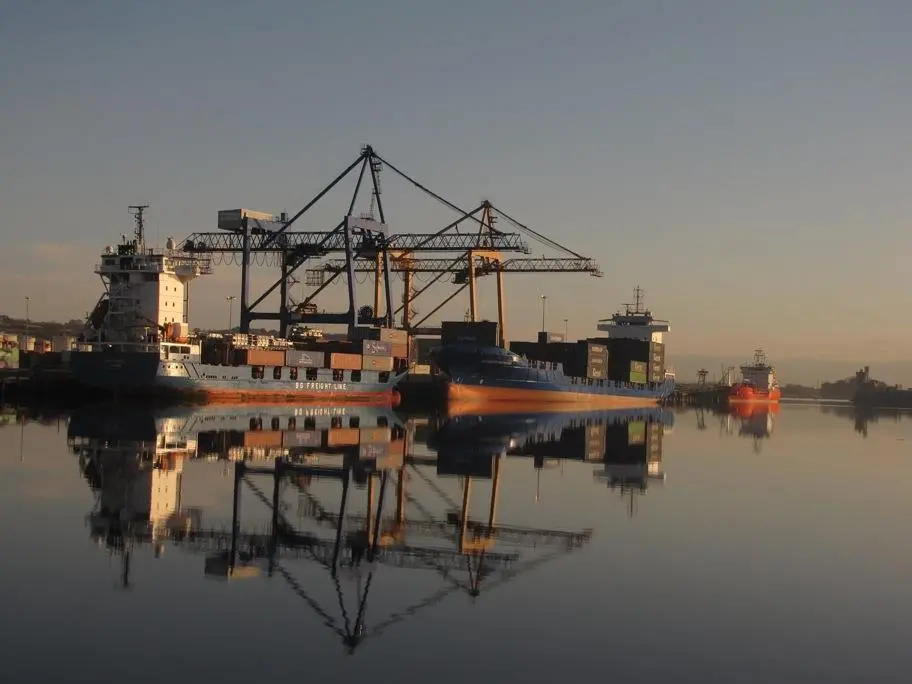
In Ireland, the training courses relevant to the IMDG code are approved by the Marine Survey Office, which comes under the umbrella of the Irish Department of Transport. Approved training courses only became available towards the end of 2009 by the course providers, leading to a bit of a scramble for certification before January 1, 2010, according to Capt Paul O’Regan, the Port of Cork’s deputy harbour master.
He says: “Established training providers designed new courses to comply with the regulations, providing advice on classification, stowage, segregation, packing, labelling, terminology and emergency response action.
“With experience gained from existing pharmaceutical, construction and transport training requirements, they were able to achieve this reasonably quickly, as they simply adapted core modules to a different marketplace. However, we started to investigate training providers in July, as we knew that the regulations would become mandatory in January 2010, and by November only two had come back with an approved course.”
Course providers can command a high average price for the training, since it’s a mandatory requirement in a niche market. Twelve people from the Port of Cork had to be trained initially. “It didn’t prove too onerous a task; we had to take people out of workforce for two or three days, so there were disruptions, but nothing more than when people take holidays and the like. At a cost of €600-€700 ($809-$944) per person, the total cost was in excess of €7,000 ($9440) – a hefty investment,” says Mr O’Regan. But he sees it as an investment, since it has been beneficial.
“Previously there was a disconnect between those responsible for the packing, the shipping and finally receiving at the port. This training should give all those involved in the transport of dangerous goods a far better understanding of their own role, and the entire supply chain; from manufacturers, packers and shippers, to feeder services and port authorities. A better understanding of the implications that their particular roles may have upon others in the supply chain should lead to a better door-to-door familiarity – of benefit to us all,” he says.
Cork, like other ports, still encounters issues relating to inadequate packing. Cargo can be tossed and turned in a ship for several weeks during adverse weather, and if the securing arrangements are inadequate the cargo may shift, causing damage to the cargo and possibly the vessel.
“Damage to goods in transit can prove challenging for receiving ports,” says Mr O’Regan. “Training has started to improve this, and of course it will take time for improvements to filter through and take full effect. Ultimately, from the necessary paperwork and packing, to securing in the container, loading the ship, and understanding how products need to be stored on vessel, the training has made the overall process much safer for everyone involved,” he says. There’s still a way to go, illustrated by the loss of three containers from a Finnish ship in the Baltic; one contained five tonnes of flammable material and a further 15 of environmentally-harmful materials. The Coastguard has been unable to locate any of them.
“We are in a fortunate position at the Port of Cork, as we have recently formed a partnership with the National Maritime College of Ireland (NMCI), which from now on will act as our training provider for all our ongoing training needs. For example, we will need to train perhaps another 40 employees to meet the IMDG regulations. Working with NMCI, we will be able to design a tailor-made course to specifically meet our needs. We will input into course content and have far greater control,” he adds.
As far as mandatory training is concerned, Cork will now be able to start the process early, removing the inevitable headache of trying to source courses from external providers. “The NMCI is an established facility, with a solid reputation and has a strong working relationship with the various government departments. And the longevity of relationship presents a fantastic opportunity for both the port and the college, ensuring best-in-class training, which represents real value for money.
“At the Port of Cork, we really do see the value in training investment. We have already instigated a pilot safety course for all port employees. It’s a one-day port familiarisation course so that people are more aware of the operational risks,” he says. Not only does this have obvious benefits for overall operational safety, but it should also prove advantageous from an insurance perspective, as it may be reflected in the premiums.
Bridging the ‘knowledge gap’ between ship and shore is central to providing safe and secure terminal and jetty operations, reducing the physical, environmental and financial risk synonymous with modern shipping and onshore services. “The ‘human factor’ may represent our greatest vulnerability, but at the same time, it also offers a wealth of opportunity,” says Mr O’Regan.
“The intricacies of the gas, container, bulk, oil and chemical markets are complicated and often inaccessible, yet it is important that shore-side personnel and staff in ship management offices, as well as seafarers, are all properly trained – they too have a key role to play in upholding procedures and maintaining standards. Increasing both practical and commercial understanding will support the promotion of best practice, improve safety and security, as well as generating efficiencies,” he adds.
Related Articles
 NEWS
NEWS
 CONTAINER & CARGO HANDLING
 OPERATIONS