


A region of port powerhouses
China may dominate the port top ten, but it’s not the only country making sure its voice is heard in East Asia, finds Kate Jones
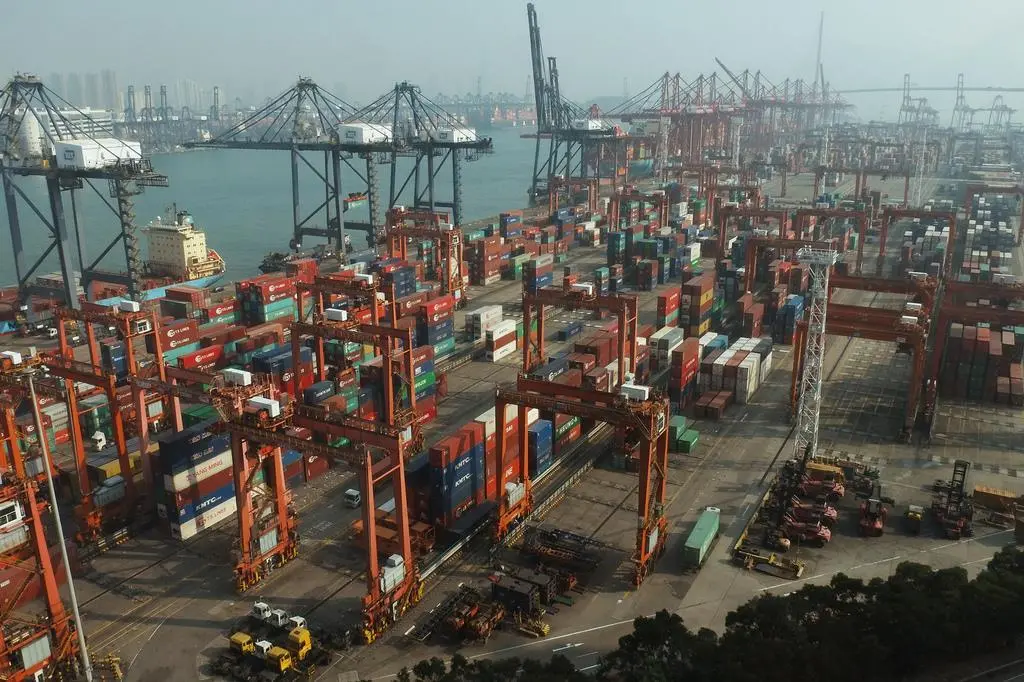
East Asia has much to offer today’s world: according to The World Bank, the subregion, along with the Pacific, is responsible for almost 40% of world economic growth.
Unsurprising then that the region is home to eight of the 10 biggest ports in the world, according to the World Economic Forum. China’s Shanghai is the largest, with the superpower’s Shenzhen and Ningbo-Zhoushan coming third and fourth respectively and South Korea’s Busan coming fifth. Furthermore, a third of all global containers move through Chinese ports.
The Port of Shanghai is driving continued capacity expansion, in line with other established ports in China. Last year, annual growth at the port was 4.4% — modest by past standards, although it did add 1.8m teu to the facility’s total. Digitalisation is also being given a push with the port one party to the blockchain consortium the Global Shipping Business Network — an open digital platform based on distributed ledger technology. Other participants included terminal operator stalwarts DP World and PSA International. Shanghai is also part of another blockchain and artificial intelligence venture, facilitated by APMEN Trade Tech and Ideanomics, to improve shipping operations by integrating port and supply chain data.
It plans to renew its Vessel Traffic Management Information System with security firm Saab in a project that is set to run to June 2020, replacing the majority of the existing radar and communications systems and delivering a new supervisory centre.
The latest development in Shanghai’s growth journey has seen its operator Shanghai International Port Group enter a co-operation agreement with Port of Ningbo operator Zhejiang Provincial Seaport Investment & Operation Group – the Chinese port located opposite Shanghai – on a development scheme for the northern part of the Xiao Yangshan port area. The move is expected to increase the efficiency of cargo transit on the Yangtze River and reduce costs. The Yangtze River Delta region is responsible for up to 70% of the Port of Shanghai’s throughput, and almost 50% of the goods in Yangshan need extra waterborne transport.
Ups and downs
Over in Vietnam, development of an ambitious deep-sea project at Lach Huyen Port in Hai Phong city in the north of the country is moving on apace. May last year marked the opening of its Haiphong International Container Terminal (HICT), a joint venture between Vietnam’s Saigon Newport Corporation, Japan’s Mitsui O.S.K. Lines (MOL) and ITOCHU and Taiwan’s Wan Hai Lines. It marks the first public-private partnership between Japan and Vietnam.
“Backed by a yen loan from Japan, the Vietnamese government has been constructing various infrastructure projects such as reclamation, levee protection, a groin and breakwater, causeway and access road between the port and Cat Hai Island,” MOL said at the time HICT was opened.
HICT is the largest deep-water container terminal in Northern Vietnam, with 750 metres total berth length, a 14-metre access channel, 660 metres of turning basin, and 16 metres of berth. HICT can accommodate container ships up to 14,000 teu and offers an annual cargo throughput of 1.1m teu.
However, the outlook is not so rosy for one terminal south of HICT. DP World’s Saigon Premier Container Terminal (SPCT) in Ho Chi Minh City opened in 2010 to target container volumes, but the terminal was forced to change tack after heavy sedimentation in the Soài Rap River stopped large container ships from reaching it. It is the State’s responsibility to dredge passages and a lack of funding and red tape has stymied dredging operations.
Car alternatives
While it waits for dredging to take place, SPCT has turned to the car sector to stem losses – which has proven to be a savvy move. Towards the end of 2018 it reported record high throughput for completely built-up (CBU) motor vehicles. SPCT offers storage capacity of about 5,000 cars on its 23-hectare site.
“I don’t see that type of capacity open to CBUs in other parts of Ho Chi Minh City, so we should focus on that,” Andrew Hoad, chief executive and managing director for DP World Asia Pacific, was quoted as saying in local press. “DP World is here to stay and this is a real contribution we can make to the economy as a trade-enabler.”
The next round of dredging of the Soài Rạp River channel was scheduled to take place in February, but there has been no confirmation that this has taken place.
In South Korea, expansion of capacity is continuing at both the Port of Busan and the Port of Incheon. Busan Port Authority is going ahead with building a 50,000-square metre logistics zone, including 34,000 square metres of warehousing and supporting facilities, in Maasvlakte Industrial Park in the Dutch city of Rotterdam, with commercial operations forecast to start in the summer of 2021. Meanwhile, operator Busan New Container Terminal has signed a deal with maritime IT solutions provider CyberLogitec for implementation of a terminal operating system.
The Port of Incheon is working on hinterland developments with Incheon Port Authority signing an agreement with Incheon Free Economic Zone Authority to create a co-operative relationship.
The shift towards domestic or cross-border co-operative agreements in South Korea is not accidental. With the domestic construction industry struggling, there are deliberate moves to boost partnerships to drive trade through the country’s ports. South Korea has offered its support for the development of a dry port in landlocked Laos through a Memorandum of Understanding that agrees to jointly implement port development co-operation projects and exchange human resources, such as port experts.
Another MoU from late last year agreed to the establishment of a basic plan for 34 ports nationwide in Vietnam, with co-operation of port development between the two countries. That MOU saw South Korea pledge to help Vietnam to study the function of ports by region, direction, and timing of development as well as the design of the port infrastructure.
HONG KONG GRIP SLACKENS
While mainland China’s terminals have enjoyed riding the long wave over the past few years, Hong Kong has been left in their wake.
Consultant Drewry reported this year that the Port of Hong Kong had dropped out of its ranking of the top five busiest shipping container terminals in the world for the first time since Drewry started compiling global port data 30 years ago. In 2006, the port handled 23.54m teu, but last year that had slipped to 19.64m teu, according to Drewry data.
Neil Davidson, the organisation’s senior analyst for ports and terminals, notes that since the 1990s, mainland Chinese ports such as Guangzhou and Shenzhen have seen massive expansion and modern facility investment and have turned into much more effective competitors to Hong Kong.
“At the same time, these mainland ports are closer to China’s factories, which have seen huge growth since the opening up of China’s economy,” Mr Davidson told Port Strategy. “Much of Hong Kong’s traffic is barge volumes, carrying cargo to and from the mainland before being shipped internationally, and these barge moves have been replaced in part by direct mainline vessel calls in mainland Chinese ports.
In addition, in Hong Kong dock labour costs are higher than on the mainland as the cost of living in Hong Kong is higher, and labour is more easily available in mainland ports. Plus, land is more expensive and scarcer in Hong Kong and there is pressure to use land for other purposes.
“These factors mean that terminal handling charges are higher in Hong Kong than in mainland ports,” says Mr Davidson.
Additionally, he notes that previously, the dock had the unique advantage of not being classed as a Chinese port and was thus “the only ‘Chinese’ port not subject to cabotage restrictions”. However, since 2016, several other key Chinese ports have been granted exemptions from these limitations.
Related Articles
 EQUIPMENT
 PORT & TERMINAL NEWS
 PORT & TERMINAL NEWS